


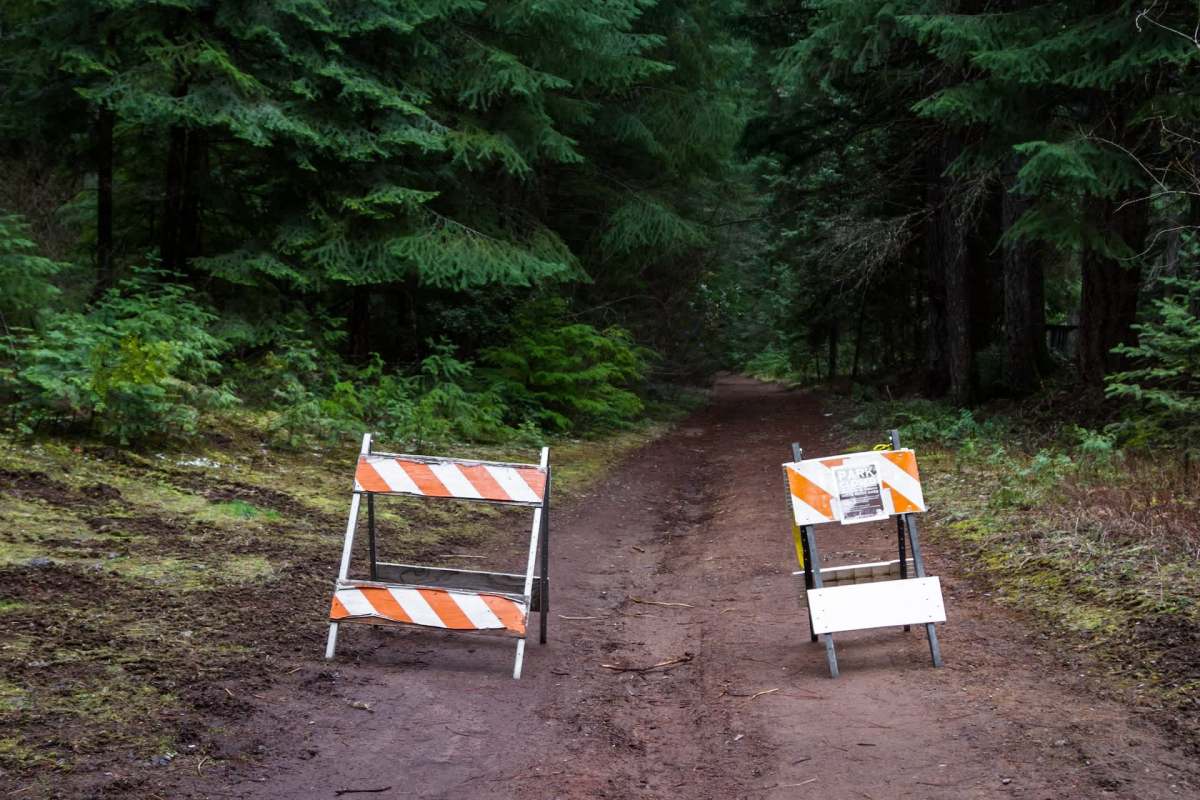
Atmospheric river-fueled storms brought historic flooding to the Pacific Northwest in December. The region is getting a break now, but officials are still picking up the pieces after heavy rainfall damaged a National Scenic Area known for its breathtaking views.
Two popular trails that wind through the dramatic scenery of the Columbia River Gorge Scenic Area remained closed in the wake of damaging December floods.
Officials described portions of the trails as "unrecognizable," per the Statesman Journal.
There was significant damage reported along multiple trails, and repairs could take months.
"Over 90 trees fell across the trail, one ripping out large craters of trail tread as it fell and one falling into the posts and cables at Punch Bowl Falls, obliterating the safety rail system," according to a Facebook post by officials. "Dozens of rockslides and mudslides cover the trail and the first three hundred yards are beneath three feet of mud."
"The superstructures of two trail bridges were badly damaged. Two enormous wash-outs of trail tread — approximately 150' combined — occurred," officials noted on another Facebook post. "Multiple large rockslides and mudslides cover the trail, as well as numerous downed trees. The small stairway and viewing platform at the plunge pool were destroyed."
"A goal of ours would be to have them ready to go in the springtime, but that will depend on getting crews onto the trails and whatever else happens this winter," Beth Kennedy, information officer for the area, told the Statesman Journal. "There is a ton of work to do before we can [reopen] them."
Washington had its fifth-wettest December on record last year, according to the National Centers for Environmental Information. Oregon had its 40th-wettest December in its 130-year climate record.
There were at least five atmospheric river-fueled storms that pounded the Pacific Northwest in December. At one point during the month, more than 300,000 people across the region were left without power. Extreme rain prompted officials in Washington to issue a Level 3 (Go Now!), the highest and most urgent level used by many U.S. emergency management agencies.
Scientists say our warming world is amplifying extreme weather events like atmospheric rivers.
TCD Picks » Quince Spotlight
💡These best-sellers from Quince deliver affordable, sustainable luxury for all




|
How often do you worry about air pollution where you live? Click your choice to see results and speak your mind. |
 Always 😷
 "As human-caused climate change continues to warm the planet, the number of days that the western U.S. will experience atmospheric rivers is projected to increase," say officials with the U.S. Department of Agriculture.
"Atmospheric rivers are also expected to be bigger and more hazardous on average," officials added. "As climate change warms the air and oceans, these storms will have more fuel to become larger and stronger because a warmer atmosphere can hold more moisture."

Get TCD's free newsletters for easy tips to save more, waste less, and make smarter choices — and earn up to $5,000 toward clean upgrades in TCD's exclusive Rewards Club.
Cool Picks






