


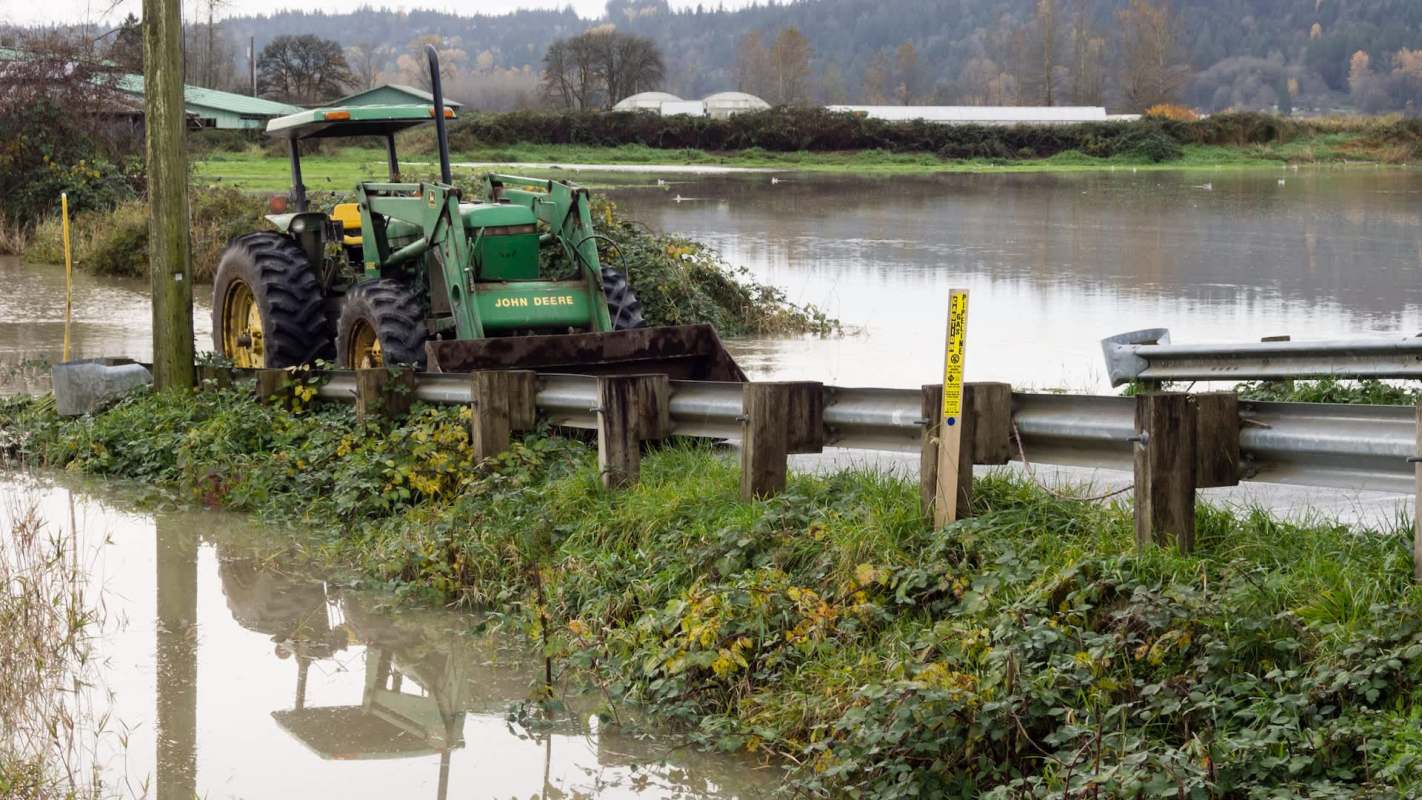
Coastal farmland in the Mid-Atlantic is disappearing under advancing saltwater faster than many experts expected, and researchers say the losses are already adding up to a major blow for farmers and rural communities.
A new study published in Nature Sustainability found, as described in Phys.org, that roughly 25,000 acres of farmland in the Chesapeake and Delaware Bay watersheds were lost from 1984 to 2022 as rising seas pushed marshes inland, even in places where landowners tried to hold the water back.
Researchers from William & Mary's Batten School & VIMS found that saltwater intrusion is overtaking coastal farmland at an alarming rate.
Saltwater intrusion happens when seawater moves farther inland through groundwater, tidal creeks, and storm surges. Over time, that extra salt kills freshwater vegetation and crops.
The Mid-Atlantic is especially vulnerable because sea levels there are rising at roughly twice the global average. While "ghost forests" — clusters of dead trees killed by saltwater — have become one of the region's most visible warning signs, the new research suggests cropland may be vanishing even faster.
Using decades of satellite imagery and field data, the team found marsh encroachment on agricultural land was happening nearly twice as fast overall as it was in nearby forests. In some parts of the region, it was up to seven times more common on farmland.
TCD Picks » Quince Spotlight
💡These best-sellers from Quince deliver affordable, sustainable luxury for all




Researchers said that even where farmers built berms, levees, and drainage systems to protect fields, those defenses mostly bought time instead of stopping the problem.
"There's this assumption that we'll never let sea level rise consume farmland, that people will protect valuable land," study co-author Matt Kirwan said. "And it's just wrong."
The loss of farmland is about much more than shifting coastlines. It also means lost harvests, shrinking incomes, and rural families watching productive land slowly become unusable.
Phys.org noted that, unlike trees, which can take decades to die off after repeated salt exposure, crops are far more fragile. A field can still look mostly intact, but the outer rows may already be failing. That means the damage can appear limited at first while quietly eroding agricultural production year after year.
That matters for the future of food production and for the communities that depend on working land. If more farmland is lost, local economies can take a hit, family operations may be forced to change course, and rural areas could be left out of adaptation plans that often focus on cities and beachfront property.
At the same time, researchers pointed to a difficult tradeoff. Migrating marshes help buffer storms, store carbon, and support wildlife. But when that migration happens across farmland, those benefits are often countered by a significant impact to farmers and their livelihoods.
Researchers found that local protective measures can help, at least temporarily. At several Eastern Shore sites, maintained levees and similar structures reduced saltwater intrusion enough to slow marsh retreat rates closer to those seen in forests. However, those fixes aren't permanent, and won't stop the intrusion of the sea entirely.
Some landowners are already adapting in other ways. In one case highlighted by the researchers, a property owner repurposed fields made too salty for farming into a wildlife habitat with assistance from a U.S. Department of Agriculture program. That kind of transition may offer one path forward for land that can no longer be productively farmed.
The researchers said better solutions will require more direct engagement with landowners, more support for adaptation in private agricultural areas, and planning that recognizes marsh migration as a major force shaping the coast.
On the larger scale, reducing heat-trapping pollution that is pushing seas higher in the first place can help eventually solve the encroaching marsh issue. Alongside that, supporting wetland restoration, smarter coastal planning, and assistance programs for farmers could help communities navigate losses that are already underway.

Get TCD's free newsletters for easy tips, smart advice, and a chance to earn $5,000 toward home upgrades. To see more stories like this one, change your Google preferences here.







