


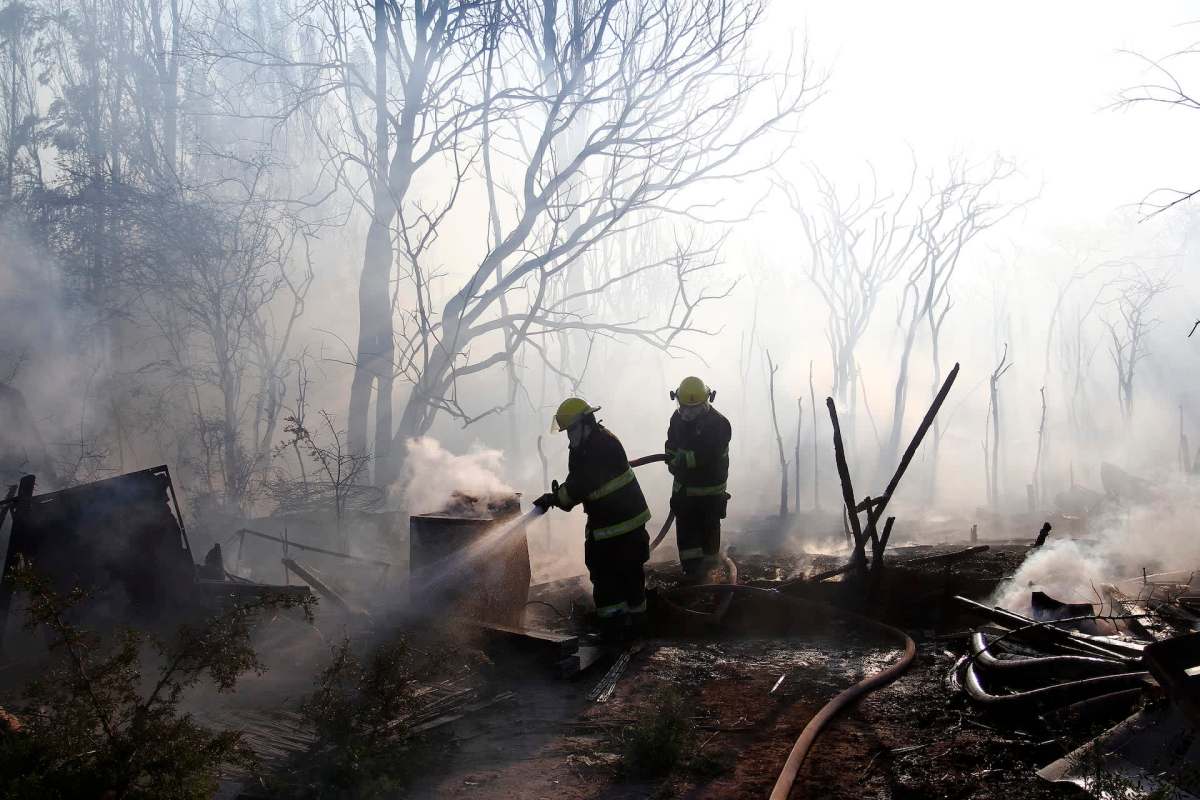
Chile declared a state of catastrophe on Monday, Jan. 19, after a massive wildfire, one of 26 blazes firefighters were battling across the country, killed at least 19 people, per CNN.
Wildfires have charred more than 54,000 acres so far, affecting an area roughly the size of Cleveland. The largest fire struck near Concepcion in Chile's central coastal region.
The fire spread rapidly, catching many by surprise, including the Caamaño family. Ana and her husband, Luis Caamaño, were sifting through the ashes of their home this week after the fast-moving fire swept through the town of Lirquen, around 25 miles northeast of Concepcion.
Franco, their son, tried to douse the home with a hose, but thick smoke whipped up by strong winds drove him away.
"It came like lightning, it was so quick," Franco said.
Based on early estimates, more than 300 homes were destroyed by the blaze, while another 1,100 are being assessed for damage. These numbers are expected to increase as emergency crews gain access to areas impacted by the fire.
Chile and neighboring Argentina started 2026 with ongoing heatwaves. Temperatures near or above 100F scorched central and southern Chile in mid-January, while heat alerts and record highs have already affected Argentina this year.
A heat alert was in effect when Argentina's capital, Buenos Aires, hit 95°F on Jan. 13, though the weather felt even hotter. The heat index that day, which accounts for both temperature and humidity, rose to 100°F.
Extreme heat and strong winds fanned this week's wildfire flames.
"Unfortunately, both yesterday, Sunday, and today, Monday, we expect to see peak temperatures in the Ñuble region and also in the Biobío region," Andrés Moncada, a meteorologist with the Chilean Meteorological Directorate, told Cooperativa.
TCD Picks » Quince Spotlight
💡These best-sellers from Quince deliver affordable, sustainable luxury for all




|
How often do you worry about air pollution where you live? Click your choice to see results and speak your mind. |
 Always 😷
 "At this moment, we have several stations with temperatures around 37 degrees Celsius, and they could still rise a few tenths of a degree," Moncada observed.
Average temperatures have hovered at unprecedented levels over the last three years. A warming world is supercharging heat waves and droughts, raising the risk of wildfires; 2025 ranked as the planet's third-warmest year on record.
The preliminary 2025 annual climate report from Chile's Meteorological Directorate described the year as "exceptionally warm and dry," consistent with worldwide patterns.
"Chile's average temperature reached 13.44°C, placing it 1.13°C above the 1961–1990 climatological average and 0.69°C above the 1991–2020 average, matching the record set in 2016," the report observed.
"With this result, 16 consecutive years warmer than the historical average have been completed."
Rainfall in 2025 dipped 25.8% below the national average, making it the eleventh driest year since 1961. The 2016–2025 period was the driest decade ever recorded, with an average deficit of 21.5%.
Since 2007, 19 straight years of below-average precipitation have strained water resources and ecosystems, and disrupted agricultural and industrial activities. Chile launched an ambitious green energy program in 2019 to help combat the impacts of an overheating planet.
The country is phasing out coal plants, replacing them with solar thermal plants and batteries.

Get TCD's free newsletters for easy tips to save more, waste less, and make smarter choices — and earn up to $5,000 toward clean upgrades in TCD's exclusive Rewards Club.
Cool Picks






