


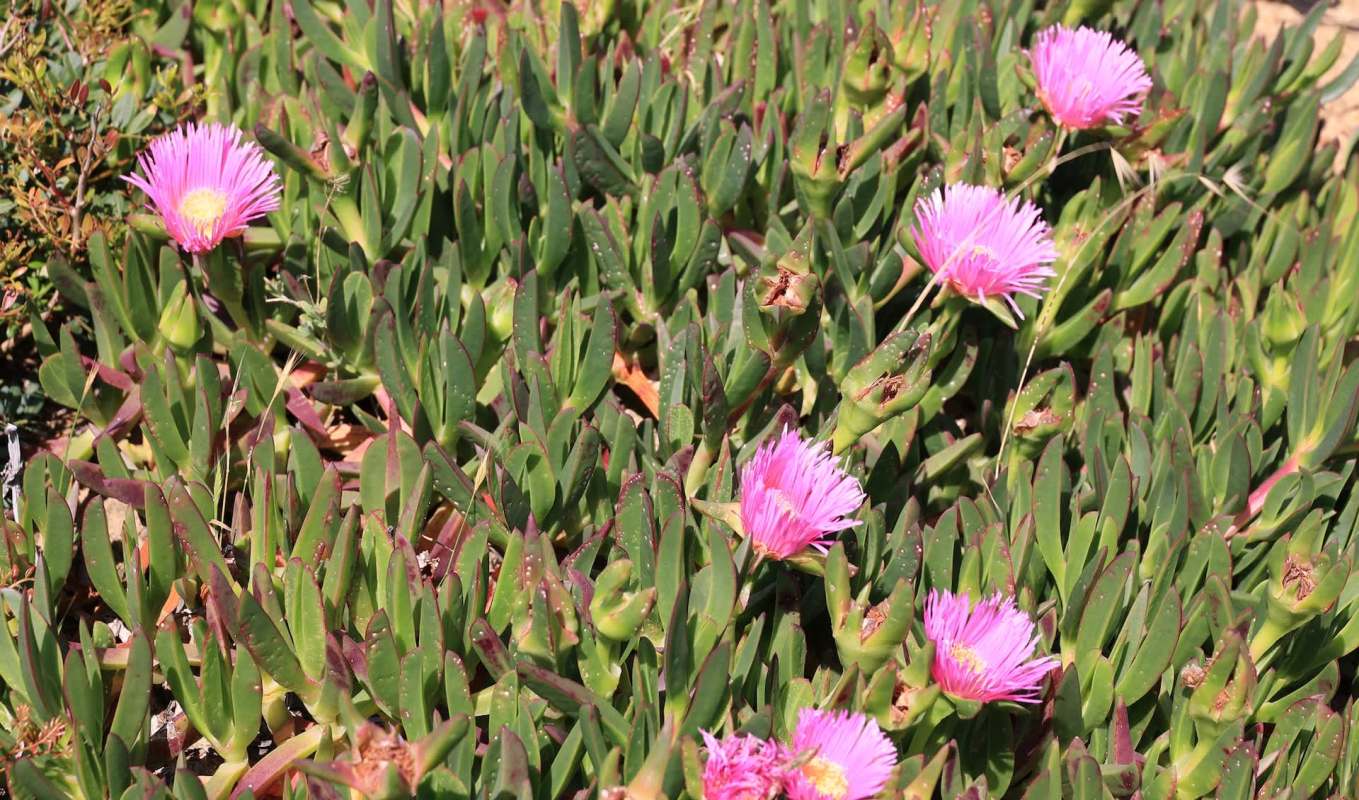
You may have seen striking photos of yellow and pink flowers pop up on your Instagram feed.
Scientists saw them, too. But instead of marveling at the flowers' beauty, the scientists used the images to track the spread of a threatening invasive plant.
What's happening?
As the University of Galway reported, a global team analyzed more than 1,700 photographs from social media and other platforms to track the spread of Carpobrotus, commonly known as ice plants or sour figs.
Carpobrotus plants are native to South Africa, but scientists showed they had spread to places such as California, Argentina, New Zealand, Portugal, and Spain. They published their findings in the journal Ecological Solutions and Evidence.
"We realized thousands of people were unknowingly documenting these invasions in the background of their beach selfies and cliff-top sunset photos," study lead author Susan Canavan said in the news release. "This gave us observers across the globe, from California's Big Sur to New Zealand's coastlines to Portugal's tourist beaches."
Researchers from the Irish institution spearheaded the study, and they were joined by others from universities in the Czech Republic, Spain, Australia, South Africa, and the United States.
TCD Picks » Quince Spotlight
💡These best-sellers from Quince deliver affordable, sustainable luxury for all




Why is this concerning?
The spread of any invasive species is a concern for whatever new environment it reaches. Whether it's a plant or animal, invasive species do harm to their new ecosystems, typically by spreading quickly and outcompeting native plants or wildlife for valuable resources such as water, food, and sunlight.
In the case of Carpobrotus, one plant can cover more than 500 square feet. It suffocates everything beneath it and changes soil composition, and its colorful flowers are attractive to local pollinators, which can disrupt the ecosystem.
What's being done about this?
Researchers hope their study will provide insight into how Carpobrotus spreads, which could lead to methods to prevent such spread. For example, they discovered that the invasive plant typically adapts to local blooming seasons instead of keeping the flowering patterns from its native South Africa.
But the research also shows the scientific value of social media.
TCD Picks » Quince Spotlight
💡These best-sellers from Quince deliver affordable, sustainable luxury for all
"The study also demonstrates how the digital age is transforming ecological research," Canavan said. "What began as vacation photos and nature observations has become a powerful tool for tracking biological invasions."
|
Should the government be allowed to ban certain plants? Click your choice to see results and speak your mind. |
 Definitely 👍
Join our free newsletter for good news and useful tips, and don't miss this cool list of easy ways to help yourself while helping the planet.







