


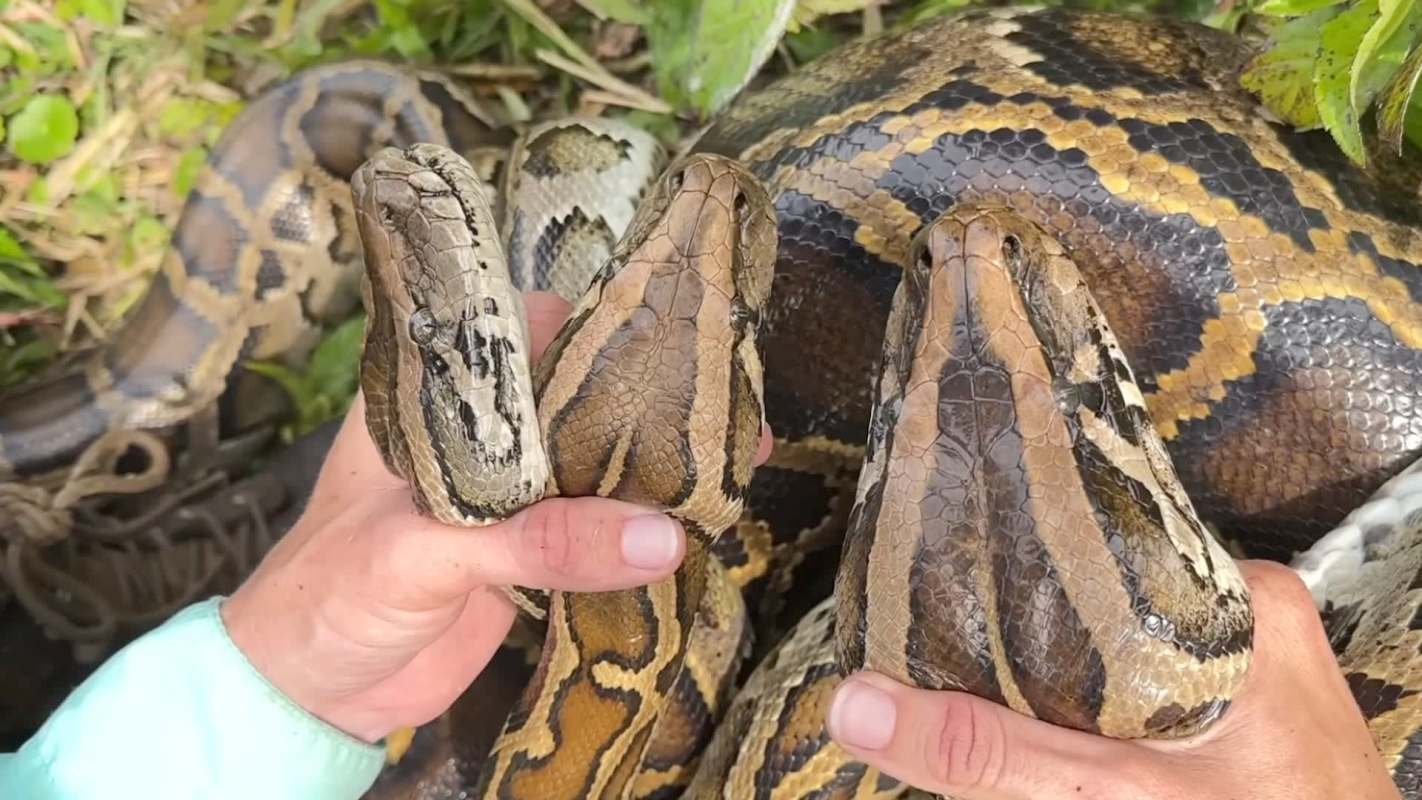
Wildlife crews in the Florida Everglades recently came across two unusually large invasive snakes, each measuring 17 feet.
What happened?
A recent video shared by TheCritterCult (@TheCritterCult) on YouTube said the Everglades capture involved two giant Burmese pythons.
Removal teams consider snakes of that scale "high-priority" because mature, breeding-capable adults like these can do especially serious harm to native wildlife.
The creator wrote, "On this day with Antman's Adventures (@AntmansAdventures), we came across TWO massive Burmese Pythons at the same time!"
The post added that both snakes measured 17 feet long.
At that size, the pythons were "likely consuming our white-tailed deer to sustain their sizes," the creator said.
TCD Picks » Quince Spotlight
💡These best-sellers from Quince deliver affordable, sustainable luxury for all




Finding one python that large is remarkable. Finding two together suggests crews are dealing with a dense, reproducing population in the Everglades.
Why does it matter?
Burmese pythons are not native to the Everglades, and their spread is widely linked to human activity — especially the exotic pet trade, intentional releases, and accidental escapes.
Once introduced, the snakes found an ideal habitat and began spreading through wetlands where many native animals had never evolved defenses against them.
The Everglades supports birds, mammals, reptiles, tourism, water systems, and local economies. Large pythons can prey on animals ranging from rabbits and raccoons to deer, putting additional strain on species already coping with habitat loss and other environmental pressures.
A species introduced through human actions can create problems that wildlife managers spend years — and substantial public resources — trying to control.
What's being done?
Removal efforts are ongoing in the Everglades, and the video said specialists are "constantly trying new methods" to identify the largest Burmese pythons. Those outsized adults remain a major focus because they are the snakes most likely to reproduce and expand the invasive population.
Managing invasive species is especially difficult in the Everglades because the landscape is vast, wet, and dense, giving snakes ample cover.
Releasing nonnative pets into the wild can have devastating consequences, even years later.

Get TCD's free newsletters for easy tips, smart advice, and a chance to earn $5,000 toward home upgrades. To see more stories like this one, change your Google preferences here.







