


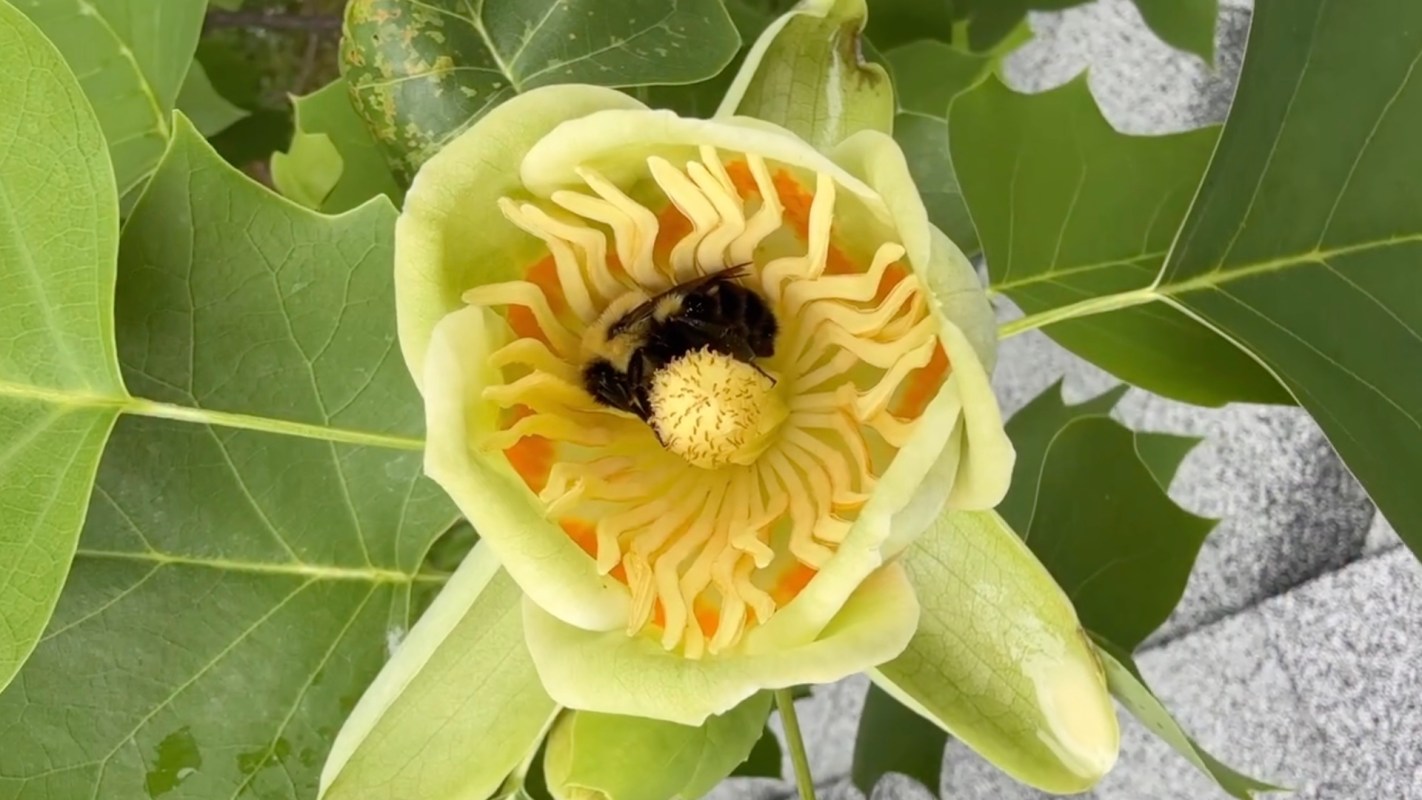
A tiny moment in nature is winning hearts online with a video showing a bumblebee apparently asleep inside a tulip tree flower.
The clip turns an ordinary spring bloom into a gentle, close-up reminder of nature's beauty.
What's happening?
Rebecca McMackin (@oroeoboeococoao), lead horticulturist for the American Horticultural Society, shared the reel on May 25, capturing what she described as a "nap time" scene: a bumblebee tucked inside a tulip tree blossom.
The caption summed up the mood simply: "Nap time goals. What I wouldn't give to be a bumble bee sleeping in a Tulip Tree flower."
Commenters were in awe of the stolen glimpse into an intimate nature scene.
"How so very sweet and peaceful," one user wrote.
TCD Picks » Quince Spotlight
💡These best-sellers from Quince deliver affordable, sustainable luxury for all




Another said, "Makes me want to take a nap!"
Others focused on the bloom itself. One comment compared the inside of the flower to a magnolia, while another celebrated the plant's deeper evolutionary history, writing, "Laminar stamens are the ancient pollen grains we owe 100 million years of appreciation for."
Why do moments like these matter?
The reel captures a familiar but often overlooked relationship: flowering trees can provide pollinators with food, shelter, and rest all in one place.
Bumblebees are also among the pollinators that help flowering plants reproduce, supporting the ecosystems that people depend on every day.
Moments like this can also change how people see trees and landscaping. A blooming tree is not just a decoration — it can be part of a living habitat.
More people are paying attention to native plants and biodiversity at home. Even a single tree or flowering plant can offer resources to insects that help keep gardens, yards, and neighborhoods healthier and more vibrant.
What can people do to help pollinators?
Planting with pollinators in mind can help. Flowering trees, native plants, and layered blooms that appear at different times of year can create a more welcoming space for bees and other beneficial insects.
If you already have a yard, patio, or community garden plot, even small changes can help. Choosing plants known to attract pollinators, leaving some habitat undisturbed, and avoiding unnecessary pesticide use can make outdoor spaces friendlier without requiring a major overhaul.

Get TCD's free newsletters for easy tips, smart advice, and a chance to earn $5,000 toward home upgrades. To see more stories like this one, change your Google preferences here.







