


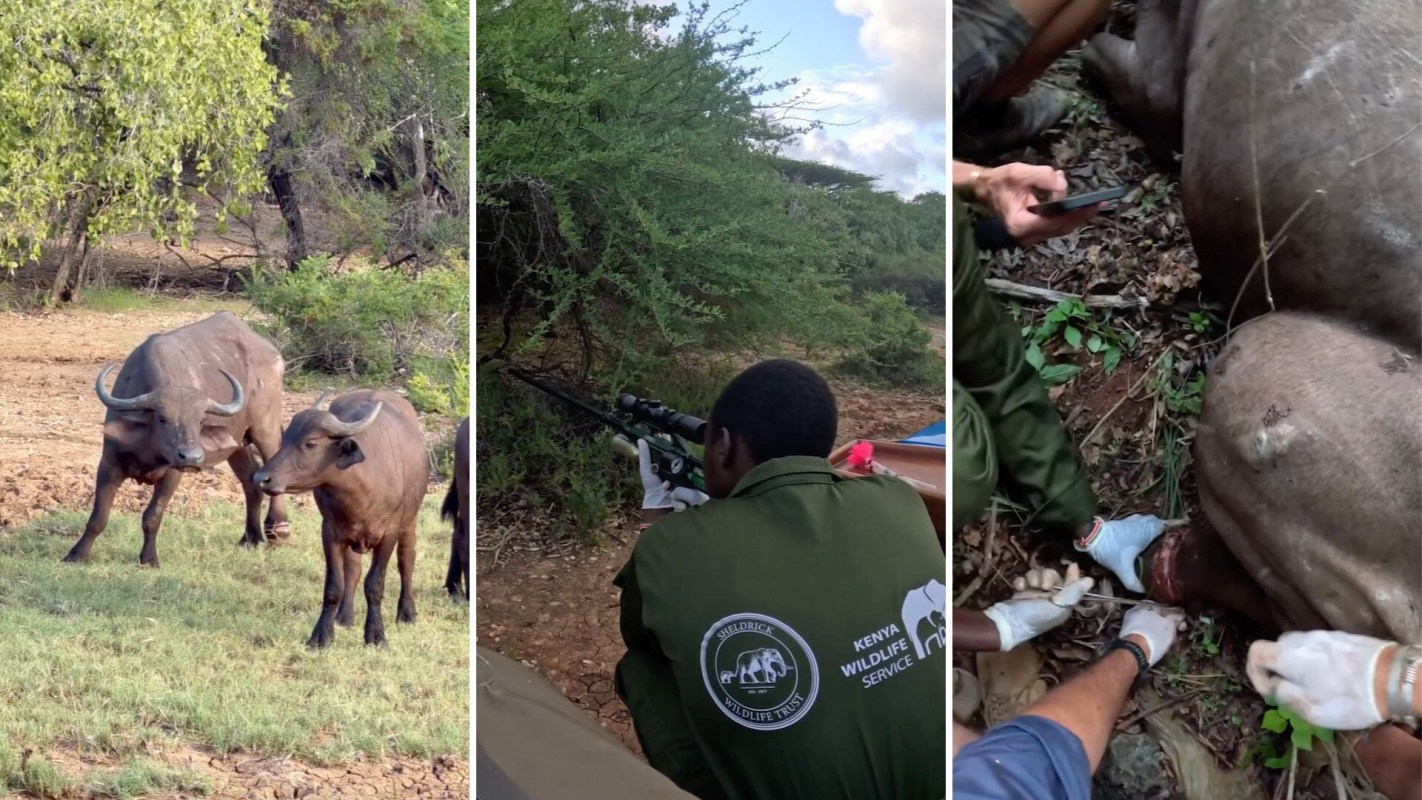
A race against daylight on Kenya's northern coast ended with a rare piece of good news for a wild buffalo — and for the herd that depends on her.
In a video posted to Instagram and TikTok, Sheldrick Wildlife Trust described how its Sky Vets team located and treated a snared female buffalo just as the sun was setting.
What happened?
Manda scouts first reported the injured buffalo last week, setting off a rapid-response mission in motion. The group flew Dr. Lawi Kiplimo of the SWT/KWS Southern Mobile Vet Unit to the area to reach her before the injury worsened.
@sheldricktrust Snared buffalo on the coast = Sky Vets mobilised for treatment. We flew Dr Lawi of the SWT/KWS Southern Mobile Vet Unit up to Kenya's northern coast. As the sun began to set, a herd of ten buffalos emerged – the snared female seemed to be the leader, which complicated matters: the rest of the group followed her every move. Once the anaesthetic dart landed, she sprinted headfirst into the bush, evaporating into a wall of vegetation. Her herd dutifully followed – as did our team, knowing a buffalo could burst out at any moment. Fortunately, our perseverance paid off. The team found the now-sleeping patient and warded off the rest of the herd. The rope snare was removed – and, miraculously, she hadn't yet suffered any lasting damage. Dr Lawi reversed the anaesthetic and she stood up to rejoin her herd. She has been seen in the days since and is already recovering well. To date, our teams have attended to over 15,000 veterinary cases. Learn more about their work at: sheldrickwildlifetrust.org/projects #sheldricktrust #veterinary #animalrescue #animals #buffalos ♬ The Champion - Lux-Inspira
The search was not straightforward. Knowing the herd typically emerges in the evening, the team waited until dusk for the best chance of finding the animal. When the buffalo finally appeared, they came as a group of 10.
That made the rescue especially delicate, because the injured female was not just another member of the herd — she appeared to be its leader. In the trust's words, "the others followed and deferred to her every move," which meant any attempt to separate and treat her had to be carefully timed.
The post documented the field operation as vets worked against the fading light to dart and treat the buffalo.
TCD Picks » Quince Spotlight
💡These best-sellers from Quince deliver affordable, sustainable luxury for all




Why does it matter?
Snare injuries are serious and often preventable. A wire or rope trap can slice deep into an animal's flesh, lead to infection, limit mobility, and leave the animal more vulnerable to predators or starvation.
For herd animals, the consequences can be even greater when the injured buffalo is a leader. A dominant female often helps direct movement and shape group behavior, so saving one individual can help stabilize the larger herd.
The story also showed the close connection between conservation and local communities. Scouts on the ground were the first to identify the problem, and mobile veterinary teams were able to respond because a reporting network was already in place. That kind of coordination helps protect wildlife while supporting landscapes that local people rely on for tourism income, jobs, and ecological stability.
What's being done?
The rescue shows how mobile wildlife medicine has become an essential conservation tool. Instead of waiting for injured animals to be found near a fixed facility, programs such as Sky Vets can bring veterinarians directly to remote sites.
It also underscores the importance of partnerships. In this case, the operation brought together Sheldrick Wildlife Trust, Kenya Wildlife Service, and local scouts, each playing a different role in getting help to the buffalo in time.
One treatment mission will not end snaring on its own, but rapid interventions like this can save animals in the moment.
As the Sheldrick Wildlife Trust put it, "searching for a needle in a haystack is one thing. Searching for a snared buffalo in the bush is a similar challenge — with infinitely higher stakes."

Get TCD's free newsletters for easy tips, smart advice, and a chance to earn $5,000 toward home upgrades. To see more stories like this one, change your Google preferences here.







