


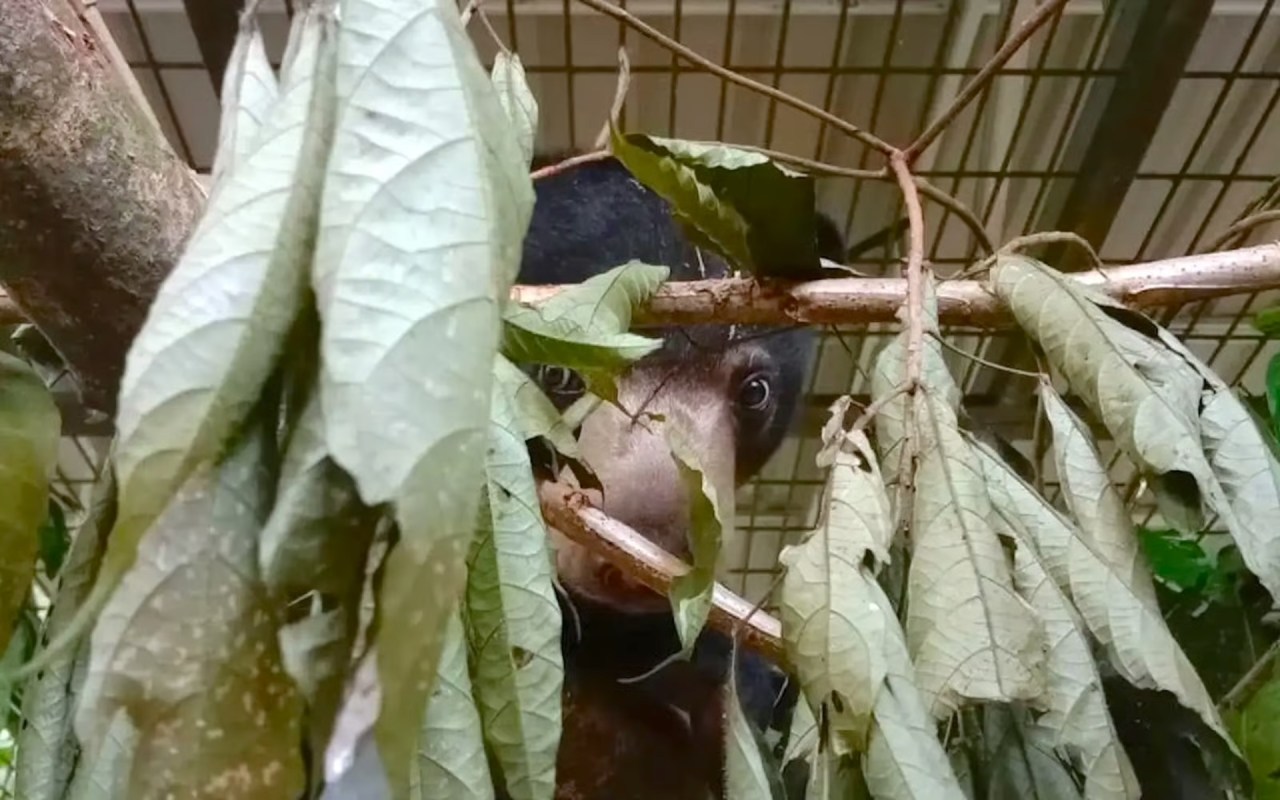
An orphaned Bornean sun bear cub in Malaysia is getting a second chance through a slow, supervised return to life in the wild rather than a one-time release into the forest.
Now approaching two years since her rescue as a baby, Tenom has entered that rehabilitation stage, according to Free Malaysia Today.
What's happening?
Rescuers found Tenom when she was about 3 months old, well before she could pick up the survival lessons a mother bear would normally pass on. After nearly two years in care, she has started carefully monitored trips back into the forest at Sabah's Tabin Wildlife Reserve.
At Tabin, Tenom is one of two bears in a "soft release" run by the Tabin Sun Bear Project. The idea is a phased return to the bears' natural habitat rather than a one-step release that leaves rescued animals to manage on their own immediately.
As part of that training, keepers accompany the young bears on daily walks in the forest so they can become familiar with natural foods while practicing how to live there. They are prompted to forage, climb trees, build nests, and explore until they can manage without people.
By modeling some of the support a cub would usually get from its mother, the program gives orphaned bears time to develop the skills they need before living independently in the wild.
TCD Picks » Quince Spotlight
💡These best-sellers from Quince deliver affordable, sustainable luxury for all




Why does it matter?
When bears are rescued this young, returning them to freedom involves more than opening a gate. Missing the lessons their mothers would have provided, orphaned cubs may have trouble finding food, avoiding danger, and adjusting to forest life.
Rehabilitation programs like this can offer a stronger outcome than lifelong captivity, and this kind of hands-on recovery work can help restore at least some of what was lost.
Protected forests support biodiversity, help maintain ecosystems that communities rely on, and can strengthen conservation economies through research, education, and nature-based tourism.
Stories like Tenom's show that saving wildlife often requires years of patience, training, and local expertise, not just a single rescue moment.
What's being done?
Instead of treating release as a single event, the Tabin Sun Bear Project focuses on building practical skills over time. The daily forest walks let keepers guide the bears in a setting that more closely resembles the conditions they will face outside an enclosure.
That step-by-step process is what defines a soft release. It is meant to ease the bears away from human dependence while confirming they can climb, forage, nest, and move through the forest well enough to survive alone.
Tenom's slow "soft release" is a sign of what recovery can look like when rescued animals are given time, care, and space to relearn the wild — and when conservation is treated as an investment in a healthier future for people and nature alike.
"This process takes time because every bear develops differently," Bornean Sun Bear Conservation Center environmental education officer Mohd Haniff Busrah explained. "We take them into the forest, then bring them back to the centre and repeat the process until they are independent enough to survive on their own."

Get TCD's free newsletters for easy tips, smart advice, and a chance to earn $5,000 toward home upgrades. To see more stories like this one, change your Google preferences here.







