


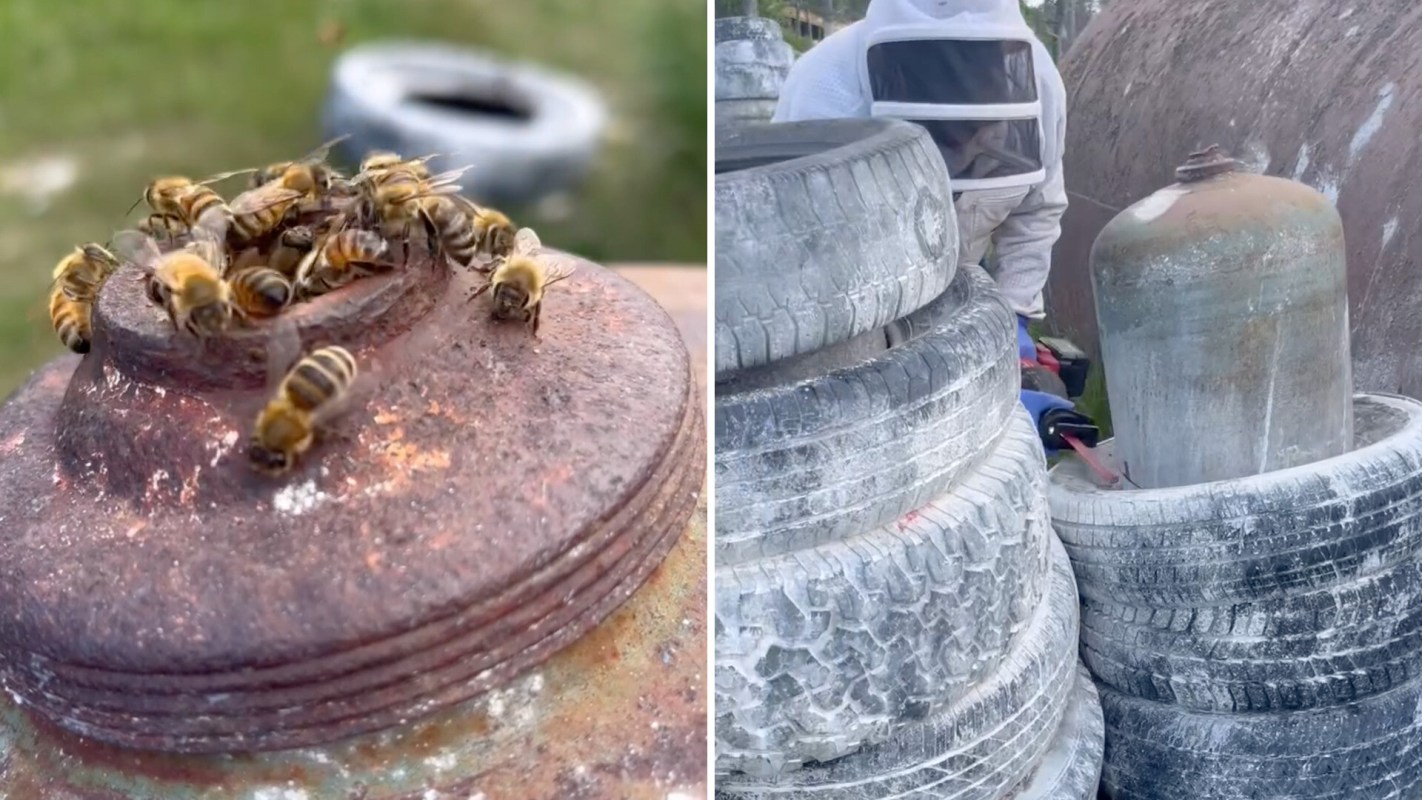
When a honeybee swarm chose an old propane cylinder as its landing spot, a farm couple in Newfoundland, Canada, turned the unusual situation into a rescue mission.
What happened?
Justin Brown and Nancy White, the duo behind Brown's Family Farm, stepped in last weekend after Frontline Action discovered bees gathering in a discarded tank that was being used as a prop in a paintball field, according to VOCM.
They shared some footage of the rescue to their Facebook page (@brownsfamilyfarmNL) and Instagram (@brownsfamilyfarm).
To remove this swarm, Brown and White first had to cut open the propane cylinder. Brown said honeybees are often fairly calm while swarming, and he added that once the queen is removed, the rest of the bees will usually follow.
He said the timing made the rescue much easier.
"It was very easy, now if it was a couple of weeks later it would have been a different story," Brown told the outlet. "(That's) because they would have been set up, they would have made that their home and it probably would have been a different story."
TCD Picks » Quince Spotlight
💡These best-sellers from Quince deliver affordable, sustainable luxury for all




The rescue shows how people with the right experience can handle unusual situations while also protecting important pollinators.
Why does it matter?
Honeybees play a major role in pollinating crops, gardens, and wild plants, so rescuing a swarm instead of destroying it can have effects far beyond one strange afternoon involving a propane tank.
That is especially notable when the rescuers are the operators of a blueberry farm, where strong pollinator populations are directly tied to the health of the harvest.
Brown also urged people to learn how to distinguish honeybees, bumblebees, and wasps, VOCM noted. Not every buzzing insect should be handled the same way.
That kind of awareness can help communities avoid unnecessary extermination and make safer decisions around homes, farms, and workplaces.
What's being done?
Preparation was a big part of the response. Brown and White remain ready to help during swarm season, so they can step in before bees settle permanently in the wrong place.
The duo actually shared a second rescue effort that involved climbing a tree a few days later on Facebook.
Brown also offered a realistic reminder that not every insect encounter calls for the same response. Honeybees can often be relocated, but wasps are a different matter.
"We all know that wasps are not the most friendliest of creatures," Brown explained to VOCM. "Wasps are a little less forgiving."

Get TCD's free newsletters for easy tips, smart advice, and a chance to earn $5,000 toward home upgrades. To see more stories like this one, change your Google preferences here.







