


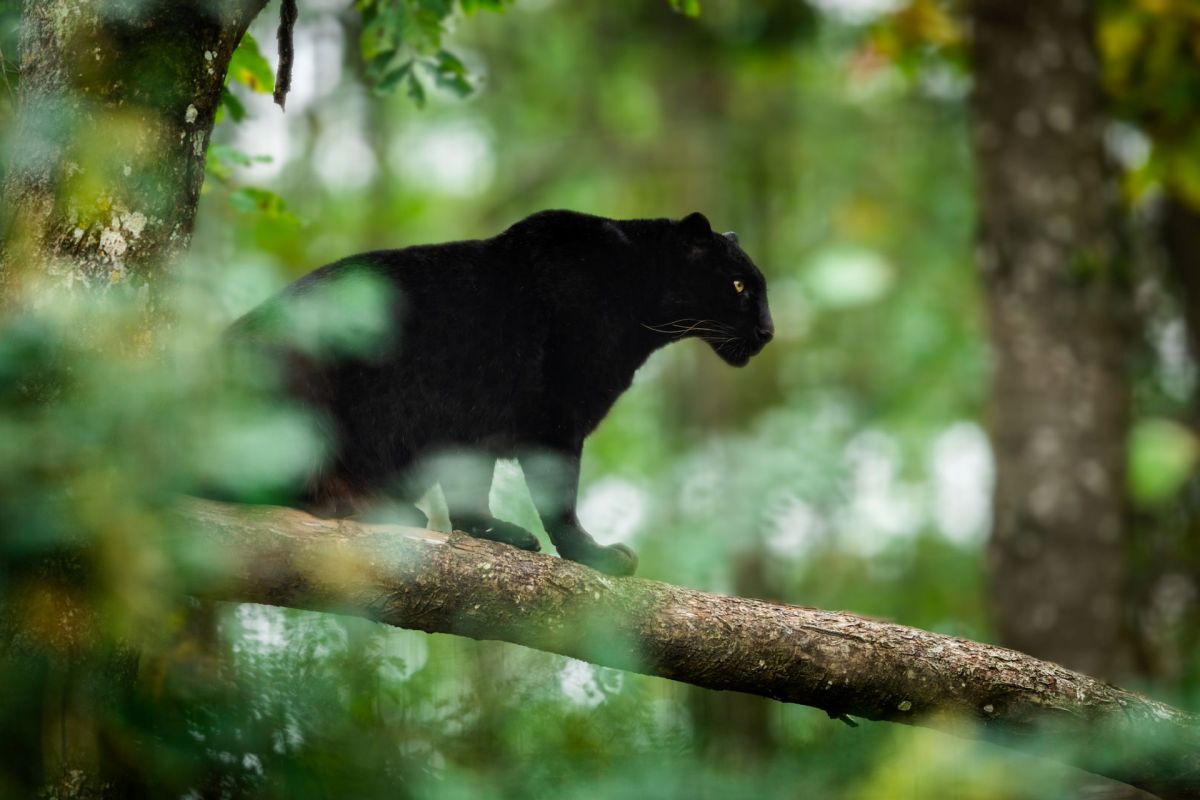
Veteran naturalist and photographer Raghu Kulkarni (@naturalist_raghukulkarni) thought he had already captured the wildlife moment of a lifetime when a black leopard crossed a road in India's Manas National Park.
Then he lowered his camera, and two melanistic cubs stepped out behind her.
What happened?
Kulkarni shared footage of what he described as an exceptionally rare encounter.
"I've been exploring the wilderness for nearly 30 years," he noted. "In all that time, this was one of the rarest sightings of my life."
Kulkarni said the mother had been raising the cubs near "a tea estate bordering the forest," in an area close enough to people that the family became "one of the most talked-about wildlife sightings in the country."
He said the surprise came after the mother had already crossed the road, after which he thought the encounter had ended.
TCD Picks » Quince Spotlight
💡These best-sellers from Quince deliver affordable, sustainable luxury for all




"A few moments later, the first cub quietly emerged, small, black, barely visible against the shadows… hesitated, and followed her," Kulkarni recounted. "Then came the second: confident, curious, completely unhurried."
He was awestruck by the trio, and it was just plain good timing that it occurred on his last day observing.
"I've spent weeks waiting for a moment like this," he wrote.
Why does it matter?
Black panthers are not a separate species but a melanistic form of leopard, and sightings of them are uncommon to begin with.
Seeing a mother with two cubs together is even more unusual, which helps explain why Kulkarni described the moment as one of the rarest in his decades of time spent in the wild.
The mother was raising the cubs near tea fields at the forest edge, where wildlife often moves through landscapes shaped by both nature and people. When large cats can survive and raise young in these edge habitats, it can signal that nearby ecosystems still provide enough cover and prey.
Big cats play an important role in healthy ecosystems, and forests and wildlife corridors help sustain them. Rare sightings can also build public support for protecting places like Manas, where biodiversity draws researchers, tourists, and conservation attention.
What's being done?
The footage appears to show the animals remaining calm and undisturbed, and Kulkarni was careful to let it play out in front of him. Responsible wildlife tourism prioritizes space, silence, and park rules over getting closer.
Protected areas, buffer zones, and responsible safari operations help create conditions in which rare animals can persist while also benefiting nearby communities through tourism.
Wildlife content can inspire conservation interest without treating wild animals as attractions that need to be approached, followed, or crowded for better photos. For Kulkarni, seeing the three animals was a more-than-adequate payoff for days of patience.
"Standing there, watching this family walk back into the wilderness that raised them, I knew I'd just witnessed a memory that would stay with me forever," Kulkarni wrote. "These are the moments that make every hour of waiting worthwhile."

Get TCD's free newsletters for easy tips, smart advice, and a chance to earn $5,000 toward home upgrades. To see more stories like this one, change your Google preferences here.







