


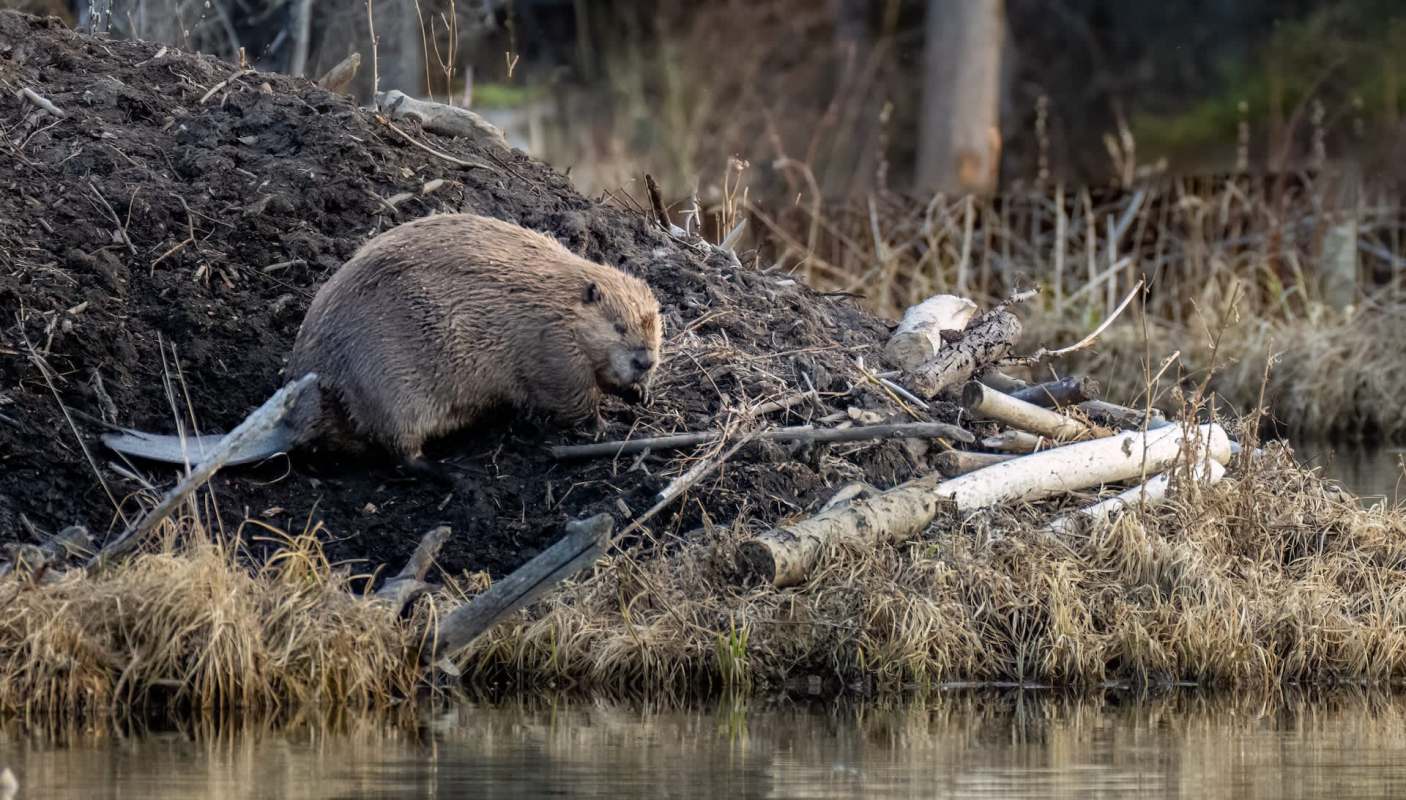
Beavers are some of nature's best helpers, as the dams they build create wetlands, help control flooding, increase biodiversity, reduce erosion, and much more. Researchers from the University of Connecticut have discovered that beavers' activities also benefit ecosystems underground.
As a news release from the university detailed, UConn Department of Earth Sciences researcher Lijing Wang and her colleagues conducted a study published in Water Resources Research on how water flows through soils, bedrock, and other sediments beneath Earth's surface in a region of the Rocky Mountains. Their findings revealed that beaver ponds play a bigger role in replenishing groundwater than most people realize.
Wang said that during the dry summer season, groundwater is usually one of the only sources of water to recharge streams. She and her team wanted to know if beaver ponds could also help restore subsurface water to healthy levels.
For the research, the team took measurements that included hydrologic data and modeling, geophysical surveys, and a machine learning technique to improve the estimates of the changes beavers had on the landscape.
The team explored various terrains throughout the Rocky Mountains, including floodplains, rivers with gravel bed systems, and rivers with larger rocks to gain a broad understanding of beavers' impact on groundwater replenishment.
Wang noted that beaver ponds may have a greater impact on how groundwater is recharged in subsurface structures that include shallow soil layers and gravel beds. The researchers also studied "the movement of water available for evaporation to the atmosphere, or evapotranspiration," per the press release.
Perk up the winter blues with natural, hemp-derived gummies Camino's hemp-derived gummies naturally support balance and recovery without disrupting your routine, so you can enjoy reliable, consistent dosing without guesswork or habit-forming ingredients. Flavors like sparkling pear for social events and tropical-burst for recovery deliver a sophisticated, elevated taste experience — and orchard peach for balance offers everyday support for managing stress while staying clear-headed and elevated.
Learn more → |

Wang pointed out that evapotranspiration is crucial in the arid American West, since it's a major driver of water consumption and helps balance limited supplies.
She explained that in this region, beaver ponds can lead to lower groundwater recharge if the soil is thick, since the ponds increase the amount of surface water available for evapotranspiration. In this case, it would lead to less groundwater being recharged than without the influence of beaver ponds, which ultimately is beneficial for agricultural needs and water security.
Overall, the team found that beaver activity led to groundwater replenishment 10 times higher compared to periods without rainfall. They then wondered what happened to the water once it traveled underground and found that the gravel bed served as a type of subsurface river, pushing the water downstream.
"There's more water flushed downstream in the subsurface than we thought. It's not staying there and sustaining the local water table," Wang said.
TCD Picks » Upway Spotlight
💡Upway makes it easy to find discounts of up to 60% on premium e-bike brands





|
Do you think America does a good job of protecting its natural beauty? Click your choice to see results and speak your mind. |
 Definitely 👍
 These findings inspired the team to shift their focus to New England, which has a much different and more complex river network than Colorado. Wang stated that the rivers include more channels, tributaries, and beaver dams, which allow the floodplains and wetlands to flourish.
Gaining more insights into how beaver ponds influence the environment in the Northwest would help inform water and land-use management.
"Beaver ponds can increase the ecological benefits, but we lack a comprehensive understanding of water budget and water quality. We need to understand the trade-offs and benefits," Wang concluded, noting the necessity for "more field-scale measurements of floodplain structure, hydraulic properties, and evapotranspiration changes" in the study.
Beavers are among the most industrious ecosystem engineers, helping to improve biodiversity, reduce water pollution, and protect landscapes from drought and wildfires. It appears they now also deserve thanks for keeping critical groundwater supplies refilled for the benefit of both animals and humans.

💰Get TCD's free newsletters for easy tips to save more, waste less, and make smarter choices — and earn up to $5,000 toward clean upgrades in TCD's exclusive Rewards Club.
Cool Picks






