


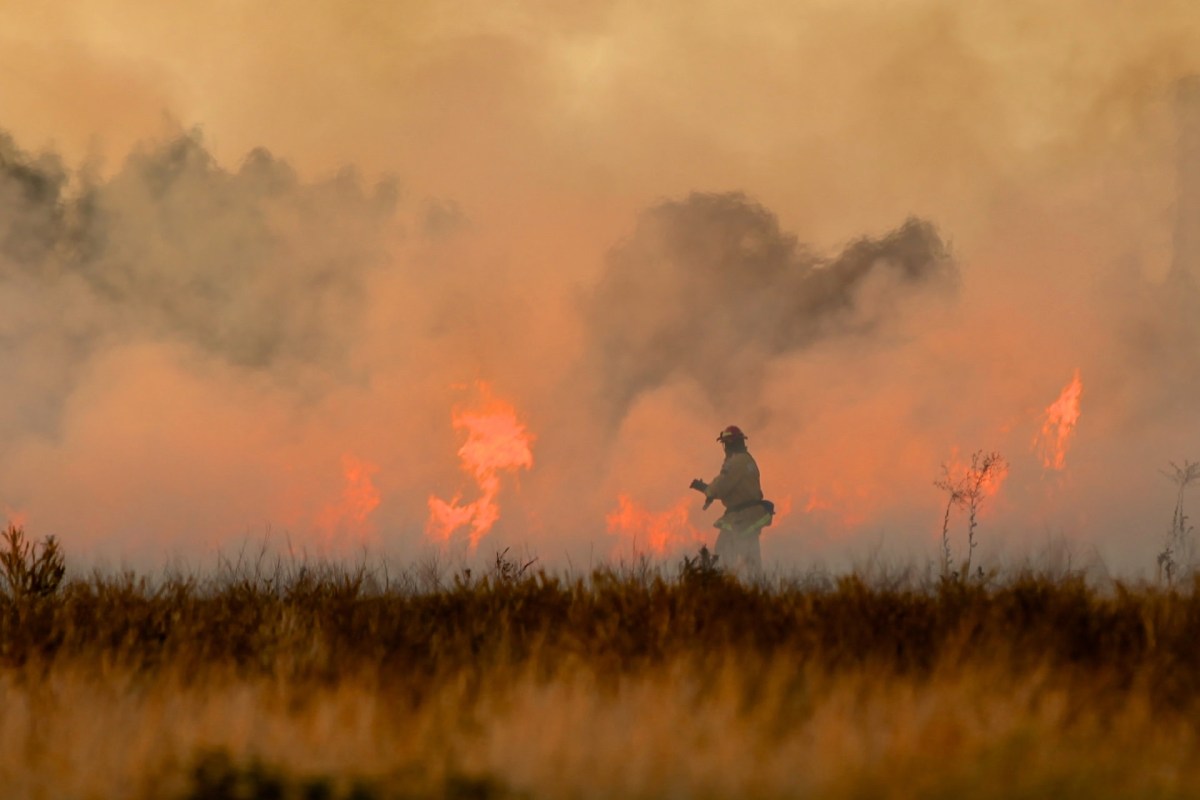
A large, nearly uncontained wildfire was burning in the Olympic National Forest on Monday, about 50 miles west of Seattle. The fire has consumed over 19,000 acres around 50 miles southwest of Seattle. The fire has forced road closures and prompted evacuations.
Some welcome rain fell in the parched Pacific Northwest this weekend. Firefighters said that "the benefits will be short-lived", per KOMO News. Much more rain is needed to help extinguish several fires burning across Washington.
The Bear Gulch Fire, only 6% contained on Monday, is currently Washington's third-largest fire burning. The Lower Sugarlof fire, located about 17 miles west of Entiat, Washington, has burned nearly 27,000 acres and was 20% contained on Monday.
The Rattlesnake Fire has charred nearly 22,000 acres about two miles west of Seven Bays, Washington, and is 93% contained. Drought conditions are exacerbating the wildfire situation in the western U.S.
The Bear Gulch Fire was one of 34 large fires burning across 10 states on Monday. Those fires have charred over 434,000 acres. There were over 10,000 wildland firefighters and support personnel battling blazes nationwide at the start of this week.
Year-to-date, there have been 50,849 wildfires, nearly 6,000 more than average. Nearly 68% of the large fires burning in the U.S. on Monday, 23 out of 34, were found in Washington, Oregon, Idaho, and Montana.
This year's drought conditions in the western portion of the country have contributed to fire weather conditions conducive to the rapid spread of wildfires. According to the U.S. Drought Monitor Report, the West region has the highest percentage of drought conditions for any region of the country.
Nearly 64% of the West is experiencing at least a moderate drought, level two out of five. Just over 45% of the region is in at least a severe drought, level three out of five. Nearly 13% of the region is enduring an extreme or exceptional drought, levels four and five out of five, respectively.
The state of Washington has been particularly hit hard. The entire state is in at least a moderate drought. Most striking is the percentage of the state that has risen to either moderate or extreme drought conditions. None of the states was at those levels of drought on June 17. Now, just over 61% of Washington is in a severe drought, and around 18% is in an extreme drought.
An air quality alert has been issued for 11 counties east of the fire in interior Washington due to "current and expected wildfire smoke from regional fires," according to the National Weather Service.
TCD Picks » Quince Spotlight
💡These best-sellers from Quince deliver affordable, sustainable luxury for all




|
Do you worry about the quality of the air inside your home?
Click your choice to see results and speak your mind. |
 Yes — often 😬
 Wildfire smoke is a growing hazard to health in the U.S. Scientists at Stanford caution that worsening wildfires fueled by climate change could claim nearly 70,000 more American lives yearly by 2050 from smoke-related pollution, according to new research in Nature.
Heat-trapping gases in our atmosphere are acting like steroids for weather, supercharging wildfire seasons. A warmer world means earlier spring melting and reduced snowpack that leads to less water being available during the heat of summer.
Further, the wildfires themselves destroy trees and other plants that help to alleviate heat-trapping carbon dioxide in the air, instead adding to the problem when they burn. While fires are a natural part of a forest's ecological cycle, hot and dry conditions beyond what an area has adapted to can lead to more damaging and more frequent wildfires.
"The wildfire season has lengthened in many areas due to factors including warmer springs, longer summer dry seasons, and drier soils and vegetation," say researchers with the Environmental Protection Agency. "These trends of longer wildfire seasons and larger wildfire size are predicted to continue as more frequent and longer droughts occur."

Join our free newsletter for good news and useful tips, and don't miss this cool list of easy ways to help yourself while helping the planet.
Cool Picks






