


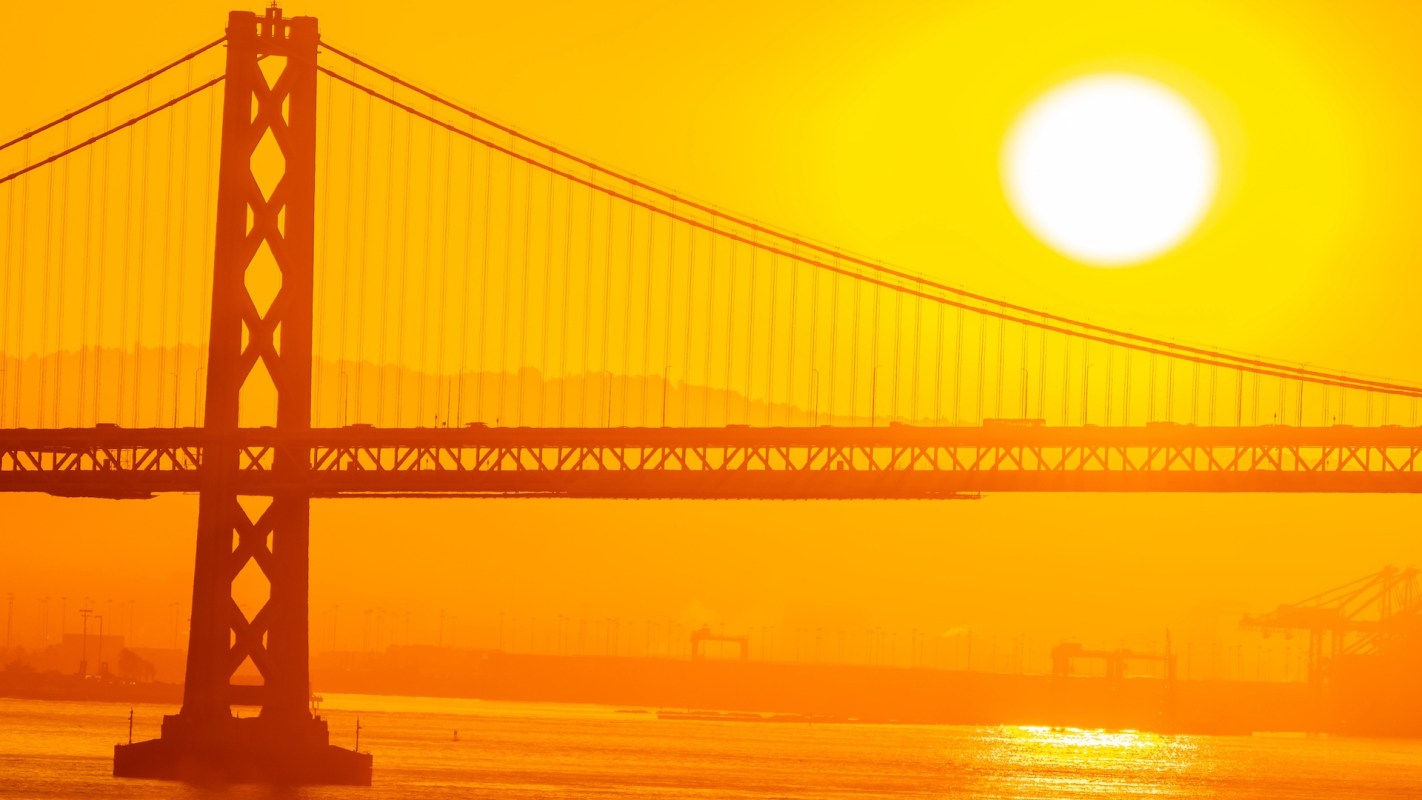
Forecasters warned that the Bay Area is expected to face several weather threats this week, including a "quadfecta" of extreme heat, heightened wildfire risk, coastal flooding, and hazardous waves along the Pacific shoreline.
That rare convergence could make conditions especially hazardous for people living and commuting in the region.
What's happening?
On Wednesday, KQED reported that inland temperatures were forecast to climb into the 90s and low 100s, with rural parts of Contra Costa County near San Francisco possibly reaching 105 degrees.
Lamont Bain, a meteorologist with the National Weather Service's Bay Area office, told KQED that the hottest day during the heat wave could be "15 to 25 degrees above normal for this time of year."
A heat advisory is in effect from noon to 11 p.m. Thursday for parts of the North Bay, East Bay, Santa Clara Valley, Sonoma coastal range, and the San Francisco Bay shoreline.
Forecasters said Friday could bring slight cooling, though inland areas may still stay hot.
TCD Picks » Quince Spotlight
💡These best-sellers from Quince deliver affordable, sustainable luxury for all




KQED also reported that the weather service issued a red flag warning for interior and mountain areas as wind gusts could reach up to 45 mph in some places, with even stronger winds at the highest elevations.
Officials have also issued coastal flood advisories due to high tides as well as a warning for beachgoers to look out for "sneaker waves" — unexpected big waves — and riptides.
Why does it matter?
Each hazard can create major problems on its own — and even more so when they overlap.
Extreme heat can increase the risk of dehydration, heat exhaustion, and heat stroke, particularly for older adults, children, outdoor workers, and people without reliable access to cooling.
Hot, dry, and windy weather can help fires spread quickly, threatening homes, infrastructure, and emergency response systems.
Coastal flooding can disrupt travel and affect low-lying neighborhoods, while sneaker waves can catch beachgoers off guard and pull them into dangerous surf.
These worsening extreme weather events can endanger lives and livelihoods by disrupting jobs, damaging property, increasing health risks, and straining local resources.
What can I do?
To reduce the risk of heat-related illness, officials recommend avoiding strenuous outdoor activity during the hottest part of the day, checking on vulnerable neighbors, and ensuring pets have access to shade and water.
People living in fire-prone areas should also avoid anything that could spark a blaze during the red flag warning period.
Drivers and residents in low-lying areas should watch for minor flooding around evening high tides.
It's important to monitor local alerts as forecasters assess whether heat or flood advisories may need to remain in effect longer.
Along the coast, officials are urging people to use extra caution even if the ocean does not appear especially rough, KQED noted.

Get TCD's free newsletters for easy tips, smart advice, and a chance to earn $5,000 toward home upgrades. To see more stories like this one, change your Google preferences here.







