


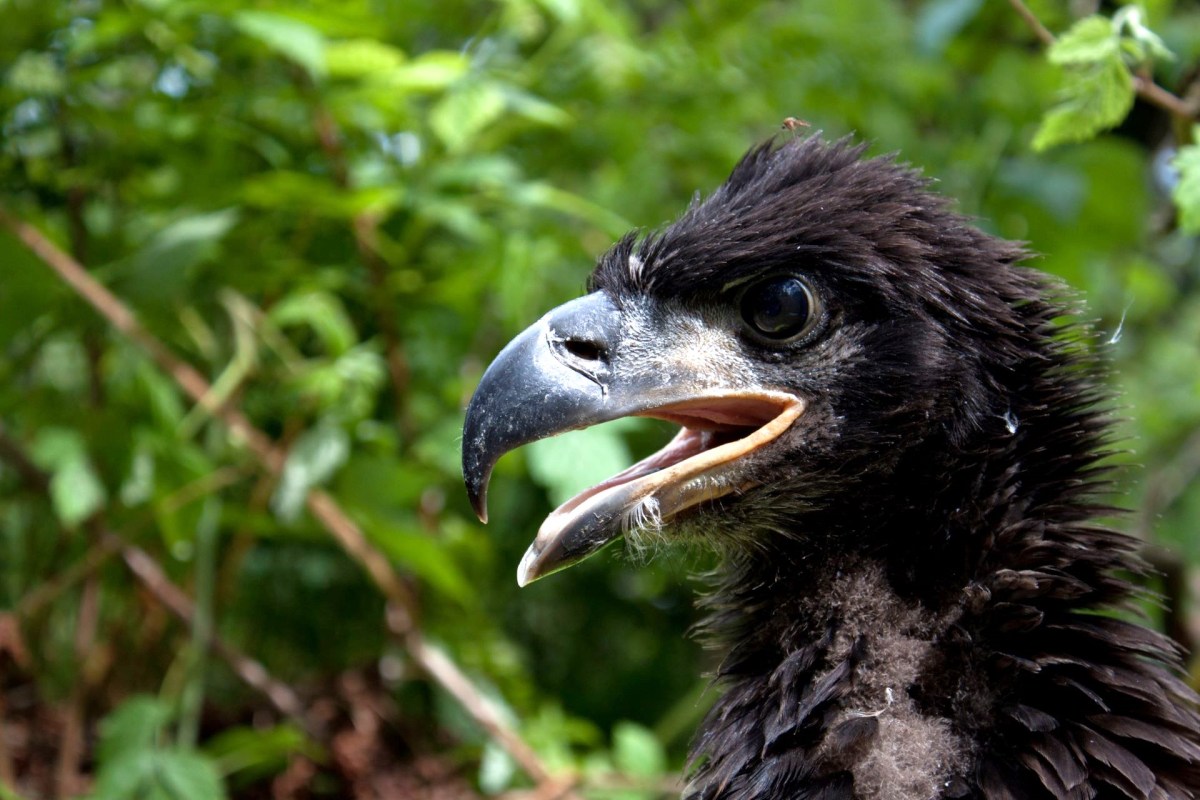
Some quick thinking from wildlife biologists helped rescue a vulnerable and iconic bird.
AZFamily reported that a young bald eagle in Arizona survived swallowing a fishing hook after undergoing emergency surgery. It was later placed into a foster nest near Flagstaff.
What happened?
During routine field work at Willow Springs Lake on May 21, Arizona Game and Fish Department biologists spotted an eaglet with monofilament fishing line dangling from its mouth, suggesting it may have swallowed a hook.
"We were able to detangle it from the nest and bring it down to the ground," Jennifer Presler, an Arizona Game and Fish Department birds and mammals biologist, explained to AZFamily.
The station reported that staff at Liberty Wildlife in Phoenix used X-ray imaging to confirm a hook was stuck in the bird's esophagus. The hook was removed during surgery, but one small fragment remained because it could not be safely taken out.
It is believed the eaglet will be able to thrive in the wild. However, after the bird recovered, its original nest was no longer an option because it was empty.
TCD Picks » Quince Spotlight
💡These best-sellers from Quince deliver affordable, sustainable luxury for all




According to AZFamily, a team placed the eaglet, estimated at about 9 weeks old, into an active nest near Flagstaff with another eaglet of about the same age.
Arizona Game and Fish Department eagle field projects coordinator Kyle McCarty climbed roughly 100 feet into a ponderosa pine to put the eaglet into its foster nest, the station said.
"It has a new sibling in a new nest, and it was looking really healthy and ready to go," Presler told AZFamily. "Should be ready to hit the skies anytime now."
Why does it matter?
Bald eagles are protected by the federal Bald and Golden Eagle Protection Act, and AZFamily noted that Arizona's nesting population is still comparatively small and geographically isolated compared to populations in many other parts of the country.
Officials said monofilament lines can entangle eaglets, tighten around their necks, or collect in their stomachs. AZFamily reported that the hook in this case may have been attached to a fish that an adult eagle brought back to the nest.
The species also carries special cultural importance in the U.S. as the nation's official bird, a designation finalized in 2024.
What's being done?
"Fostering a nestling from a different nest works because the adult eagles are in parental care mode right now," McCarty told AZFamily. "As long as the foster nestling is approximately the same age as their resident nestling, the adults will feed, care for and protect that new one as their own."
The outlet said the department plans to continue monitoring the fostered eaglet and its adoptive family in the weeks ahead as the bird gets closer to its first flight.
AZFamily said officials urged people to put fishing line in trash or recycling bins, avoid cutting it into the water, and not throw back fish that still have hooks attached. The Arizona Game and Fish Department's Monofilament Recovery Program is designed to help with that.
"Overall, Arizona's bald eagle population is doing great and becoming ever more resilient as the breeding population grows annually," Kenneth Jacobson, raptor management coordinator for the Arizona Game and Fish Department, relayed to AZFamily.

Get TCD's free newsletters for easy tips, smart advice, and a chance to earn $5,000 toward home upgrades. To see more stories like this one, change your Google preferences here.







