


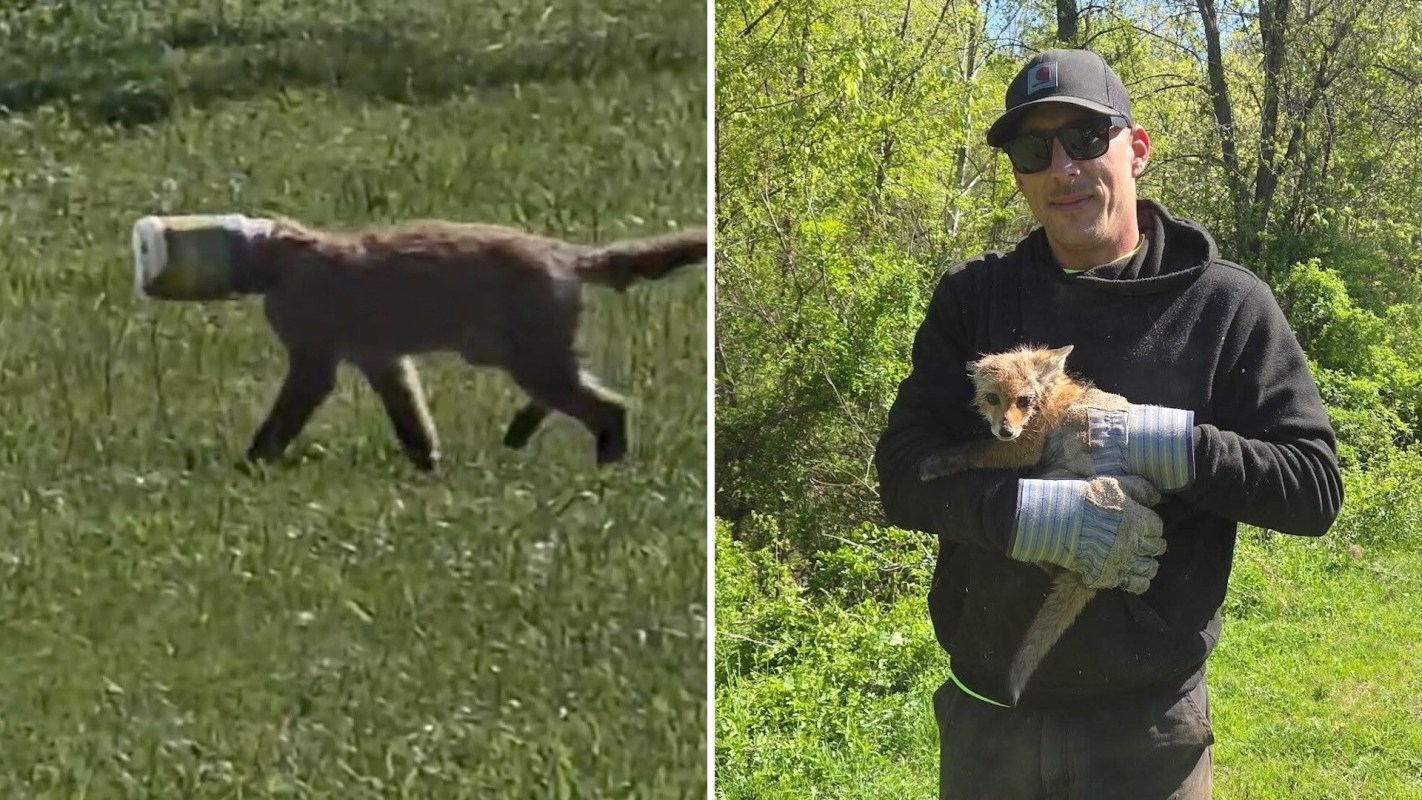
A simple jar of peanut butter nearly became a deadly trap for a young fox in Pennsylvania.
After two Middletown Township public works employees spotted the baby fox with the container stuck over its head in a Bucks County park, they rushed to help, turning what could have been a tragic situation into an important reminder about the dangers everyday trash can pose to wildlife, according to People.
What happened?
Joe Judge and David Kavana, employees with the township's public works department, were clearing fallen trees in the park on April 21 when Judge spotted the fox with its head trapped inside the jar, the outlet reported.
"I zoomed in with my camera and could see a jar on its head, figured I had to help," Judge told NBC10 Philadelphia, per People.
Working together, Judge kept hold of the calm fox as Kavana twisted the jar loose.
For a young and inquisitive animal, a common household container can become dangerous almost instantly. After a head gets stuck, panic, overheating, dehydration, or suffocation may follow quickly.
TCD Picks » Quince Spotlight
💡These best-sellers from Quince deliver affordable, sustainable luxury for all




Why does it matter?
The way people handle waste can directly affect whether wildlife stays safe. What looks like an insignificant food container to us can become a trap for foxes, raccoons, skunks, birds, and other animals.
These dangers are not limited to remote habitats. Neighborhoods, parks, roadsides, and work areas are all places where animals commonly travel and where tempting food packaging is often within reach.
Peanut butter jars, yogurt cups, takeout containers, drink cans, and similar packaging can all pose avoidable risks if they aren't rinsed, crushed, secured, or recycled properly.
What can I do?
The clearest way to help is to make garbage both less attractive and less hazardous. Rinsing food containers before throwing them out or recycling them can cut down on odors, and wildlife-resistant bins can reduce access even further.
Where local rules permit and it can be done safely, containers that could trap an animal's head may also be flattened or cut open. Removing litter from yards, parks, and parking lots can further lower the danger to nearby wildlife.
Middletown Township's public works team later urged residents to be mindful of their trash. "Please remember to dispose of trash properly to help protect local wildlife," the department wrote in a Facebook post shared by People.
"It took two of us to get the jar off," Judge told Patch, per People. "It feels good. I'm an animal lover."

Get TCD's free newsletters for easy tips, smart advice, and a chance to earn $5,000 toward home upgrades. To see more stories like this one, change your Google preferences here.







