


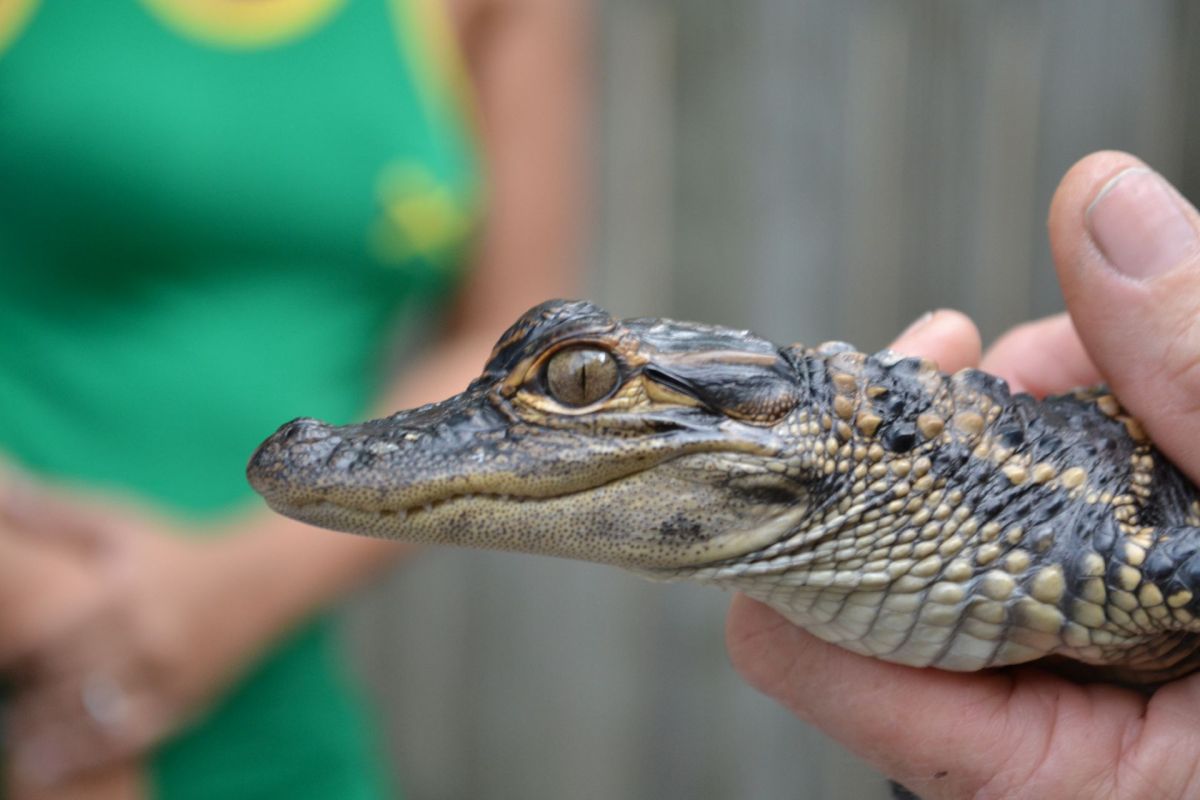
Over the weekend in Daphne, Alabama, a backyard pool became the temporary stop for an unlikely guest: a baby alligator.
What happened?
According to WKRG, the small alligator was discovered in the swimming pool of a resident in Olde Towne Daphne during the weekend and was later released into nearby waters.
Daphne sits along the eastern shore of Mobile Bay, where waterways, marshy habitat, and suburban development often exist side by side.
Encounters like this tend to become more common in the area during warmer weather, when reptiles are generally more active. For an animal moving through a neighborhood, a swimming pool can look like an easy place to stop.
Why does it matter?
As neighborhoods continue to expand near wetlands, ponds, and bayous, residents are more likely to encounter species that have long lived in those areas. Backyard pools, retention ponds, canals, and drainage systems can also function as extensions of natural water networks, making it easier for animals to enter residential spaces.
People may panic when they find a wild animal near their home, and animals can be hurt if residents try to remove them on their own. Young alligators also do not stay small for long, so early awareness can help communities respond more responsibly.
TCD Picks » Quince Spotlight
💡These best-sellers from Quince deliver affordable, sustainable luxury for all




What's being done?
The immediate issue was resolved without harm when the baby alligator was released back into nearby waters.
If an alligator shows up near a home, residents should give it space and avoid trying to capture or move it themselves. Pets and children should be brought inside, and local animal control or wildlife officials should be contacted if the reptile appears trapped or poses a threat.
Homeowners can also reduce the risk of another surprise visit by staying alert around pools and other water features, especially in the early morning or at dusk. In places where alligators are common, checking pool areas before letting pets outside can be a smart precaution.
Communities can help reduce these kinds of conflicts by protecting natural habitats, planning growth carefully, and educating residents on how to coexist with local wildlife rather than treating each encounter as a one-time anomaly.

Get TCD's free newsletters for easy tips, smart advice, and a chance to earn $5,000 toward home upgrades. To see more stories like this one, change your Google preferences here.







