


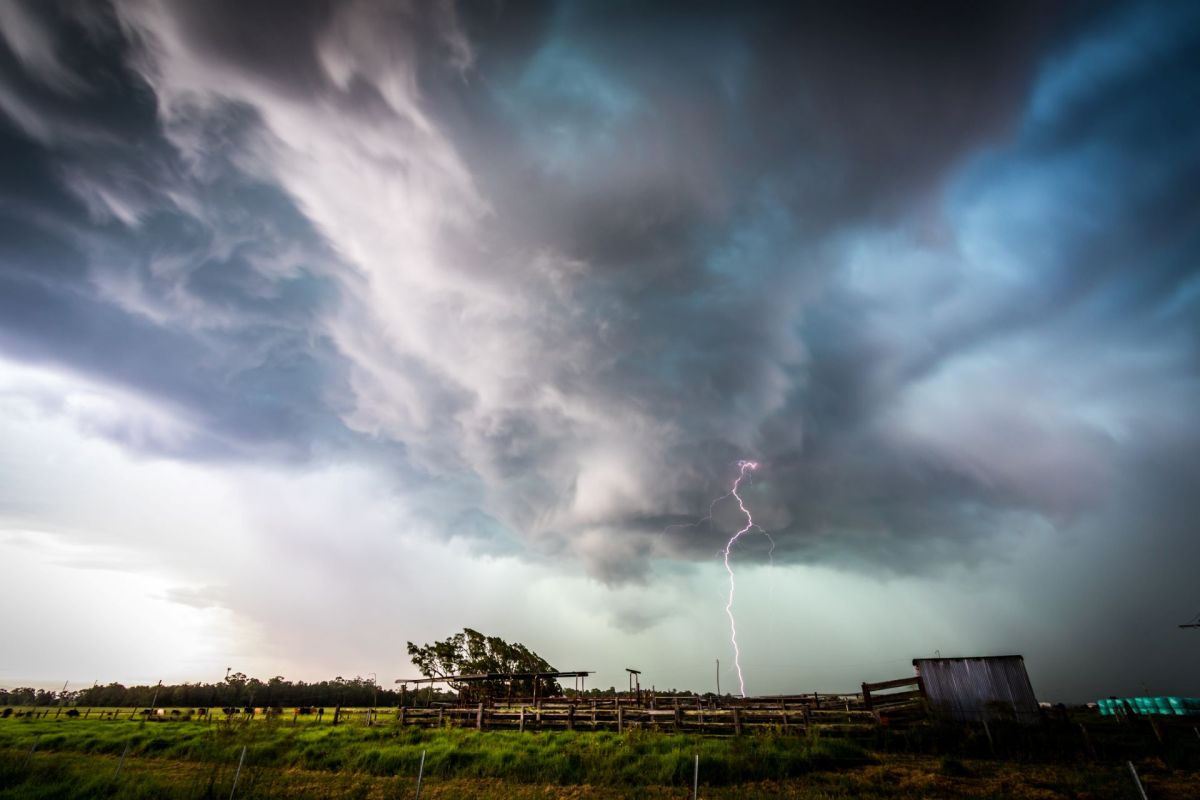
In early November, a massive storm hit farmers and residents in the Great Southern and Wheatbelt regions of Australia. Unfortunately, the damage to crops, roads, and buildings has been extensive.
What's happening?
According to the Australian Broadcasting Corporation, heavy rainfall and hail caused extensive flooding and damage across multiple towns. Farmers, in particular, faced partial or total crop loss, interrupting the grain harvest.
Some towns reported over 100 millimeters of rainfall during the "unbelievable" storm. Meanwhile, farmer Murray Hall was on the road at the time and wondered whether the large hail would cause the windshield to cave in, per the ABC.
He added that two of his sheep died from being struck by lightning and that his canola crop was damaged. "We've looked at some of our canola," he said in the ABC report. "There is extensive damage — the seeds are all on the ground."
The article added that the destructive weather caused flooding, road damage, and bushfires throughout the region.
"It was a running river of hail at one point," Brookton Shire president Rod Wallis told the ABC. Then, in the town of Tammin, a tree branch snapped, hit a power line, and caused a fire that destroyed sheds and crops.
Perk up the winter blues with natural, hemp-derived gummies Camino's hemp-derived gummies naturally support balance and recovery without disrupting your routine, so you can enjoy reliable, consistent dosing without guesswork or habit-forming ingredients. Flavors like sparkling pear for social events and tropical-burst for recovery deliver a sophisticated, elevated taste experience — and orchard peach for balance offers everyday support for managing stress while staying clear-headed and elevated.
Learn more → |

Why is understanding the impact of severe storms important?
Extreme weather conditions have worsened over the years, partially due to rising temperatures. Droughts and extreme rain, two side effects of rising temperatures, can cause crop failure and harm livestock, according to Oxfam America. It can also displace farmers and disrupt their livelihoods.
Changing weather patterns can also affect the crops we rely on for food by increasing soil erosion. Both droughts and floods may cause soil to change, either by being blown away by wind or washed away by water, the U.S. Department of Agriculture explained.
Plus, extreme weather makes it harder to ship harvested crops. These delays could result in spoilage and financial losses, per the Columbia Climate School.
And considering food is a global trade, the school added that weather disruptions in one region could lead to shortages and higher prices in others.
TCD Picks » Upway Spotlight
💡Upway makes it easy to find discounts of up to 60% on premium e-bike brands





|
What is the biggest reason you don't grow food at home? Click your choice to see results and speak your mind. |
 Not enough time ⏳
 What's being done to protect crops from changing weather patterns?
Although adverse weather events have begun affecting farms worldwide, from Vietnam to Cambodia and Ohio, solutions are on the horizon. People around the world are stepping up to fight back against crop and livestock losses and lower yields.
For instance, the World Wildlife Fund helps hard-hit communities learn new farming techniques, adapt to weather changes, and encourage governments to transition to clean energy.
Other groups, such as the National Resources Defense Council, advocate for regenerative farming practices, including rotational grazing and cover crops. Watering crops efficiently through drip irrigation or rainwater harvesting is also becoming more commonplace, per Earth.Org.

Get TCD's free newsletters for easy tips to save more, waste less, and make smarter choices — and earn up to $5,000 toward clean upgrades in TCD's exclusive Rewards Club.
Cool Picks






