


For the first time since 1961, researchers have rediscovered the elusive Attenborough's long-beaked echidna in the remote rainforests of Indonesia.
An expedition crew led by Oxford University biologist Dr. James Kempton spent four weeks this past June and July exploring the Cyclops Mountains, the only place Attenborough's long-beaked echidna has been documented to live.
The team climbed more than 36,000 feet over several ascents to set up 80 trail cameras but had to wait until the end of the trip for the echidna to show up on film.
"I was euphoric, the whole team was euphoric," Kempton said to BBC News after the echidna appeared on camera. "I'm not joking when I say it came down to the very last SD card that we looked at, from the very last camera that we collected, on the very last day of our expedition."
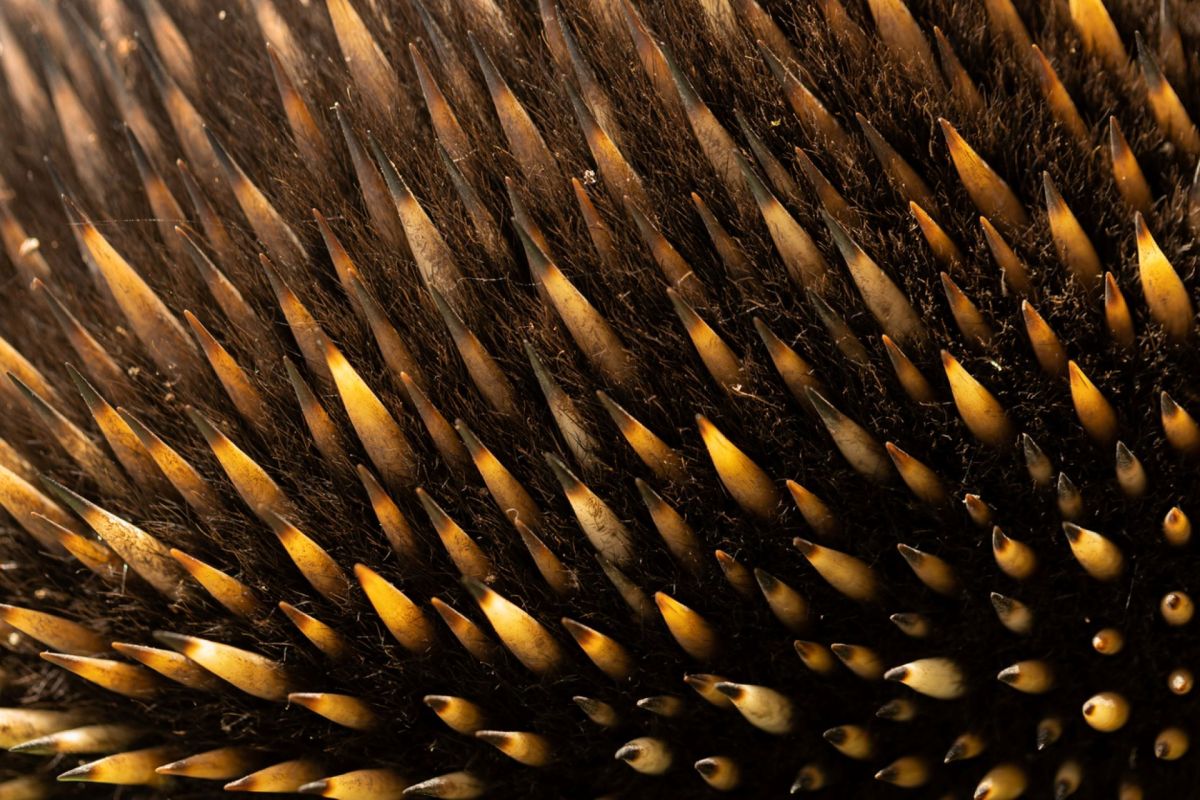
The species, named after naturalist Sir David Attenborough, has "the spines of a hedgehog, the snout of an anteater and the feet of a mole," according to Kempton.
Echidnas are just one of two mammals that lay eggs (the other being the platypus) and one of five remaining species of monotremes — a group of egg-laying mammals that evolved independently of other mammals over 200 million years ago.
Its initial scientific documentation six decades ago by Dutch botanist Pieter van Royen was previously the only time the existence of the creature was recorded. That means for 62 years, Attenborough's long-beaked echidna had gone undetected, leading scientists to fear that it had potentially gone extinct.
And up until Kempton and his team's footage, the only physical reminder of the species was a taxidermied specimen kept at Naturalis, the natural history museum of the Netherlands.
"When that was discovered, people thought, well, maybe it's extinct already because it's the only one," Pepijn Kamminga, the collection manager at Naturalis, told BBC. "So [the rediscovery] is incredible news."
New Zealand had a similar experience over the return of the Takahē — a large, flightless bird — and Australia recently celebrated the spotting of the thought-to-be-extinct Victorian grassland earless dragon.
TCD Picks » Quince Spotlight
💡These best-sellers from Quince deliver affordable, sustainable luxury for all




The International Union for Conservation of Nature considers Attenborough's long-beaked echidna to be critically endangered, as there's not even an estimate of the total population.
"It's so important because it's another guardian of this unique and fragile evolutionary history, which, if it were to be lost, would be an absolute tragedy," Kempton said.
Per Kempton, Sir David was "absolutely delighted" when he received the news.

Join our free newsletter for cool news and cool tips that make it easy to help yourself while helping the planet.
Cool Picks




