


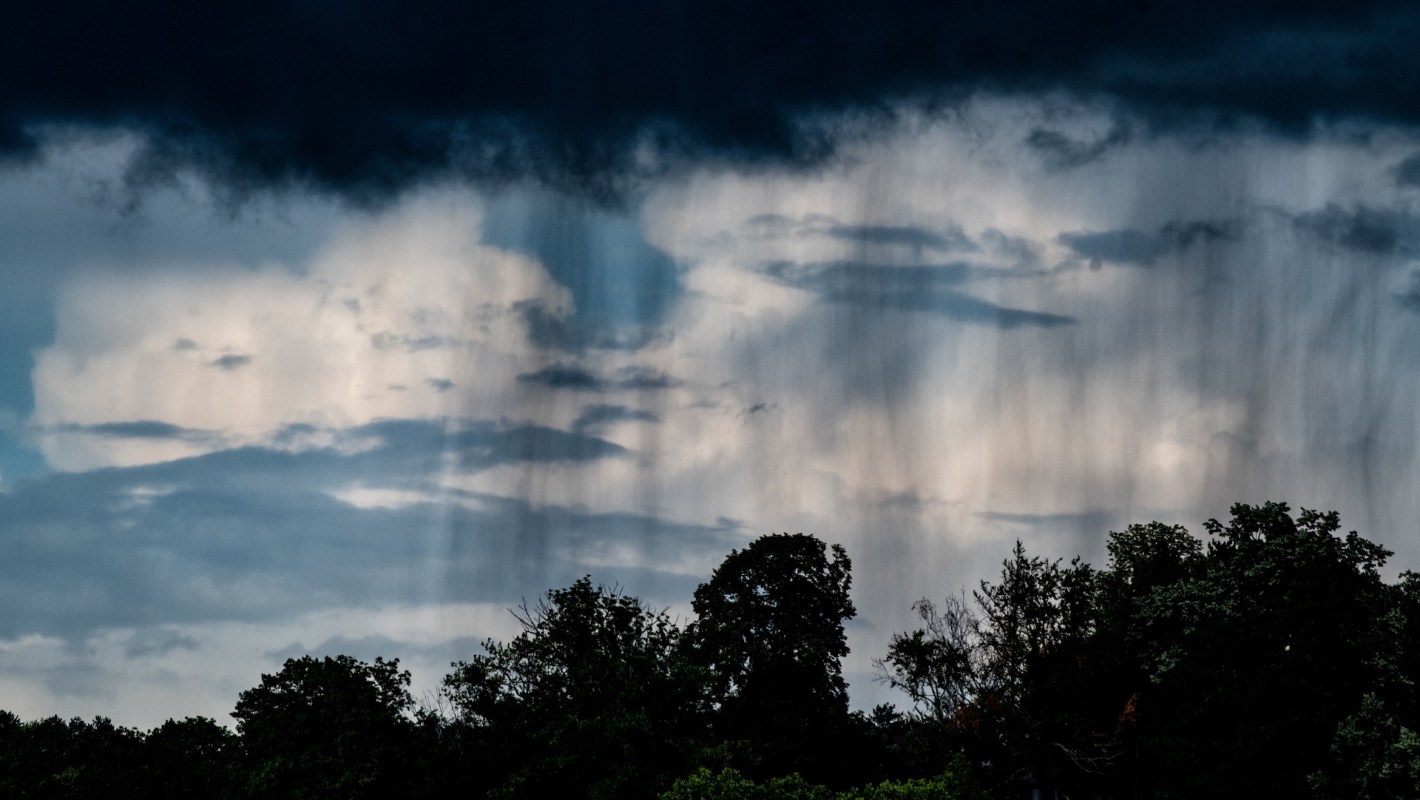
Several atmospheric-river-fueled storms have slammed the Pacific Northwest this winter, with at least five events contributing to heavy rainfall across the region in December. Climate scientists are concerned that it could be a preview of what is to come in the not-too-distant future.
"Atmospheric rivers are these sort of the 'juiciest storms,'" explained Larry O'Neill, a state climatologist, to Oregon Public Broadcasting. "They're responsible for about 30% to 50% of our annual precipitation total."
Think of atmospheric rivers as long, narrow rivers in the sky that funnel most of the water vapor moving through the atmosphere outside the tropics.
"The average atmospheric river is about 800 kilometers (500 miles) wide and 1,600 kilometers (1,000 miles) long and carries an amount of water vapor roughly equivalent to 25 times the average water flow at the mouth of the Mississippi River," according to researchers with the University of California, San Diego. "These rivers in the sky release their water when they are forced upward, causing the water vapor to cool, condense, and fall as rain, snow, or ice."
Atmospheric rivers helped supercharge storms that left more than 300,000 people without power in the Pacific Northwest during the middle of December. The storms whipped up hurricane-strength winds of over 100 mph and dumped torrential rain in portions of Washington. Nearly 10 inches of rain fell in Olympia during the first 17 days of the month, more than doubling the capital's normal rainfall for the entire month.
Extreme rainfall in December prompted officials in Oregon to issue a Level 3 (Go Now!) evacuation notice as a major river in the region spilled its banks. That level of evacuation notice is the highest and most urgent level used by many U.S. emergency management agencies.
"Our strongest rain events during the wintertime are expected to get even stronger and more impactful. So we are expecting more," O'Neill said, per OPB. "If the climate wasn't changing, we could say, 'OK, that's a one-off; we don't have to worry about that again,' but we know that we'll be experiencing those things more in the future. And so how did we do with that, what kind of adverse impacts of that?"
Washington experienced its fifth-wettest December on record. Portland, Oregon, saw its 14th-wettest first month of meteorological winter, while Astoria recorded its 12th-wettest.
This year, the Atmospheric River Reconnaissance program, led by the Center for Western Weather and Water Extremes at UC San Diego's Scripps Institution of Oceanography and in partnership with the National Oceanic and Atmospheric Administration, will, for the first time, coordinate research flights to study atmospheric rivers in both the Pacific and Atlantic oceans.
"So there's basically learning opportunities for us about how we adapt and become more resilient so that these things don't become quite as impactful into the future," noted O'Neill, per OPB.
TCD Picks » Quince Spotlight
💡These best-sellers from Quince deliver affordable, sustainable luxury for all




|
Do you think America has a plastic waste problem? Click your choice to see results and speak your mind. |
 Definitely 👍
Get TCD's free newsletters for easy tips to save more, waste less, and make smarter choices — and earn up to $5,000 toward clean upgrades in TCD's exclusive Rewards Club.
Cool Picks






