


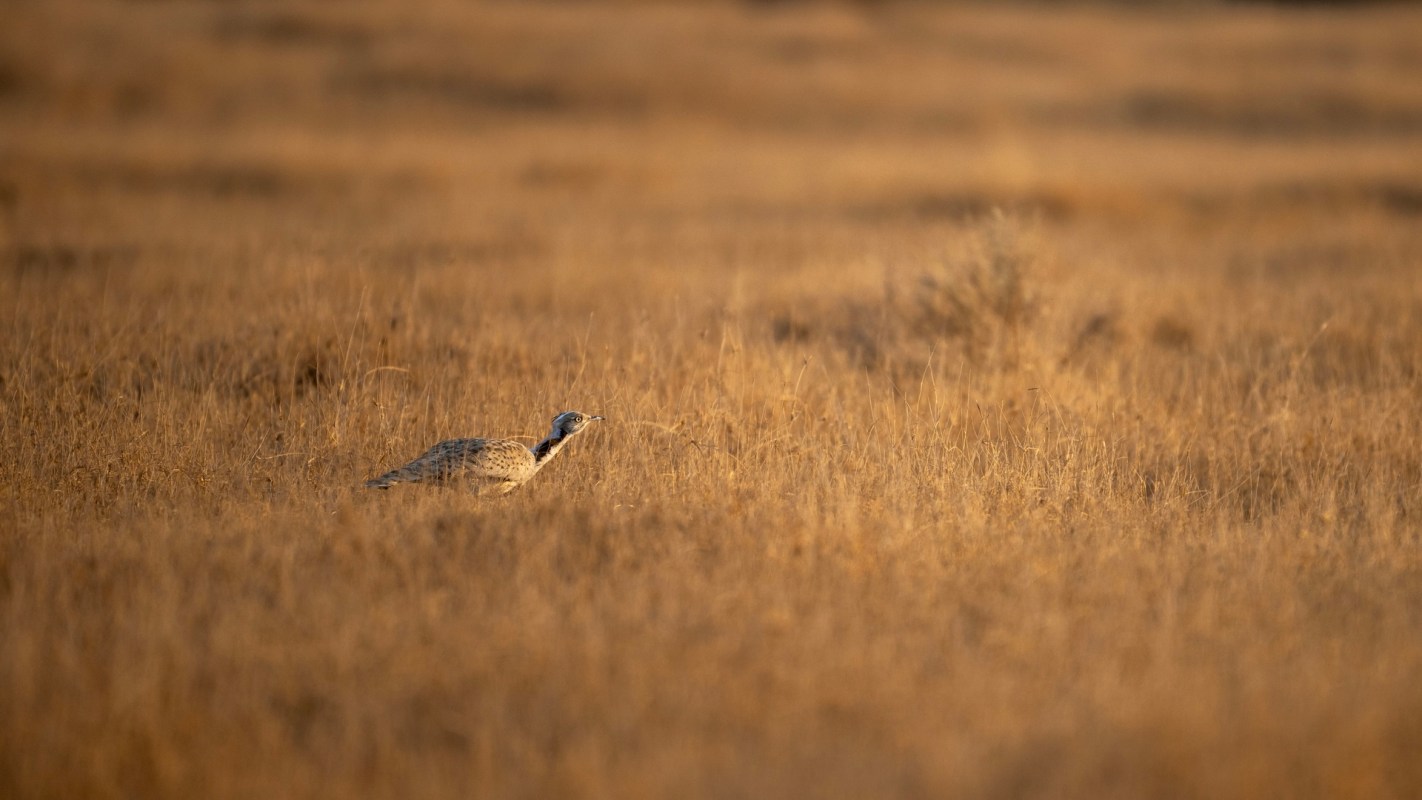
Conservationists are bringing the threatened Asian houbara bird back from the brink of extinction in Saudi Arabia.
As Arab News reported, populations of this iconic species have struggled to thrive on the Arabian Peninsula, in spite of decades of breeding programs and conservation efforts.
After about 1950, overhunting and habitat loss devastated wild populations of the birds and their natural territories, according to the report.
However, the Saudi Green Initiative and Saudi Vision 2030 have helped restore the Asian houbara's habitat. Wildlife protection systems and restoration programs have helped the bird return to the wild where it once thrived.
Recently, the Prince Mohammed bin Salman Royal Reserve reintroduced the Asian houbara with the release of 20 birds after a 35-year absence in this area. This reserve has established a successful rewilding program and reintroduced a total of 13 native species to the land, with plans to restore at least 10 more species with efforts similar to those for the houbaras.
"Habitat restoration across the reserve is re-establishing suitable conditions for the species to survive and disperse," said Andrew Zaloumis, CEO of the reserve, in the Arab News report. "At the same time, our advanced ranger program and community engagement initiatives provide the capacity needed to monitor wildlife effectively and counter the risk of illegal hunting."
The news from Saudi Arabia is encouraging because it demonstrates successful conservation and species reintroduction efforts that are possible worldwide.
At the Saudi reserve, conservationists have implemented research, long-term monitoring, the application of specialized expertise, and genetic management to improve the species' chances of survival. As Zaloumis told the news outlet, they have also ensured that reintroduced animals have adequate natural resources, minimal human disturbance, and limited threats from predators and poaching.
Meanwhile, other vulnerable bird restoration efforts have been successful elsewhere, including for loons in Maine, Takahē in New Zealand, and bitterns in the United Kingdom.
These efforts show that successful conservation work is feasible and worthwhile for restoring natural ecosystems and balanced global food chains.
TCD Picks » Quince Spotlight
💡These best-sellers from Quince deliver affordable, sustainable luxury for all




|
What's the most you'd pay per month to put solar panels on your roof if there was no down payment?
Click your choice to see results and speak your mind. |
 $200 or more 💰
 If you are interested in supporting native species where you live, consider taking local action by volunteering your time or donating money to a conservation group.
On Facebook, a media company called the Asian houbara reintroduction in Saudi Arabia a "major step for wildlife conservation and biodiversity restoration," and wrote, "The move strengthens efforts to revive native species and protect fragile ecosystems."
SceneNow Saudi posted on Instagram, "The Asian houbara holds cultural significance in the region as a traditional quarry in Arabian falconry, which was recognised by UNESCO as Intangible Cultural Heritage of Humanity in 2021."

Get TCD's free newsletters for easy tips to save more, waste less, and make smarter choices — and earn up to $5,000 toward clean upgrades in TCD's exclusive Rewards Club.
Cool Picks




