


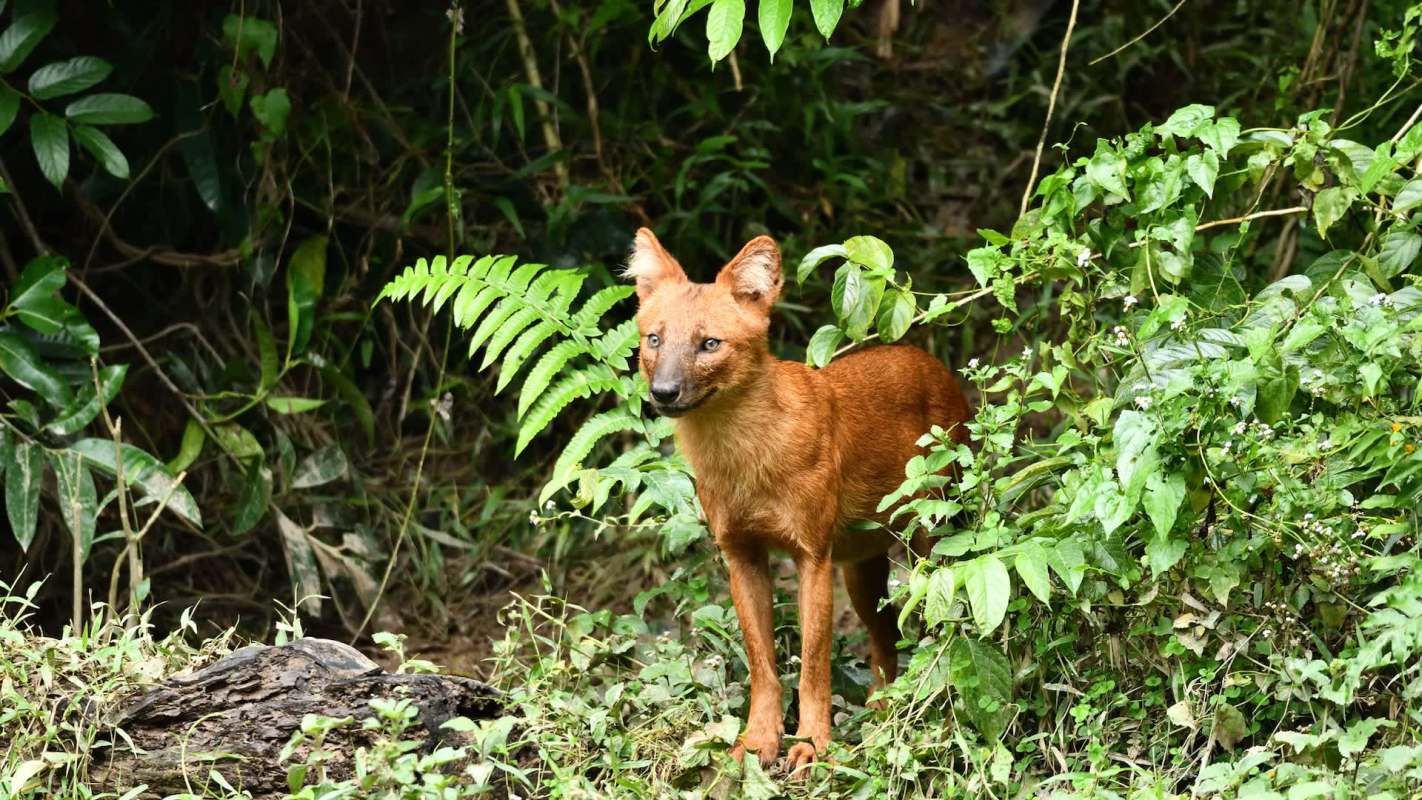
Asia's endangered dhole — a highly social wild dog sometimes known as the "whistling hunter" — is quickly running out of space to survive.
Fewer than 2,500 mature adults are believed to remain in the wild, and conservation experts say the species has already disappeared from large stretches of its historic range.
What's happening?
According to interviews with several researchers by WorldAtlas, dholes now persist only in isolated pockets spanning the Indian subcontinent, parts of Central Asia, and Southeast Asia.
India is still the species' most important stronghold. Even so, dholes have been lost from about 60% of their historic range there over the last 100 years. WorldAtlas noted that the animals now occupy roughly half of their potential habitat in the country, with the largest remaining populations centered in the Western Ghats, central India, and the northeast.
Outside India, the outlook is even more troubling. Only small and fragmented populations remain in Nepal, Bhutan, Malaysia, Laos, Cambodia, Thailand, and Myanmar. WorldAtlas also reported that the species is nearing extinction in China and may already have disappeared from Vietnam.
Experts say the threats are mounting on multiple fronts. Habitat loss, prey decline, retaliation by herders over livestock losses, and diseases transmitted by domestic dogs all threaten the dhole.
TCD Picks » Quince Spotlight
💡These best-sellers from Quince deliver affordable, sustainable luxury for all




Although the dhole is officially listed as endangered, researchers say it is often overlooked because it lacks the public profile of larger carnivores.
Why is this important?
In many Asian landscapes, dholes serve as apex predators, helping keep herbivore and other prey populations in check. When they disappear, those effects can ripple through the ecosystem.
Bhutan offers a clear example. As described in WorldAtlas, after dholes were driven close to extinction through mass poisoning in the 1970s and 1980s, wild pig numbers jumped and crop damage increased sharply, deepening losses for farming communities.
In other words, removing predators from an ecosystem does not make problems go away. It often changes them in ways that can hurt people, too.
The dhole's decline also highlights a broader conservation problem: Lesser-known carnivores can slip toward extinction before governments and the public fully understand the role they play in the landscapes around them. As forests shrink and wildlife corridors break apart, communities can face more conflict with animals, less biodiversity, and weaker ecosystems overall.
Disease is another major concern. Because dholes live and hunt in packs, scientists warn that infections such as rabies and canine distemper can move quickly through an entire group. In small, isolated populations, a single outbreak could wipe out years of recovery progress.
What's being done to help dholes?
Researchers say the species is not beyond saving, but protecting it will require region-specific solutions rather than a one-size-fits-all approach.
WorldAtlas said that in India, tiger reserves and other protected landscapes have helped preserve some dhole habitat, though scientists say dhole-specific conservation planning is still urgently needed. Researchers have also begun mapping species more carefully through projects focused on wild canids, helping to close major data gaps.
In Nepal, conservationists are calling for more research, better habitat connectivity, and stronger community engagement. In Southeast Asia, researchers say reducing poaching is the top priority.
To address disease, vaccinating domestic dogs against rabies and distemper could reduce a major pathway for infection. It also calls for stronger surveillance to learn whether these diseases are being maintained mainly by dogs, other wildlife, or both.
China has taken at least one step by moving the dhole to the country's highest level of legal protection in 2021. However, experts say legal status alone will not reverse the species' decline without habitat protection and meaningful enforcement.
"I only hope that in the coming times, these indefatigable red dogs will fill the hearts of countless global citizens with the perkiness that they so beautifully epitomize," said Dr. Anish Andheria, president of Wildlife Conservation Trust India, according to WorldAtlas.

Get TCD's free newsletters for easy tips, smart advice, and a chance to earn $5,000 toward home upgrades. To see more stories like this one, change your Google preferences here.







