


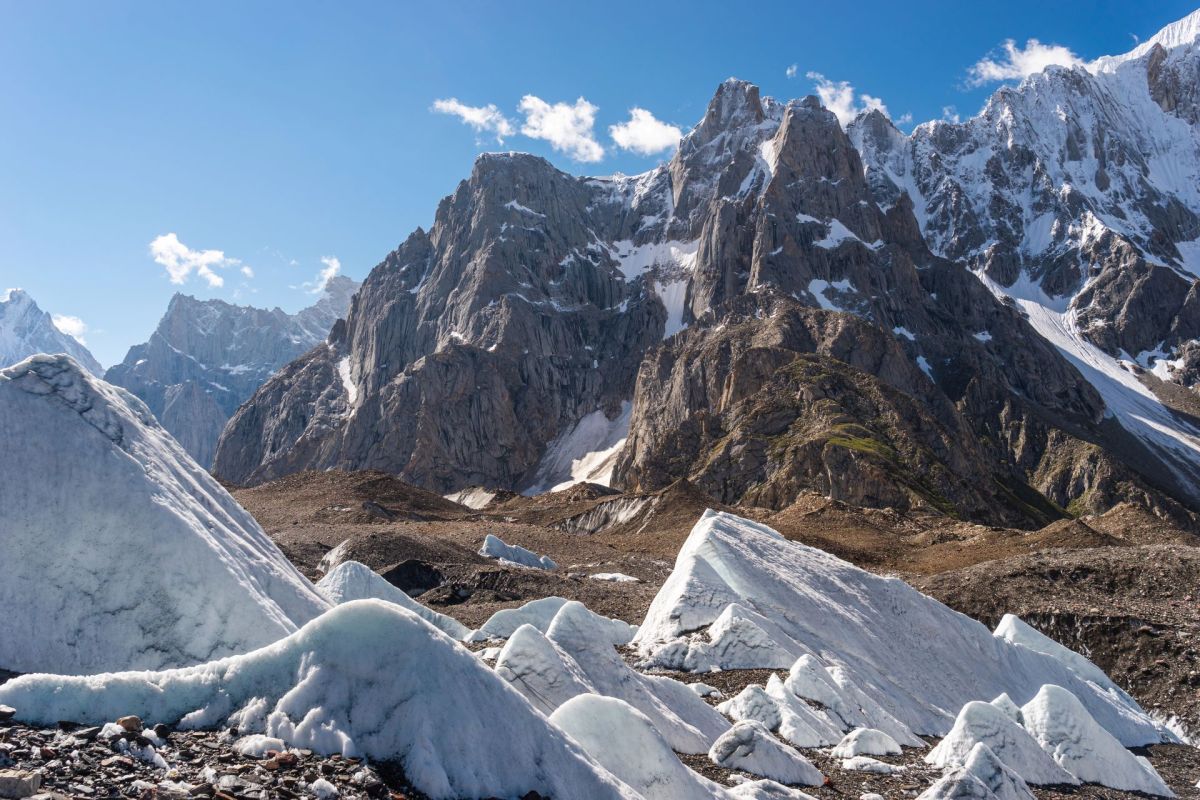
When spring planting comes around in Northern Pakistan, it's not unusual these days for water to be a no-show. But instead of waiting for shrinking glaciers in the Himalayas and Karakoram mountains to drip down in June, some local farmers have found an ingenious workaround. Dialogue Earth reports how they freeze water into huge cones during the winter and let them melt later to create the water they need.
What's happening?
Construction is simple. Using rubber pipes, a nozzle, and a frame, such as a tall tree, for support, they pipe the water uphill. They then allow gravity to spray it into the freezing air. The droplets freeze, creating the giant cones of ice. Then, during the spring, the ice melts to irrigate crops like maize and wheat. These artificial glaciers are helping farmers survive severe water shortages and stave off droughts.
Why is this concerning?
In the past, farmers could reliably count on glacier melt, but over the years, the water started to come too little, too late. Melting patterns shifted, and snowfall became less predictable. Hamid Mir, the coordinator for the World Wildlife Fund-Pakistan's Water Resource Accountability in Pakistan project, put it plainly, saying the structures "are like freezer ice – seasonal, not a substitute for real glaciers." While the ice stupas help buy time, they can't fully replace the year-round water reservoirs filled by the natural glaciers.
The shrinking ice also means we're seeing higher tides in coastal regions, more severe flooding, and shifting disease patterns. All of these issues are touching communities around the globe.
In another case, the UN Food and Agriculture Organization helped develop artificial glaciers in Kyrgyzstan to provide water security for rural towns.
If you're looking to understand how these issues fit into the bigger picture, here's a resource that breaks down the most critical problems tied to overheating and environmental instability.
What's being done about it?
The first ice stupa in this region went up in 2019. Since then, around 20 villages have adopted the method, and more than 16,000 people now rely on them during the driest months. In one village, the water from these towers helped families stretch their growing season and reduce their reliance on outside groceries.
In a separate effort, engineers at MIT created a device that pulls clean drinking water straight out of dry air — no power required.
One study found that making commercial fishing off-limits in certain areas helped sea life recover, showing that nature often rebounds when given a break.
For those interested in water and energy resilience at home, there's a free tool that helps homeowners compare quotes for solar and battery storage. This upgrade can keep the lights on during outages.
TCD Picks » Quince Spotlight
💡These best-sellers from Quince deliver affordable, sustainable luxury for all




|
Do you think your city has good air quality? Click your choice to see results and speak your mind. |
 Definitely 🥰
Join our free newsletter for good news and useful tips, and don't miss this cool list of easy ways to help yourself while helping the planet.
Cool Picks






