


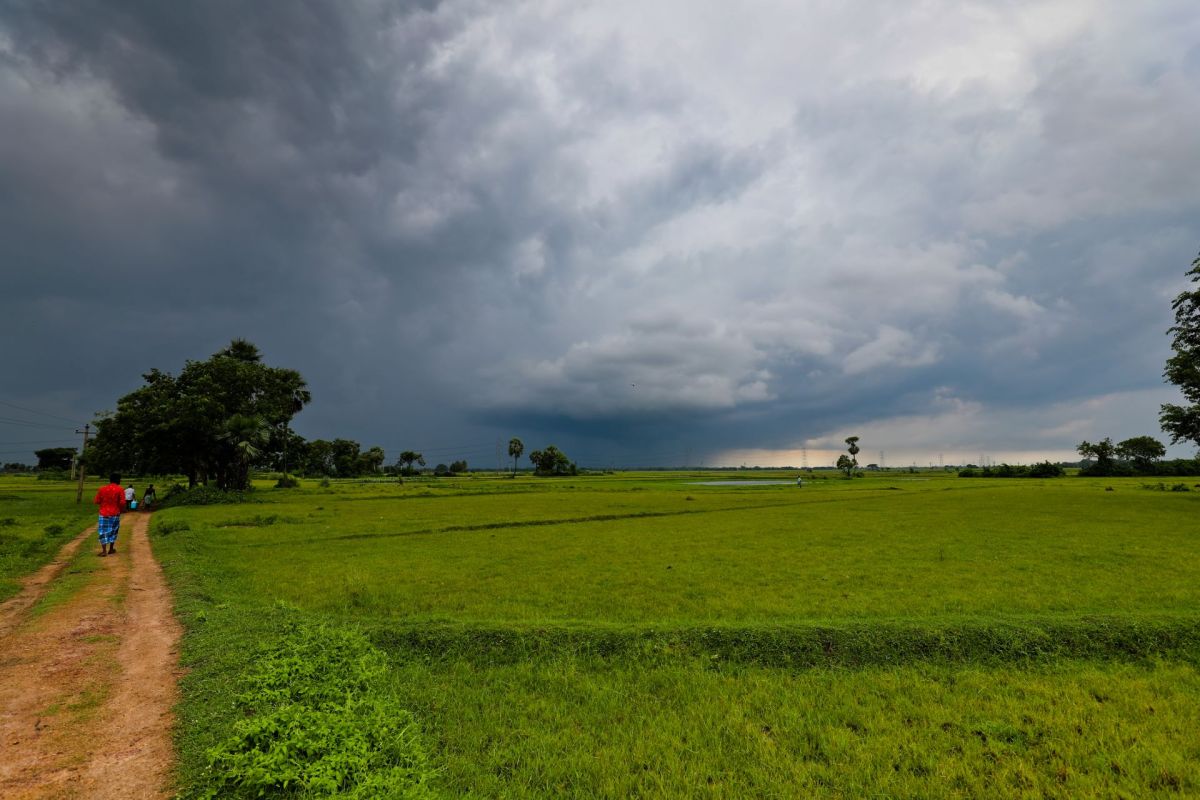
The monsoon season is shifting west across India, and researchers at the Indian Institute of Tropical Meteorology have discovered that Arctic ice melt in June and July is contributing to that, according to a press release by the American Association for the Advancement of Science.
What's happening?
While the summer monsoon season lasts from June to September, researchers observed that in the past decade, rainfall increased in August and September and shifted westward.
In addition to analyzing data, the researchers also used climate models to better understand what was happening. According to the AAAS, "These simulations incorporate all components of the climate system — land, atmosphere, ocean, sea-ice — to investigate how changes in Arctic sea ice might impact the ISMR (Indian summer monsoon rainfall)."
"The melting of polar sea ice can have significant, far-reaching effects on the global climate system," said Indian Institute of Tropical Meteorology, Ministry of Earth Sciences, and first study author, Hemantkumar S. Chaudhari.
He also noted that rising global temperatures are contributing to the sea ice melt.
The researchers used available data from 1979 to 2022 to analyze the changes and published their findings in Ocean-Land-Atmosphere Research.
Why is the worsening of the monsoon season concerning?
In 2024, researchers from two Massachusetts hospitals found that the death rate in that community increased in the following weeks after a major weather event. The study concerned extreme weather events between 2011 and 2016 that caused at least $1 billion in damages.
Excessive rainfall can also ruin crops, as it did in the Catskills. Not only can that jeopardize food security, but it also puts the livelihoods of farmworkers at risk. Catskills farmer Kendra Payne was due to receive a federal grant to enable her to install an irrigation system, but those funds were frozen, leaving her to deal with it herself, like so many other farmers.
Additionally, melting Arctic permafrost can have other consequences, including the release of high levels of mercury, which converts into methylmercury that can enter the food chain. Scientists are also concerned about ancient viruses being revealed under the ice.
What's being done about the monsoon season intensifying?
The team at the Indian Institute of Tropical Meteorology will next expand its research to include a longer time frame while continuing to use climate models.
TCD Picks » Quince Spotlight
💡These best-sellers from Quince deliver affordable, sustainable luxury for all




Subodh Kumar Saha, corresponding author, said, "Our ultimate goal is to advance understanding of South Asian summer monsoon rainfall variability and predictability in a warming world, particularly in the context of rapidly declining Arctic sea ice."
|
Which of these savings plans for rooftop solar panels would be most appealing for you?
Click your choice to see results and earn rewards to spend on home upgrades. |
 Save $1,000 this year 💸
Get TCD's free newsletters for easy tips to save more, waste less, and make smarter choices — and earn up to $5,000 toward clean upgrades in TCD's exclusive Rewards Club.
Cool Picks






