


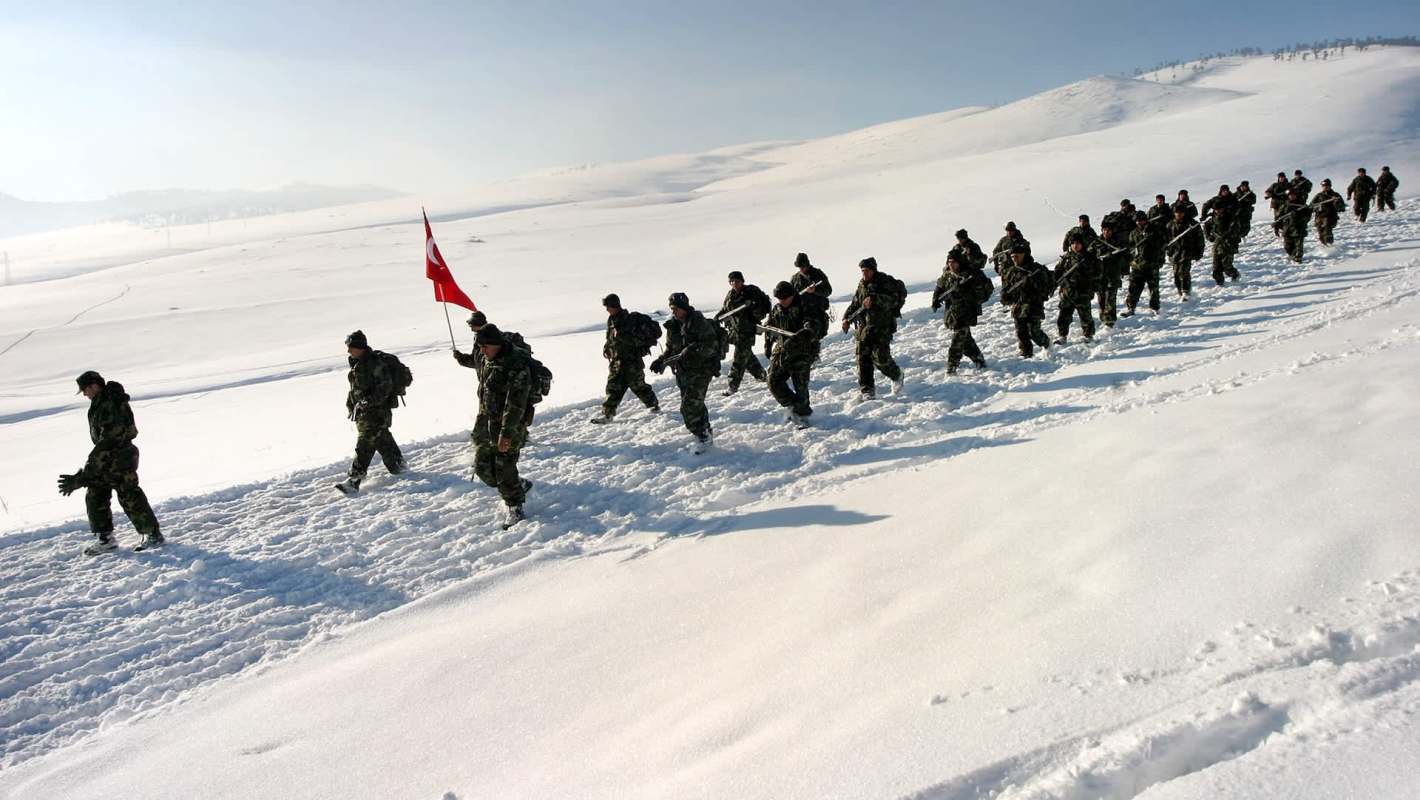
To be prepared for any circumstance, U.S. and European military forces have been training in the Arctic.
However, melting ice is throwing a wrench into prior strategies for Arctic combat, the Wall Street Journal reported.
What's happening?
While previous Arctic training has required combatants to be prepared and equipped for the bitter cold, the Swedish Subarctic Warfare Center has recently offered training outside the winter months, which involves an entirely different climate.
According to Sergeant Major Fredrik Flink of the Swedish Army's Subarctic Warfare Center: "This requires a completely different way of fighting. You can almost compare it to the jungle."
When the landscape isn't frozen over, everything is wet. As in a jungle, mud, puddles of water, and bugs are common issues.
NATO allies gather at the Subarctic Warfare Center to train together for the varied challenges that a conflict in the Arctic would present.
TCD Picks » Quince Spotlight
💡These best-sellers from Quince deliver affordable, sustainable luxury for all




Captain Barney Walker, a member of the British army's Ranger Regiment, said, "It's a slow learning curve."
Why is Arctic ice melt important?
Melting ice in the Arctic has a wide range of impacts on the planet and its inhabitants. Burning dirty energy sources that release pollution into the atmosphere is exacerbating the effects.
As the ice recedes, microbes that have been frozen for centuries can become airborne, raising public health concerns as animals can pass the unearthed diseases to humans.
Based on NASA's data, summer measurements of Arctic sea ice have been shrinking at a rate of around 12% per decade since 1980. When the ice melts into the ocean, it contributes to rising sea levels. According to the National Oceanic and Atmospheric Administration, global sea levels have risen eight to nine inches since 1880, with the rate of rise accelerating rapidly.
|
Do you worry about having toxic forever chemicals in your home?
Click your choice to see results and speak your mind. |
 Majorly 😥
 This poses a distinct risk to coastal communities, which lose land as the water creeps in, face harsher flooding conditions, and risk their fresh water being contaminated with salty ocean water.
Hotter atmospheric temperatures and higher oceans can also supercharge storms, leading to more destructive hurricanes and floods.
What's being done about ice melt?
According to the Guardian, ice melt has slowed, but this is likely only a temporary reprieve from climate variation, as countries worldwide continue to burn dirty energy sources that pollute the atmosphere.
While technologies are being developed to address Arctic ice melt, most experts see these as Band-Aids. These temporary approaches may ultimately cause more harm in the long run.
The only way to reduce Arctic ice melt is to slow the rise in global temperatures, which will require a concentrated and collaborative effort from people worldwide.

Join our free newsletter for good news and useful tips, and don't miss this cool list of easy ways to help yourself while helping the planet.







