


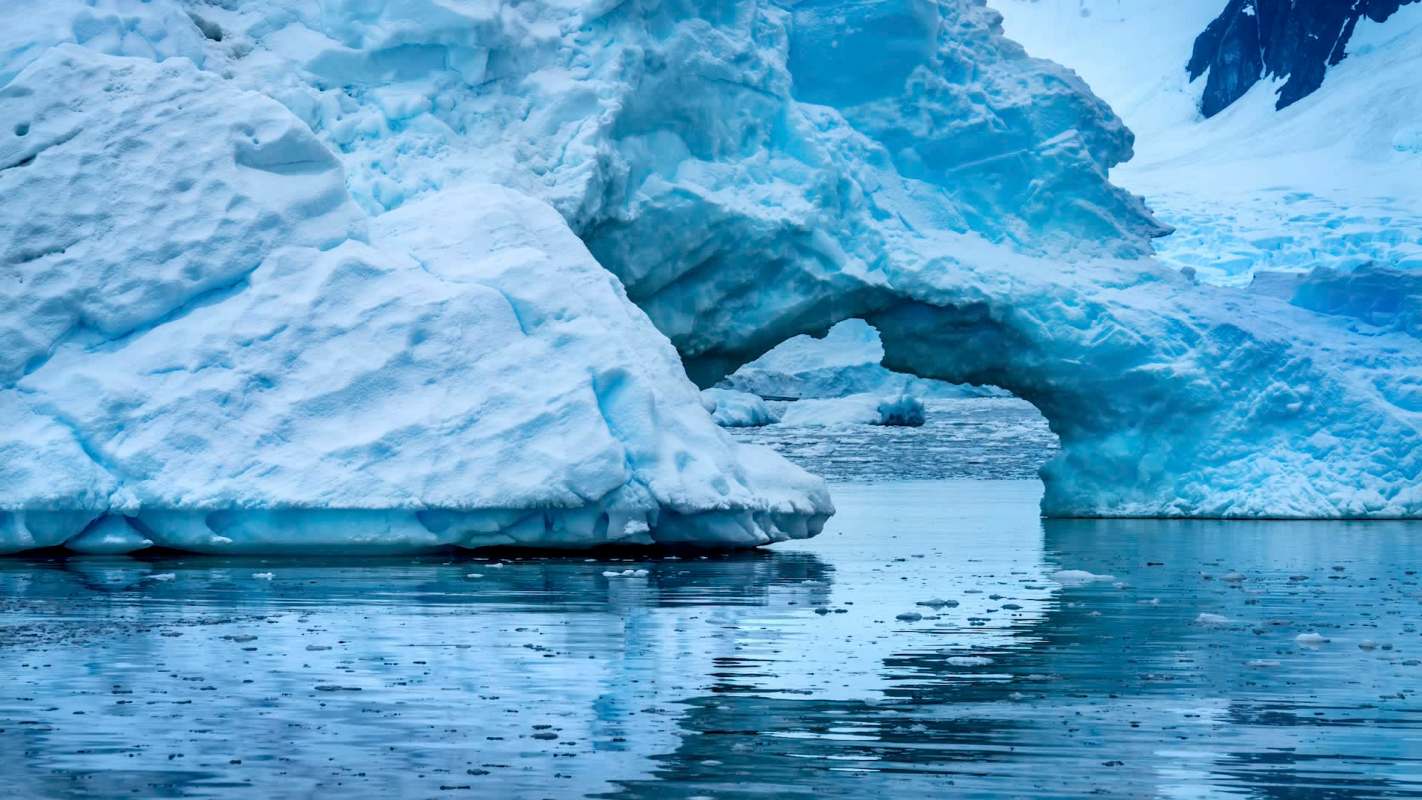
When imagining Antarctica, most people picture an endless field of ice and snow. However, not all ice is equal.
What's happening?
Researchers have analyzed satellite data from the last 30-plus years and determined that Antarctica has lost 5,000 square miles of "grounded ice," Space.com reported.
The study, led by scientists from the University of California, looked at data from 1992 to 2025. It featured satellite imagery of the coast of Antarctica.
Along the coast, the ice visible at the surface can be either grounded ice or an ice shelf. Grounded ice rests on the bedrock of the Antarctic continent, while ice shelves float above the rock on a pool of seawater.
Researchers examined satellite imagery to determine where the grounding line — the boundary between grounded ice and ice shelves, such as the ones recently mapped using a submersible — was located, as well as how it changed over time. They identified ice shelves by how they rose and fell with the tide.
What the researchers discovered was a significant loss of grounded ice along parts of the coastline, with the grounding line retreating as much as 26 miles over the period during which the data was collected.
TCD Picks » Quince Spotlight
💡These best-sellers from Quince deliver affordable, sustainable luxury for all




"It's like the balloon that's not punctured everywhere, but where it is punctured, it's punctured deep," lead author Eric Rignot of UC Irvine said in a statement.
Why is a retreating grounding line important?
The difference between grounded ice and ice shelves matters because of how ice melt is affected. Warmer water flowing in and out under the ice hastens melting at the bottom of an ice shelf, while grounded ice stays frozen for longer.
When grounded ice is lost, Antarctic ice melt accelerates, and the sea level rises faster. The more Antarctic ice melts and the sea level rises, the more coastal areas throughout the world are at risk. Property, infrastructure, fishing, and even the very existence of some communities are all threatened.
What's being done about Antarctic ice loss?
Rignot and his colleagues have made a significant contribution to the study — and perhaps the future prevention — of Antarctic ice loss by documenting this shift. Having decades of data to compare to will make it easier to validate computer models that predict changes — such as the rapid acceleration of ice loss after 2100 — and inform policy regarding pollution that affects the climate.
To make sure you are doing your part at home and in the voting booth to prevent ice loss, start with education.
|
Which of these savings plans for rooftop solar panels would be most appealing for you?
Click your choice to see results and earn rewards to spend on home upgrades. |
 Save $1,000 this year 💸
Get TCD's free newsletters for easy tips, smart advice, and a chance to earn $5,000 toward home upgrades. To see more stories like this one, change your Google preferences here.







