


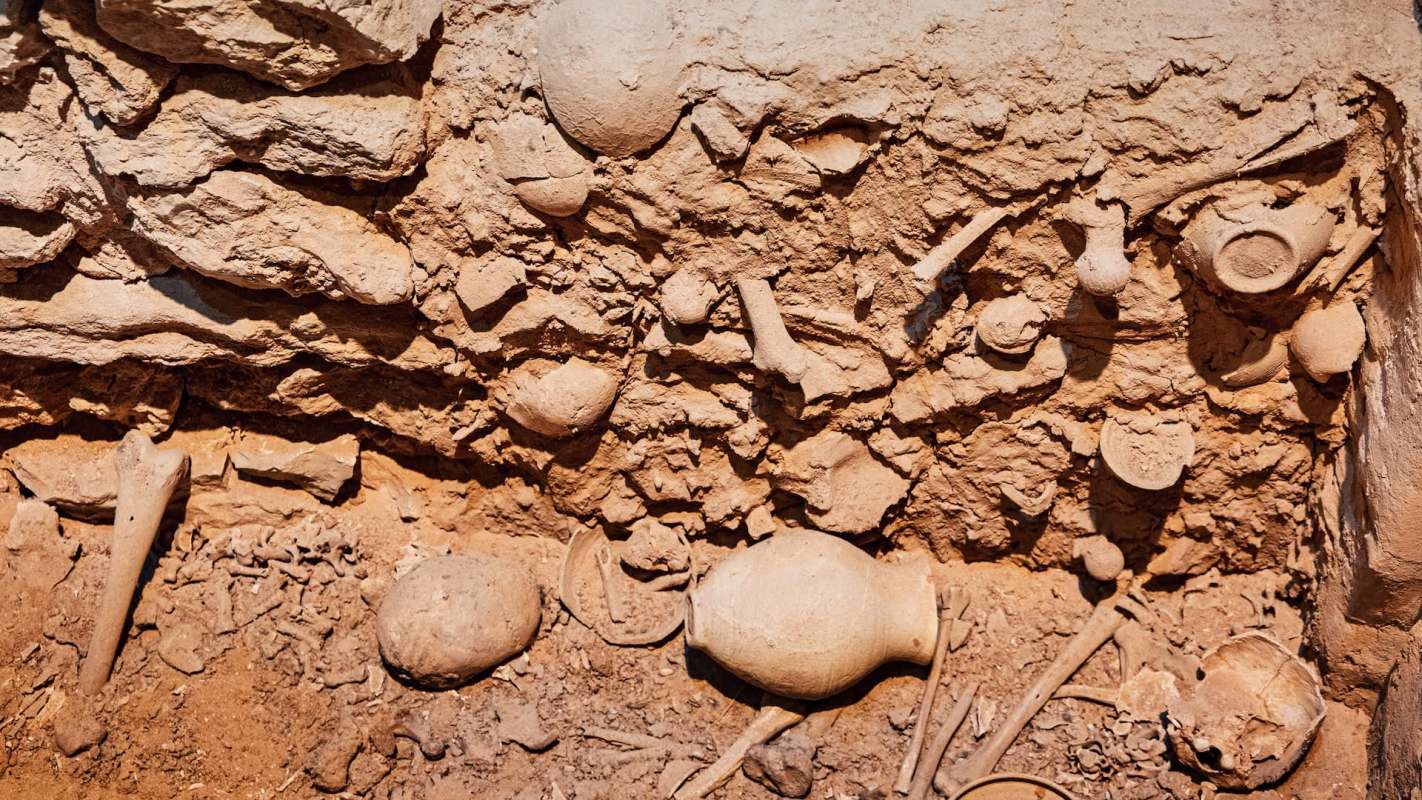
It's one thing to analyze a faint residue left behind in an ancient vessel. It's quite another to open one and find a significant amount of the liquid is still inside.
As Science X detailed, that is what happened with a tightly sealed bronze bottle discovered in a tomb on the edge of China's Shanjiabao cemetery.
What happened?
A study published in the Journal of Archaeological Science: Reports found that the bottle contained an intact ancient alcoholic beverage made from grains, thereby offering a rare glimpse of what people were drinking more than 2,000 years ago.
The vessel, described in the study as having a distinctive garlic-shaped mouthpiece, was uncovered in a tomb dating to the Warring States period (475-221 BC). Researchers said it held about 3,740 milliliters of clear, light blue-green, odorless liquid, along with a thin layer of sediment at the bottom.
Science X reported that chemical testing indicated the mystery drink was grain-based rather than a fruit wine, with high levels of lactic and oxalic acids and little tartaric acid.
Microscopic analysis added another layer of detail, per the study. Scientists identified more than 100,000 starch grains, pointing to a brew made primarily from broomcorn millet, with smaller amounts of wheat or barley. They also found more than 8,500 yeast cells, strong evidence that the liquid had undergone fermentation.
TCD Picks » Quince Spotlight
💡These best-sellers from Quince deliver affordable, sustainable luxury for all




The team said the bronze bottle's unusual state of preservation was likely the result of a two-layer sealing method using textile and daub, which protected the contents for centuries.
Why does it matter?
While ancient alcohol discoveries in China are not unheard of, finding the liquid itself is exceptionally rare. The study notes that most earlier research relied on faint residues stuck to pottery rather than preserved liquid, leaving major questions about ingredients, brewing methods, and regional traditions.
The study suggests brewers in the Qin state were using broomcorn millet as their main grain and likely employing the traditional qu method, a fermentation starter made from moldy grains or herbs. Damage observed on the wheat and barley grains suggested they had been ground and heated, which supports that theory, according to Science X.
Food and drink can also offer clues about agriculture, trade, preservation techniques, technology, and daily life. The bottle is also a piece of cultural heritage.
Ancient methods can sometimes inspire new techniques while helping preserve old ones that might otherwise disappear.
To identify the drink, researchers used a range of modern tools, including Fourier transform infrared spectroscopy, mass spectroscopy, and machine-learning analysis. They compared the liquid's chemical profile with a database of more than 2,000 samples.
The study also says the team heat-aged six modern alcoholic beverages, including grape wines and grain-based rice wines, for 180 days to create reference samples and better understand how chemical signatures shift over long periods.
What's being done?
The methods on display allowed the researchers to move beyond educated guesswork and reconstruct not only whether the liquid was alcoholic, but what it was made from and how it may have been brewed.
The findings could help museums and archaeologists preserve similar artifacts in the future. They may also prove useful for researchers and producers trying to revive heritage foods and traditional brewing practices in a more scientifically informed way, Science X asserted.

Get TCD's free newsletters for easy tips, smart advice, and a chance to earn $5,000 toward home upgrades. To see more stories like this one, change your Google preferences here.







