


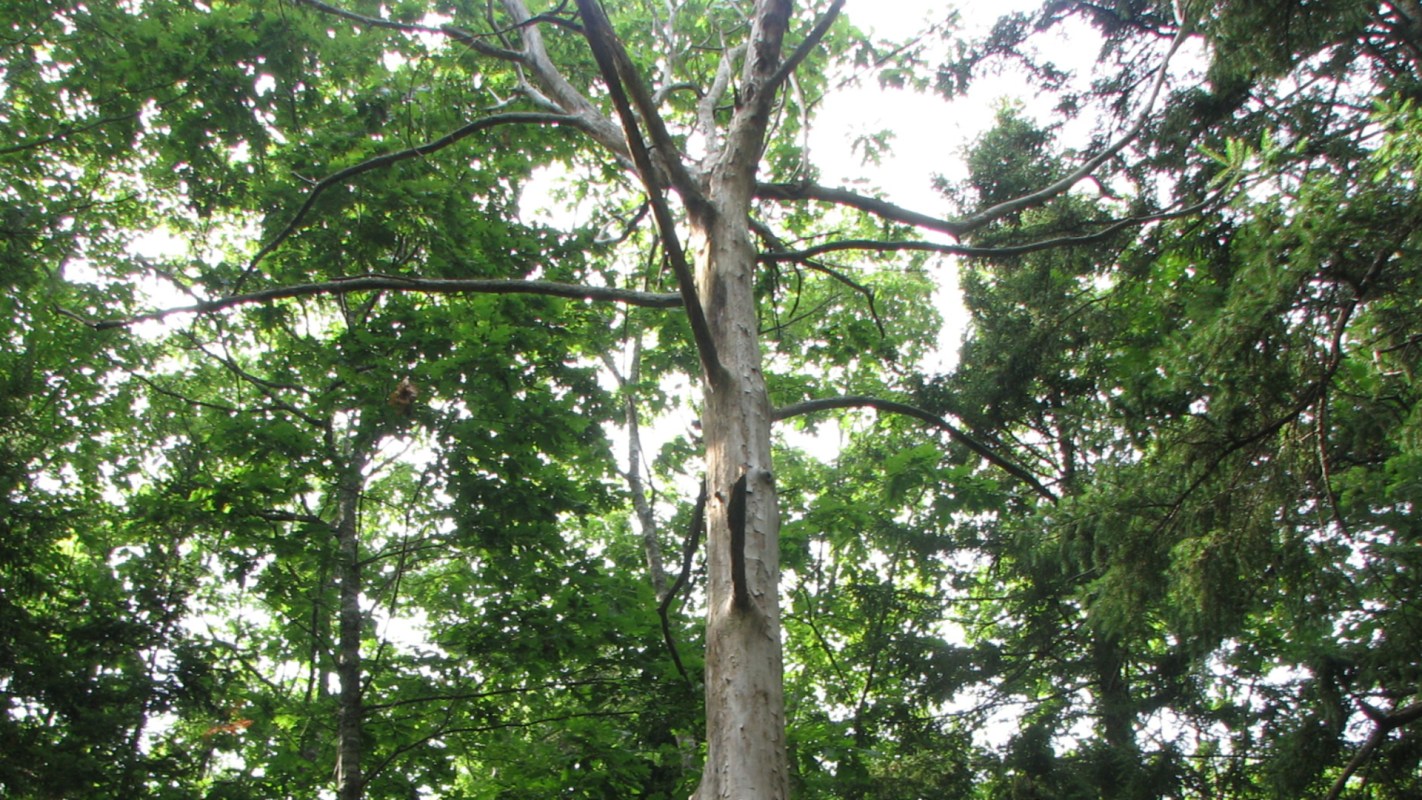
A hiker detailed his experience seeking out an orchard of American chestnut trees in the Lesesne State Forest in Virginia. For most people, this might not seem like such a big deal, but for scientists, environmentalists, and conservation groups, getting a glimpse at nature's past is refreshing. It also signals quite the comeback for a species once thought to be all but lost.
The hiker, Eric Wallace, detailed in his article for Backpacker that the Virginia Department of Forestry planted an orchard of American chestnut trees in Lesesne in the 1970s. According to Cassie Stark, the regional science coordinator for the American Chestnut Foundation, it remains the largest and oldest experimental planting of the species in the U.S.
But that's not where the story begins.
When European settlers first arrived in North America, the American chestnut was everywhere. It dominated eastern forests, fed wildlife with its abundant nuts, and served as a key source of strong, rot-resistant lumber. Telephone poles were actually made from chestnut trees, many of which are still standing today, according to TACF.
"This was the tree of early America," wrote author Susan Freinkel in her book, "American Chestnut: The Life, Death, and Rebirth of a Perfect Tree." "It's impossible to understate the importance of American chestnuts for the developing U.S."
That changed dramatically in the late 19th century, when a fungus accidentally introduced from imported Japanese chestnut trees began spreading through forests. Within decades, billions of American chestnuts had died, and the species seemed destined to survive only as stumps that continued to sprout but never reached maturity. The American chestnut was considered extinct.
Perk up the winter blues with natural, hemp-derived gummies Camino's hemp-derived gummies naturally support balance and recovery without disrupting your routine, so you can enjoy reliable, consistent dosing without guesswork or habit-forming ingredients. Flavors like sparkling pear for social events and tropical-burst for recovery deliver a sophisticated, elevated taste experience — and orchard peach for balance offers everyday support for managing stress while staying clear-headed and elevated.
Learn more → |

After decades of conservation efforts, that's why modern sightings of thriving trees and orchards are so encouraging. From breeding programs and forest monitoring to managing blight-resistant hybrids, the work is beginning to pay off.
The comeback of the chestnut also highlights a bigger environmental win: Restoring threatened species strengthens the ecosystems we rely on. When species disappear, the natural systems that filter water, store carbon, and support biodiversity start to break down. Reintroducing these species helps rebuild those networks and makes forests more resilient to climate change, pests, and disease.
So while Wallace's discovery might seem like a small moment, it's part of a much larger story. The American chestnut's slow return shows why protecting threatened species remains crucial to preserving nature.
|
Do you think America does a good job of protecting its natural beauty? Click your choice to see results and speak your mind. |
 Definitely 👍
💰Get TCD's free newsletters for easy tips to save more, waste less, and make smarter choices — and earn up to $5,000 toward clean upgrades in TCD's exclusive Rewards Club.
TCD Picks » Upway Spotlight
💡Upway makes it easy to find discounts of up to 60% on premium e-bike brands





Cool Picks







