


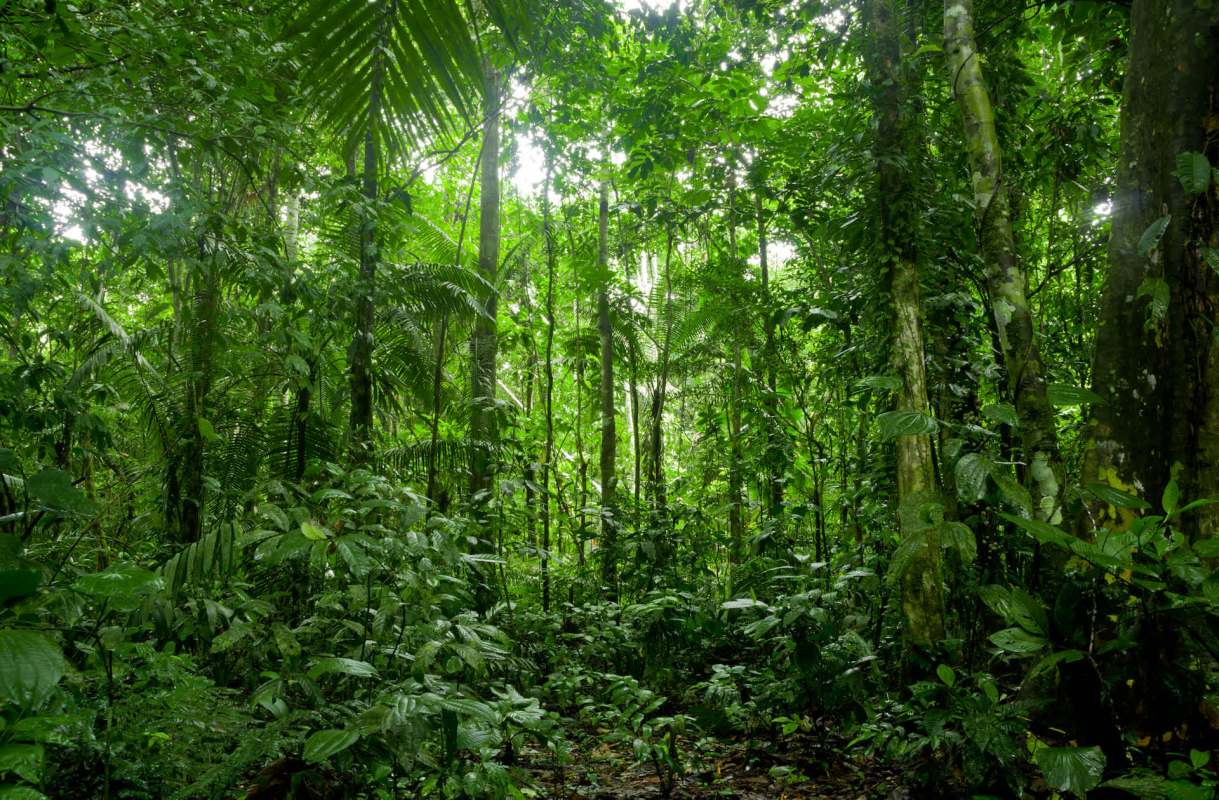
The biggest changes to the Amazon rainforest start from within, according to new research in Nature Sustainability. The study's investigation into community-based management underscores how taking local action is one of the most effective strategies toward creating a brighter future.
Anthropocene Magazine spoke with Carlos Peres, one of the study's authors and an ecologist at the University of East Anglia in the United Kingdom. Peres explained that local villagers are patrolling their rivers and forests to protect them from loggers and poachers.
"The conservation dividends from community-based protection are unprecedented and deployed at a tiny fraction of the financial costs of traditional protection mechanisms," Peres said. "In practice, this makes local land managers true 'unsung heroes.'"
Illegal logging and poaching in the Amazon rainforest take a significant toll, contributing to biodiversity loss, degrading water supplies, altering rainfall patterns, and reducing its ability to regulate global temperatures through carbon sequestration. To combat this, the Brazilian government has set up reserves and relied on the help of local communities since the 1990s.
Peres and his colleagues primarily conducted their research along the Juruá River, a major tributary that supports fishing and agricultural activities. During the 2010s, the government negotiated fishing agreements with locals to safeguard economic and food security.
A growing body of research reveals that these efforts are paying off — and the latest study suggests the benefits are rippling out into other communities, per Anthropocene Magazine.
"When someone was guarding a lake, their presence also affected activity in the surrounding floodplain, both because they policed activities there and because the higher numbers of fish meant the flooded ecosystem was more intact," the publication explained.
"The guards also cut off access for people who might want to log the surrounding forests, because waterways act as the main transportation system."
However, the researchers believe this system isn't without its faults, as it keeps locals tied up with guard duties when they could be using that time and energy to generate other income. Supporting vetted organizations dedicated to conservation can alleviate some of that burden, though the study cautions against "toothless environmental agencies."
"Recognizing the vital role local people play in protecting the Amazon rainforest and supporting local communities are essential for long-term conservation and a crucial matter of social justice," study lead Ana Carla Rodrigues of Brazil's Universidade Federal de Alagoas told Anthropocene Magazine.
TCD Picks » Quince Spotlight
💡These best-sellers from Quince deliver affordable, sustainable luxury for all




|
Do you think America does a good job of protecting its natural beauty? Click your choice to see results and speak your mind. |
 Definitely 👍
Join our free newsletter for good news and useful tips, and don't miss this cool list of easy ways to help yourself while helping the planet.
Cool Picks






