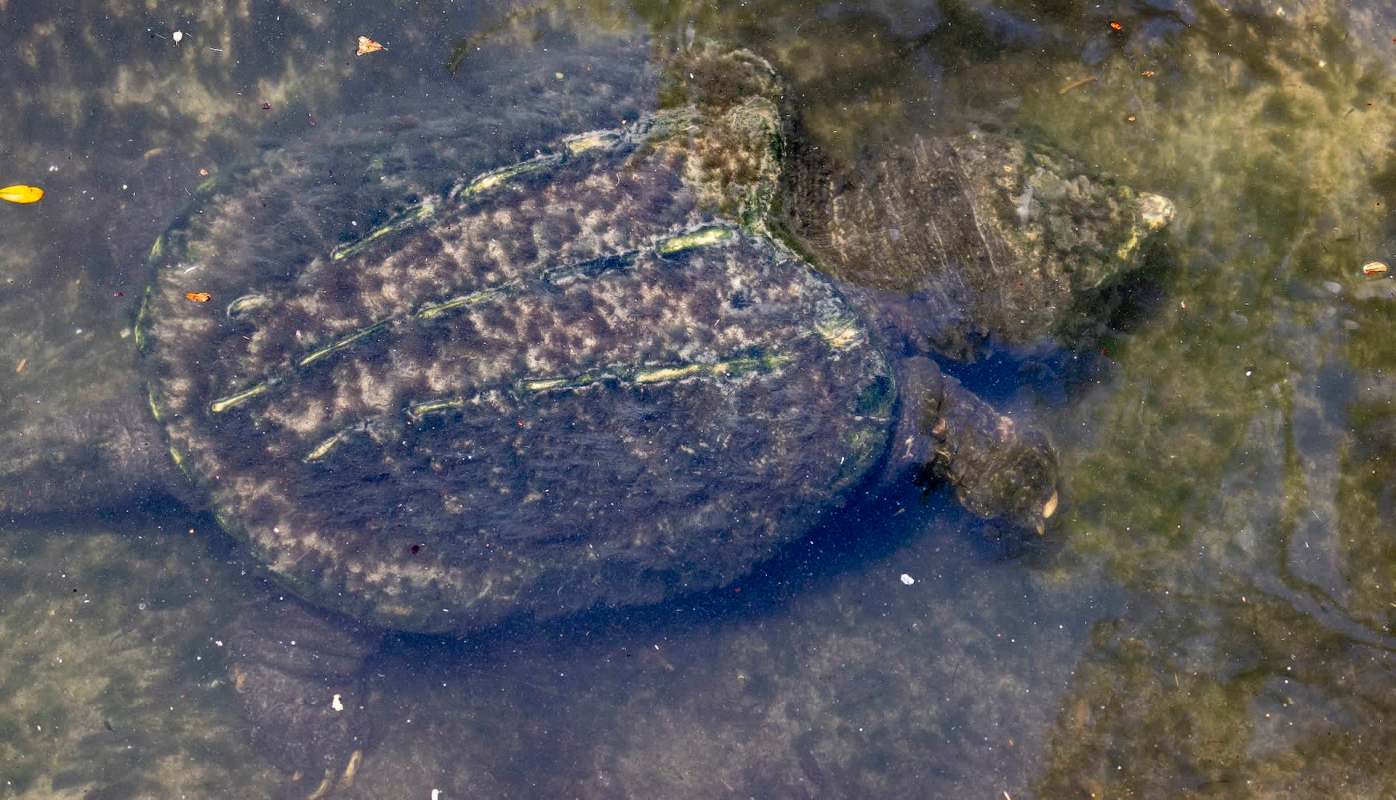
A 60-pound alligator snapping turtle — among the first reported in the wild in Massachusetts — turned up in an Essex County pond after officials said it had apparently been abandoned by its owner.
What started as a strange discovery quickly turned into a rescue, and it's a stark reminder of what can happen when people keep wild animals as pets and then dump them somewhere they were never meant to survive.
According to Boston.com, local homeowners contacted freshwater turtle biologist Trina Wantman after spotting what they thought was an alligator snapping turtle in their pond. As it turns out, they were right.
In a Facebook video posted by the Massachusetts Division of Fisheries and Wildlife, herpetologist Mike Jones said it was "one of the first alligator snappers that's been found in the wild in Massachusetts," adding that its presence strongly suggests "somebody had it as a pet."
Officials said the turtle was sluggish in the cold water and had severe pneumonia when it was found. They identified it by its shell shape and its distinctive tongue, which has a worm-like lure used to attract prey — a feature that is fascinating in the right habitat and deeply unfortunate in a Massachusetts pond.
According to Boston.com, the turtle was brought to the New England Wildlife Center, where it is now recovering while officials work to determine where it came from.
TCD Picks » EDF Spotlight
💡EDF's Vital Signs newsletter delivers stories about game-changing solutions close to home and around the world




The case is a vivid example of how pet abandonment can directly harm animals. Alligator snapping turtles are native to warmer areas stretching from Louisiana to Iowa, according to officials, which means a pond in Massachusetts was never a safe place for this animal to live.
Cases like this can also create problems for neighbors, wildlife agencies, and rehabilitation centers. Residents may not know what they're looking at, and responders have to spend time and resources rescuing animals that were never supposed to be in the local ecosystem in the first place.
It's a reminder that keeping wild or illegal animals as pets can have consequences long after the initial purchase, especially when owners are unprepared for the animal's size, care needs, or the laws around keeping it.
If the turtle recovers, the hope is that it can eventually be returned to its native range, where it could contribute to conservation efforts instead of struggling in an environment that was never suited for it.
TCD Picks » Quince Spotlight
💡These best-sellers from Quince deliver affordable, sustainable luxury for all




For the public, the takeaway is pretty simple — don't release pets into the wild, especially nonnative ones. "They are not native to Massachusetts. They don't do well in our environment," Wantman said.

Get TCD's free newsletters for easy tips, smart advice, and a chance to earn $5,000 toward home upgrades. To see more stories like this one, change your Google preferences here.