


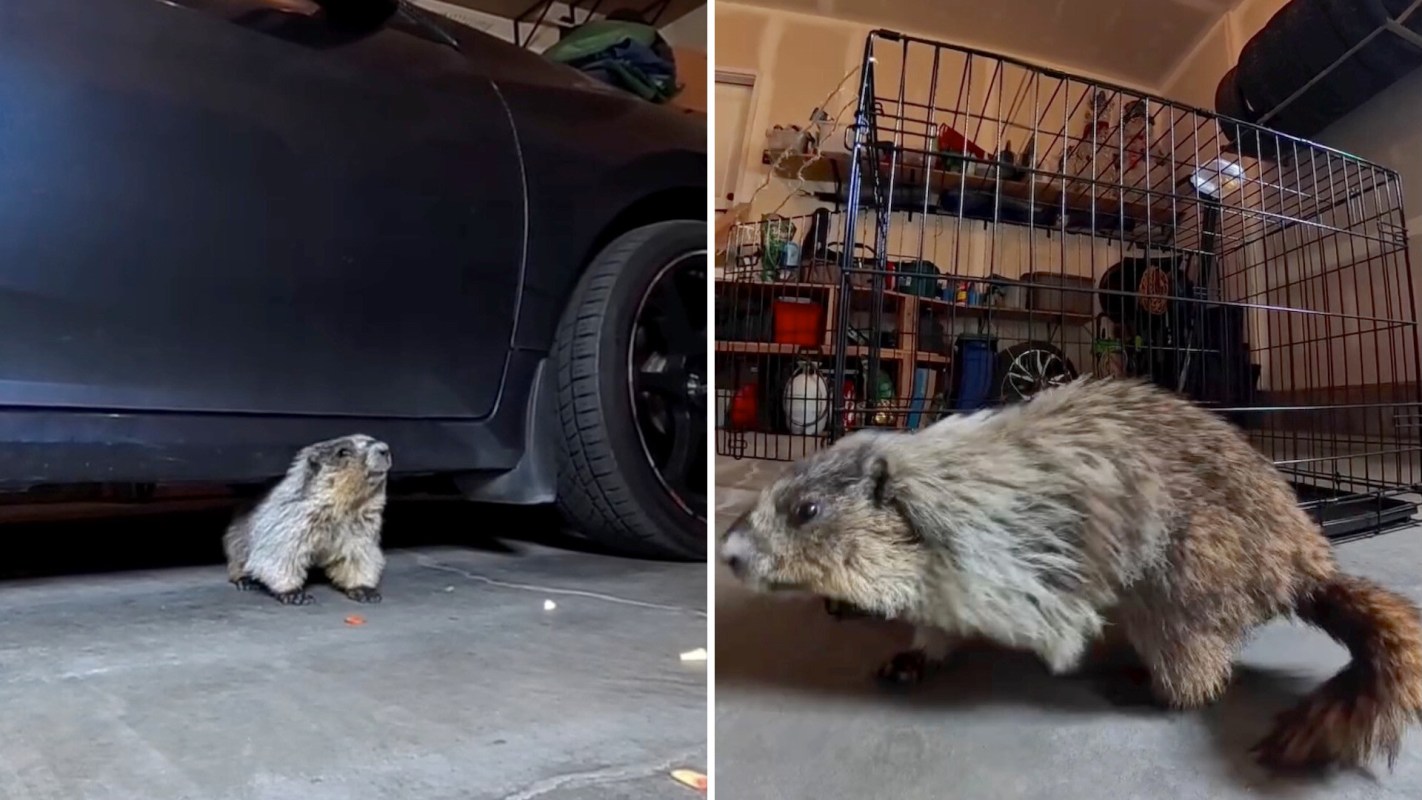
An Airdrie, Alberta, garage became a temporary stop for a marmot after the animal apparently rode 75 miles in a vehicle.
The unusual discovery ended with wildlife rescuers reporting that the animal was healthy and that they planned to take it back to Kananaskis, United Press International reported.
Here's what to know
When his child pointed out a large rodent in the family garage, Chris Ratzlaff assumed it was a porcupine. The animal was "hiding in a corner," Ratzlaff told CTV News, as UPI reported. Believing it might leave on its own, he kept the garage open so it could get out.
The family only recognized it as a marmot after it moved. Ratzlaff said they think the female had traveled with them from Kananaskis by clinging to part of the vehicle. As he told CTV News, "There's a skid plate under the engine that would be a great spot for it to ride."
The marmot ventured around the neighborhood before returning to the garage. Ratzlaff then shut the garage and contacted the Calgary Wildlife Rehabilitation Society, which collected the animal.
Ratzlaff recorded the marmot in the garage and posted a video of its antics to Instagram. He told CTV News that wildlife rescuers said the animal was healthy and "feisty" and that they planned to return it to Kananaskis.
TCD Picks » Quince Spotlight
💡These best-sellers from Quince deliver affordable, sustainable luxury for all




More background
Wild animals can end up in human spaces when people unintentionally bring them there. In this case, the vehicle may have helped carry the marmot far from where it belonged.
That kind of accidental relocation can be dangerous for both animals and people. A wild animal in an engine bay, a garage, or a neighborhood can face injury, dehydration, stress, and conflict with pets or residents. Drivers can also be at risk if an animal damages a vehicle or darts out from a confined space.
Encounters such as this are often shaped by human movement into wildlife habitat, whether through roads, recreation, or expanding development. A BBC report on why wild animals attack humans examines rising contact between wildlife and people.
What can be done?
Check your vehicle after spending time in mountain, rural, or wooded areas, especially if it has been parked near habitats where animals may seek shelter or warmth. Unusual sounds, smells, or movement around the wheel wells or hood can all be warning signs.
"To avoid bringing these hitchhikers home with you, banging on the hood and fenders and checking the engine compartment can help scare them away before you head home," Ratzlaff wrote in a comment on Instagram.
If you find a wild animal, experts generally advise against trying to handle it without help. Marmots are not pets, and even small wild animals can bite. Calling a local wildlife rehabilitation group or animal control agency is usually the safest option.
It can also help to give the animal an exit route and to keep children and pets away.
Trained rescuers can determine whether an animal is healthy enough to be released and if it should be moved to more suitable habitat rather than left where it does not belong.

Get TCD's free newsletters for easy tips, smart advice, and a chance to earn $5,000 toward home upgrades. To see more stories like this one, change your Google preferences here.







