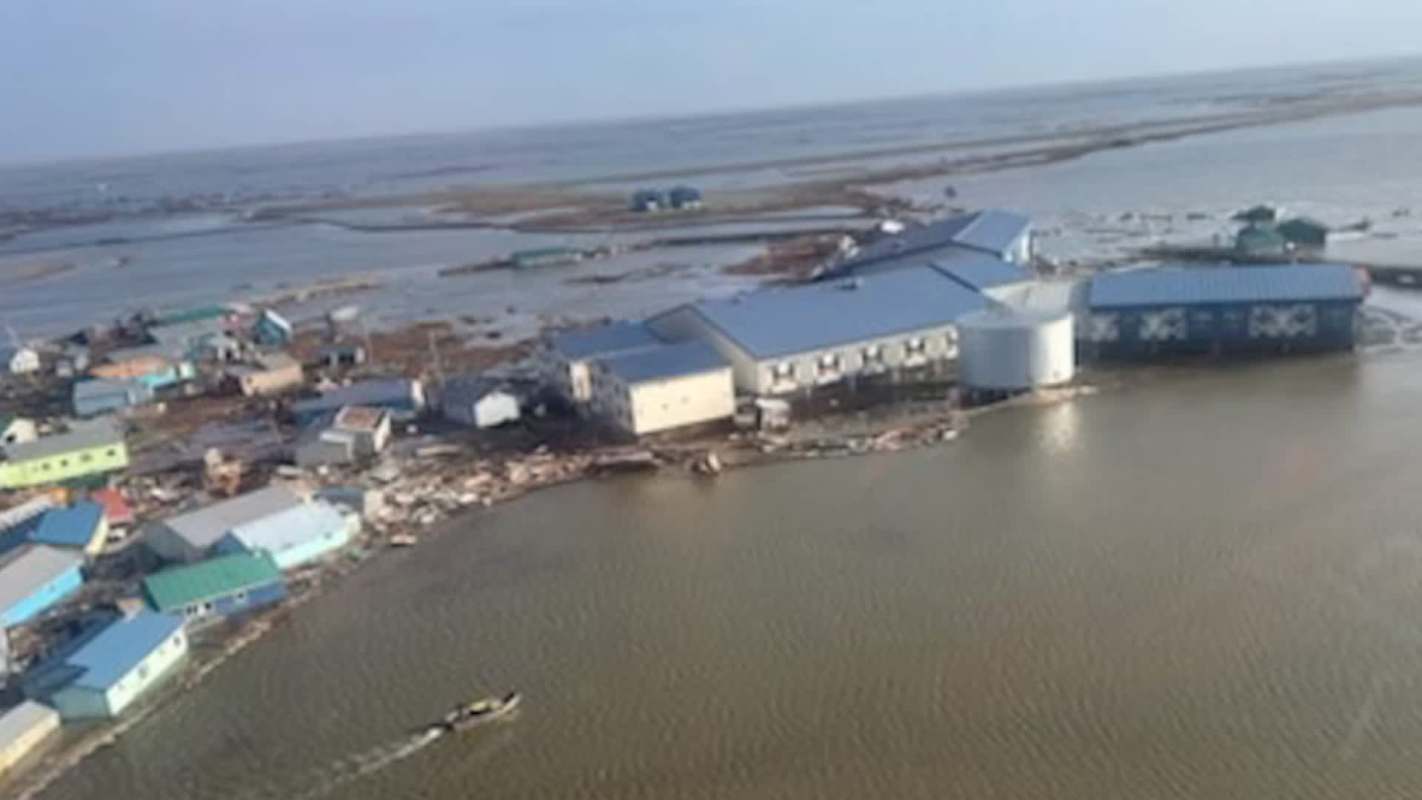
A massive evacuation effort is underway in western Alaska, Anchorage's KSKA reports, after the still-powerful remnants of Typhoon Halong caused widespread devastation to coastal communities.
What's happening?
On Oct. 12, the last of Typhoon Halong swept through remote Alaskan villages "with the ferocity of a Category 2 hurricane," according to CNN.
Homes were washed away and floated through rushing floodwaters, with winds as high as 100 mph and a storm surge 8 feet over typical high tide rates in the affected area, per USA Today.
On Oct. 16, Alaska Gov. Mike Dunleavy formally requested a federal major disaster declaration, projecting that over 1,500 Alaskans had been displaced. Dunleavy anticipated that many of those displaced would be unable to return to their homes for "upwards of 18 months."
The following day, CNN estimated the number of displaced residents at over 2,000, and evacuation efforts have been underway to move those affected from temporary accommodation.
Citing challenges posed by the "time, space, distance, geography, and weather," Dunleavy indicated that even accelerated response efforts would be insufficient to "support winter occupancy in America's harshest climate."
TCD Picks » Quince Spotlight
💡These best-sellers from Quince deliver affordable, sustainable luxury for all




Why is this concerning?
Although Alaska's climate and terrain are notoriously difficult, particularly in the winter, the damage caused by a weakened Typhoon Halong was another thing entirely.
The communities of Kwigillingok and Kipnuk were reportedly hit the hardest, with 90% of homes in the latter village left uninhabitable.
According to the Alaska Climate Research Center (ACRC), the typhoon's impacts "fit within a broader pattern of change consistent with scientific understanding of a warming climate," which is a known contributor to the increasing prevalence of extreme weather events.
Like hurricanes and wildfires, typhoons are not a new weather phenomenon, but extreme weather manifests differently everywhere.
|
Should taxpayers help pay to clean up the Great Pacific Garbage Patch?
Click your choice to see results and speak your mind. |
 We should pay for all of it 👍
 In Alaska, the ACRC cited "Arctic sea-ice loss, warmer North Pacific sea-surface temperatures, sea-level rise, and thawing permafrost coasts" as factors contributing to the storm's severity.
However, the devastation in western Alaska is not unique to the region. Worldwide, higher sea surface temperatures and average temperatures supercharge disruptive weather systems, making them costlier, less predictable, and deadlier when they strike.
As extreme weather becomes increasingly prevalent, understanding how it occurs and how to stop it is critical.
What can be done to help Alaskan storm evacuees?
According to KSKA, donating to storm relief efforts is ideal, and the outlet indicated that the Alaska Community Foundation's Western Alaska Disaster Relief Fund is collecting donations for those affected.
A handful of organizations are collecting donated goods for evacuees, but experts like Alaska Voluntary Organizations Active in Disaster chair Jenni Ragland noted that financial contributions, for those who can afford it, ultimately go further.
"While it may seem impersonal, cash really is the best [way] to help," Ragland explained.
"It provides flexibility for us to purchase exactly what's needed, to procure those items quickly, and to get them into the hands of disaster survivors."

Join our free newsletter for good news and useful tips, and don't miss this cool list of easy ways to help yourself while helping the planet.