


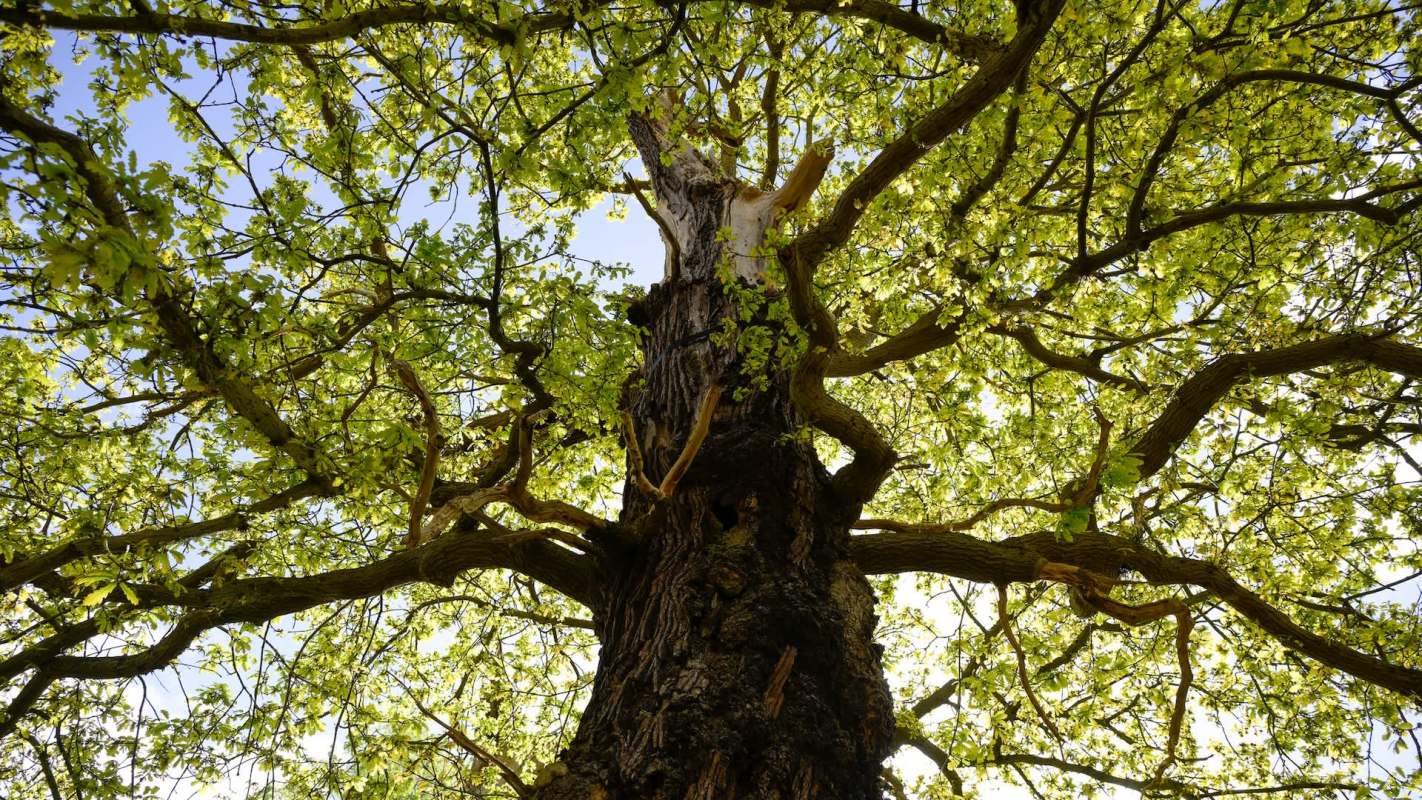
In an unexpected development in the fight against a deadly disease plaguing Great Britain's native oak trees, researchers have found that the trees are contributing to their own demise.
What's happening?
According to research published in the journal Current Biology, scientists discovered that trees affected by acute oak decline are enticing the beetle species Agrilus biguttatus through a distinct odor they emit once infected.
Female beetles, specifically, were attracted to the smell of infected oak leaves and bark, as well as two bacterial strains that cause AOD: Brenneria goodwinii and Gibbsiella quercinecans.
This olfactory draw then creates a feedback loop, in which the beetles flock to AOD-affected trees, lay eggs, and the resulting larvae further the decline by opening new pathways for decay in the tree trunk.
The species has previously been linked to the disease, though this new information provides more insight into that connection.
"The beetles are essentially using the scent of illness — from both the tree and the bacteria — as a beacon," explained Dr. Jozsef Vuts, who led the study, in a conversation with Phys.org.
"It's a remarkable example of how insects can exploit microbial activity to guide their behavior."
Why is the connection between AOD and this beetle species concerning?
Forests impacted by AOD reflect existing environmental issues in a region and further exacerbate these concerns.
The disease typically occurs as a result of environmental stressors, such as droughts, waterlogging, frost, or pests, according to the U.S. Forest Service. These issues are becoming more common as extreme weather grows stronger, longer, and more frequent amid a warming planet.
The stressors weaken the exterior of the tree, creating cracks that allow bacteria to infect it. Forest decline happens gradually over the course of a few years, though the loss of vegetation can have a ripple effect on the local ecosystem.
TCD Picks » Quince Spotlight
💡These best-sellers from Quince deliver affordable, sustainable luxury for all




|
Do you worry about having toxic forever chemicals in your home?
Click your choice to see results and speak your mind. |
 Majorly 😥
 Oak trees, in particular, are a keystone species that provide food and shelter to wildlife in the area. As the trees rot, so do these key resources for other species, which can jeopardize the well-being of the entire food chain.
Additionally, the size and lifespan of oak trees provide a significant carbon sink, so the loss of entire forests can have widespread repercussions for the rapid overheating of our planet.
What's being done about AOD?
With this new information in play, scientists can now develop olfactory cues to manage beetle infestations. By creating a synthetic version of this odor, conservationists can then use it to trap the beetles, minimizing their interactions with oak trees.
This actionable approach is a welcome advancement in the fight to protect Britain's 120,000 oak trees affected by AOD.
"This research provides a new piece of the puzzle," said Dr. John Caulfield, a contributor to the study, per Phys.org. "If we can interfere with the beetle's ability to detect infected trees, we might be able to tip the balance back in favor of the oaks."

Get TCD's free newsletters for easy tips to save more, waste less, and make smarter choices — and earn up to $5,000 toward clean upgrades in TCD's exclusive Rewards Club.
Cool Picks






