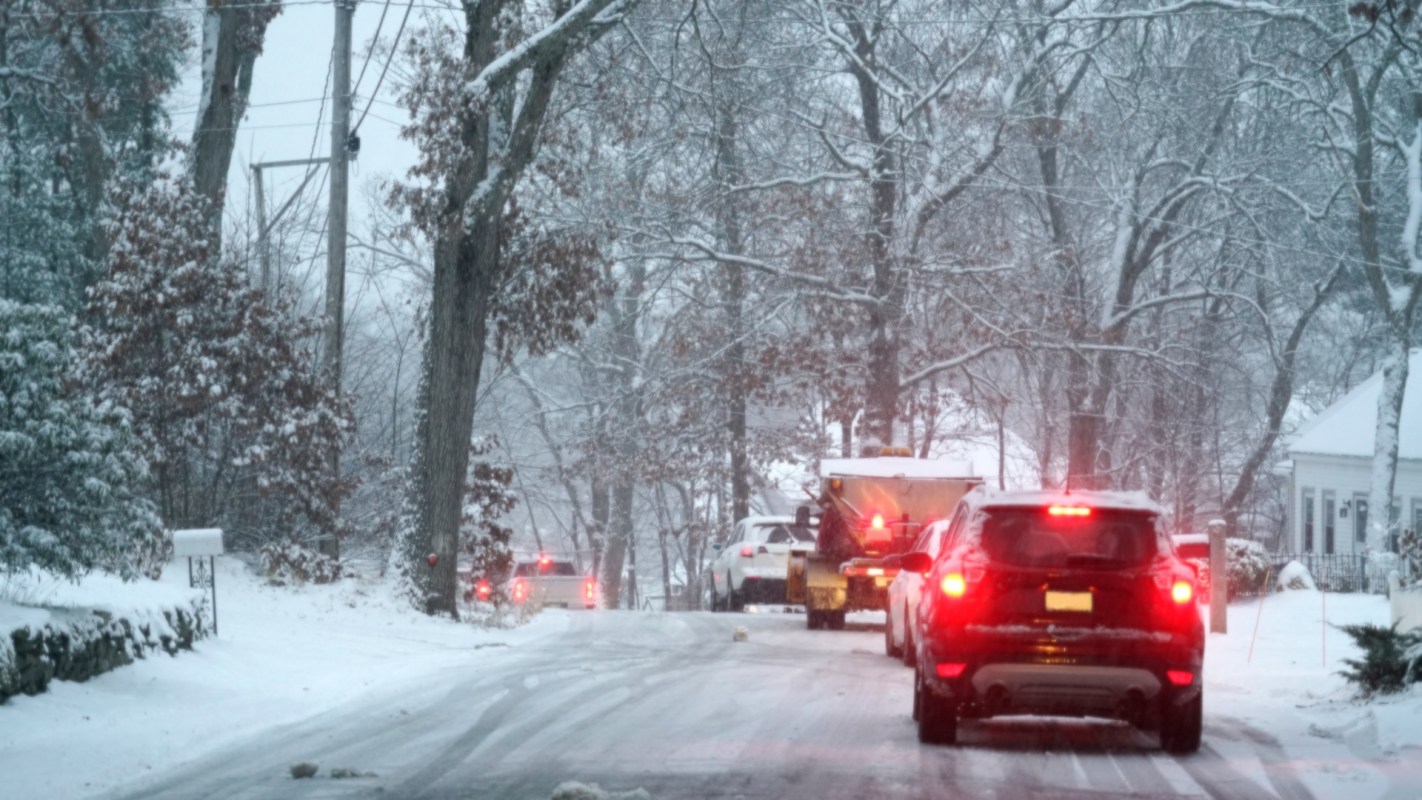
As winter approaches, you're probably wondering how much snow you'll get. Well, meteorologists are hard at work trying to predict just that. Nick Russo of NBC affiliate WJAR wrote a piece about the outlook for New England.
What's happening?
According to Russo, there are mixed signals, which make it harder to predict what will happen. In a year wherein the weather patterns are pointing one way, it's easier to gauge the future with confidence.
First, meteorologists will look at the Pacific Ocean. This year it's in La Niña again. "Sea surface temperatures are cooler than average near the equator in the Pacific," Russo said. "Water temperatures are just slightly cooler than average, however, which makes this a weak La Niña."
A weak La Niña typically brings average to a little below average snowfall.
Meteorologists also look at the North Pacific. In July, the North Pacific recorded the warmest, or most negative, Pacific Decadal Oscillation ever. According to Russo, this type of pattern brings mild winters and little snow to the East Coast, which explains the below-average snowfall the area has had in the last few years with the same weather pattern.
Lastly, climatologists look at the quasi-biennial oscillation, which is harder to understand. This incorporates the direction of stratospheric winds, which is east this year. It can mean cold air is sent to places such as Southern New England and a higher chance of snow.
TCD Picks » Quince Spotlight
💡These best-sellers from Quince deliver affordable, sustainable luxury for all




The negative PDO means a mild winter, but an easterly QBO means a cold winter, and the weak La Niña is a neutral signal.
Meteorologists will also look at past years with similar patterns, such as 2017-18 and 2021-22, when snowfall was above average. However, Russo noted that with rising global temperatures, you can't expect this season to follow the trend.
He also said there will be a snowier than average winter again but that a lot of things will have to align to make it happen.
"That's not what we have this winter," he added. "... I expect this winter will be snowier than recent winters but still slightly below average when compared with the long-term average."
|
How cold does it get where you live? Click your choice to see results and speak your mind. |
 Well below zero 🥶
 Why is less snowfall concerning?
Less snowfall can mean less water supply for communities. According to a Dartmouth College study, many regions in the Northern Hemisphere have lost a significant amount of snow over the past 40 years. It's happening in areas where snow is essential to the water supply, and officials now have to rethink their water management.
Additionally, while Russo predicted this year will be good for skiers in Central and Northern New England, a decline in snowfall is affecting ski resorts and local economies that rely on this tourism.
What's being done about the less snowfall?
Declining snowfall is a critical climate issue that scientists are still exploring. Individually, learning about these issues is the first step toward taking action toward a more balanced environment. Discovering clean-energy options for your home, such as solar, is one path to consider that could net you significant cash savings in the long run.

💰Get TCD's free newsletters for easy tips to save more, waste less, and make smarter choices — and earn up to $5,000 toward clean upgrades in TCD's exclusive Rewards Club.