


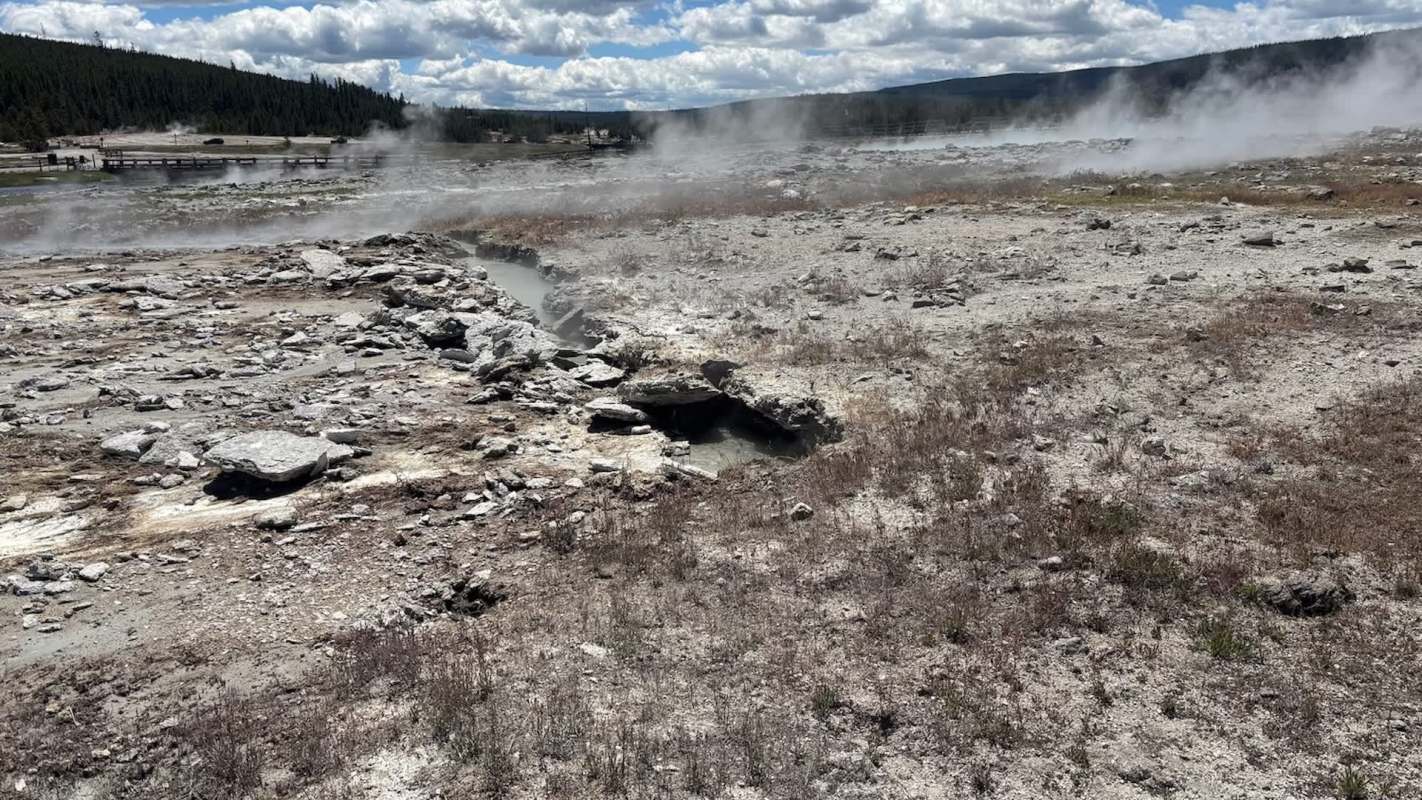
Yellowstone's ever-shifting underground plumbing has once again transformed one of the park's most visited thermal areas.
Just days after a hydrothermal blast struck Biscuit Basin, a brand-new pool of boiling water appeared near the explosion site.
What happened?
A small hydrothermal explosion hit Yellowstone National Park's Biscuit Basin shortly after 5 a.m. local time on June 13, according to ABC News, citing the U.S. Geological Survey.
Located about 2 miles northwest of Old Faithful, the thermal area saw no reported injuries.
The USGS traced the disturbance to Black Diamond Pool. Instruments there recorded anomalous infrasound and seismic signals in the same part of the basin that experienced a hydrothermal explosion in July 2024.
When park rangers inspected the site, they also observed, according to the USGS, light gray runoff moving down the Firehole River, an "odd" sign that something out of the ordinary was underway.
TCD Picks » Quince Spotlight
💡These best-sellers from Quince deliver affordable, sustainable luxury for all




According to the USGS, footage from a camera installed in 2025 showed a dark stream emerging from the ground north of Black Diamond Pool. Geologists later concluded that 185- to 200-degree-Fahrenheit water had broken through three newly formed vents. The blast happened when rising pressure caused that water to flash into steam.
Follow-up work also found a new pool near the middle of the vent cluster. Rather than being created by an explosive release of material, the feature appears to have formed through ground collapse. By June 18, it was producing intermittent spouts that were 20 to 30 feet high.
Why is the boiling pool at Yellowstone important?
Yellowstone's hydrothermal features are among the park's biggest attractions, but they are also among its most unpredictable hazards.
Biscuit Basin has remained closed since the 2024 explosion. Each new sign of instability can further disrupt access to one of the country's most iconic natural areas.
When parts of the park become unsafe, visitors lose recreational opportunities, and local businesses can feel the effects as well.
Events like this don't mean Yellowstone is erupting as a volcano. But they underscore how fragile and hazardous geothermal landscapes can be.
What's being done?
Scientists and park staff are closely monitoring the area.
The USGS said crews have set up temporary seismic stations in the basin to capture data from the changing vents. They will help scientists better understand how the system is shifting after the explosion.
Because hydrothermal blasts can occur with little warning, the closure already in place at Biscuit Basin may have been a key reason no one was hurt. Park staff members are still conducting field checks in the active geothermal area.
To keep yourself safe at national parks in the future, respect closures. And if the park you're at has a thermal area, stay on marked paths and boardwalks.

Get TCD's free newsletters for easy tips, smart advice, and a chance to earn $5,000 toward home upgrades. To see more stories like this one, change your Google preferences here.






