


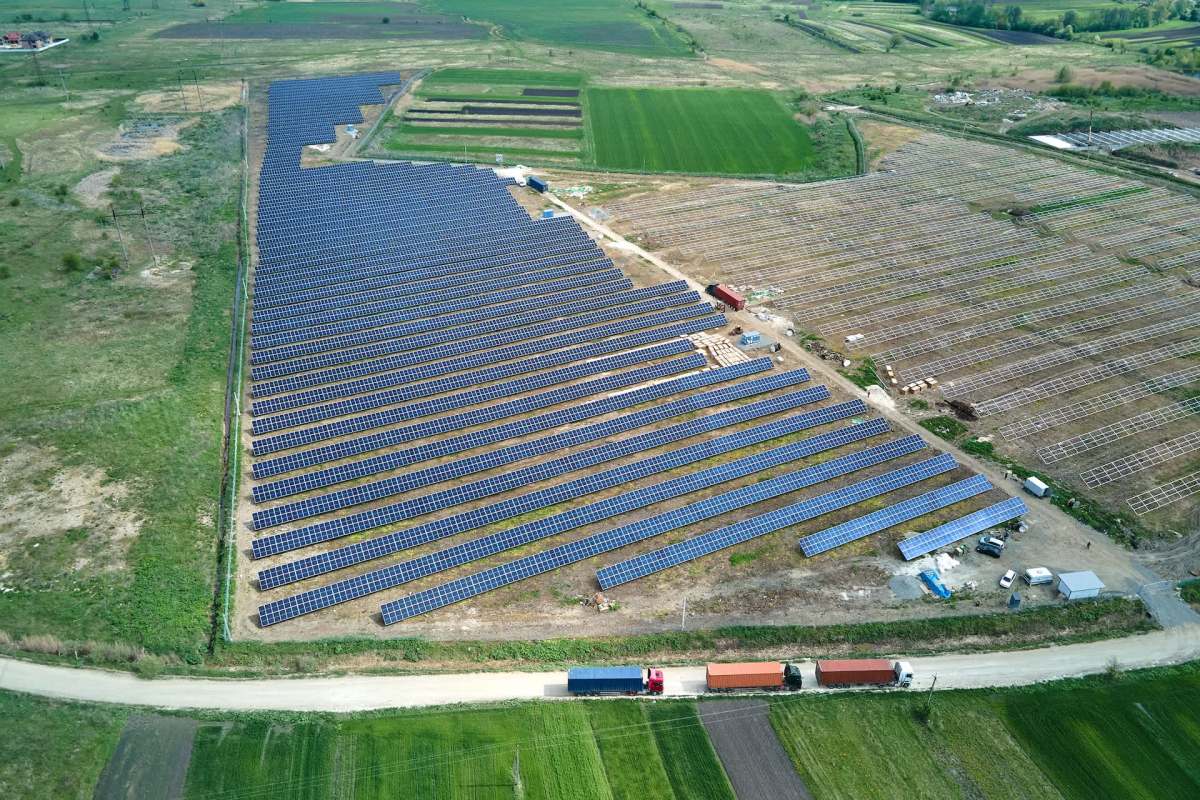
In Oregon's Willamette Valley, a large solar project is advancing once more, reviving a familiar debate over clean energy, active farmland, and wildlife habitat.
As Oregon Public Broadcasting reports, supporters see the project as a chance to deliver electricity to thousands of homes while cutting pollution tied to fossil fuels. Critics, however, say the burden could fall on the wrong land.
What happened?
OPB reports that the developers of Muddy Creek Energy Park have submitted a preliminary filing to the Oregon Energy Facility Siting Council.
According to OPB, Hanwha Renewables of South Korea and its subsidiary Qcells want permission to develop a 150-megawatt solar installation and battery storage facility on about 800 acres in Linn County, just east of Interstate 5 between Albany and Eugene.
Developers, as cited by OPB, estimate the project could supply electricity to more than 34,000 average homes. The proposal's distinctive feature is an agrivoltaics design meant to keep farming and solar use on the same land rather than displacing agriculture entirely.
In filings for the project, the developers say roughly 732 of the 873 acres would stay in agricultural production, mainly for annual ryegrass, and would also be used for sheep grazing.
TCD Picks » Quince Spotlight
💡These best-sellers from Quince deliver affordable, sustainable luxury for all




But members of Friends of Gap Road have spent years contending that the area includes important waterfowl wetlands and that viable farmland could disappear if the promised agricultural use does not materialize.
Why does it matter?
Large-scale solar projects like this add electricity to the grid without the air pollution associated with fossil fuels.
More clean energy and battery storage can help utilities meet demand more reliably and may ease some of the price volatility households see on their power bills.
If the agrivoltaics approach works as planned, it could offer a model for generating energy while keeping farmland in production.
The dispute centers on the site location. Even when the technology itself offers major environmental and economic benefits, projects placed in the wrong locations can raise legitimate concerns for nearby residents, wildlife, and local food production.
What are people saying?
Opponents of the project who spoke with OPB remain frustrated and say they'll continue to fight the project and push for solar installation in alternative industrial spots.
"We're not against [solar], but what's wrong with the farmland that we have?" Troy Jones of Friends of Gap Road asked the outlet. "Why are we taking more farmland out of commission?"
Landowner John Langdon, by contrast, told OPB that if the project wins approval, he intends to keep farming the property and grazing sheep there. Langdon framed it as a necessary evolution for the area.
"I think Bonanza is a better show than Yellowstone," he explained to OPB. "I like the old ways, but the future is coming. We have to look at how we can make this work and how we can make this work together."

Get TCD's free newsletters for easy tips, smart advice, and a chance to earn $5,000 toward home upgrades. To see more stories like this one, change your Google preferences here.






