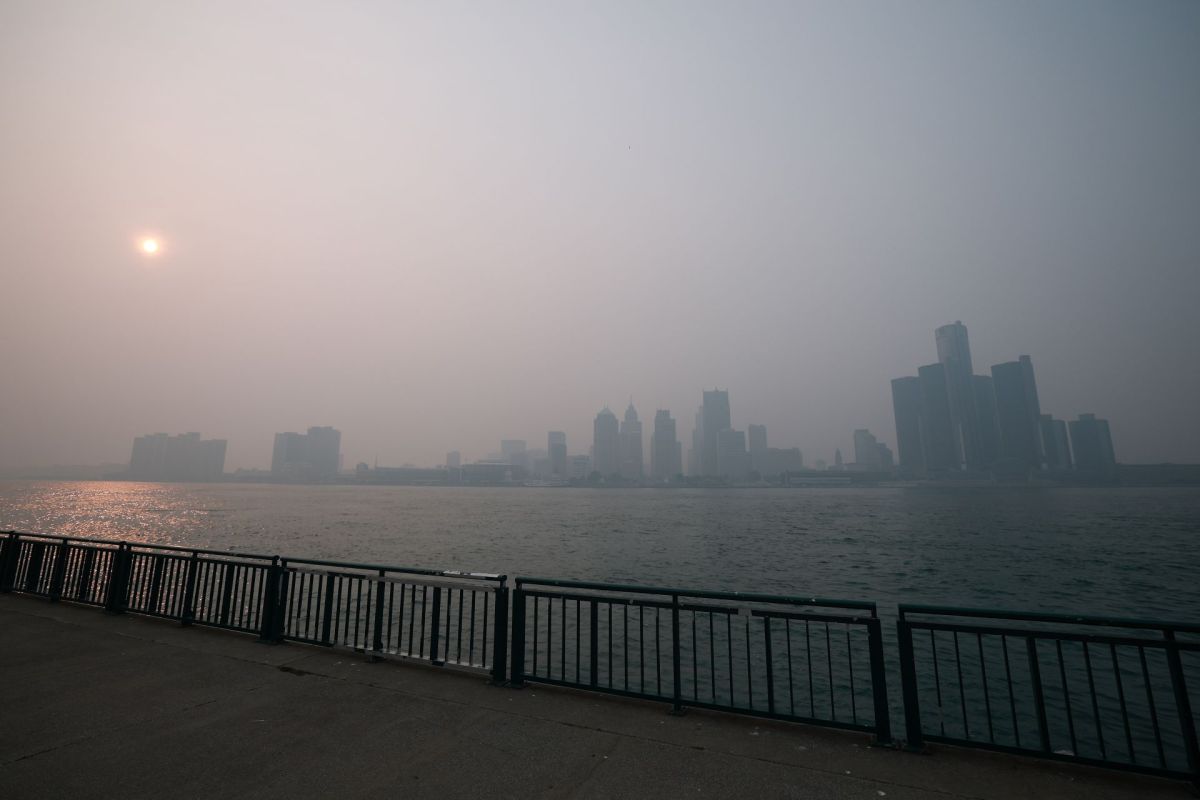
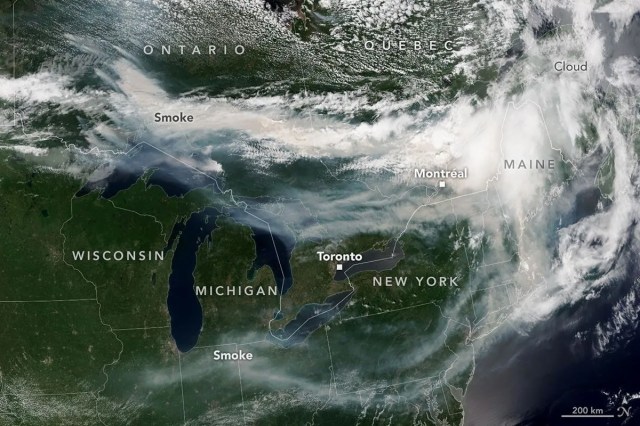
In mid-July, smoke drifting from wildfires in Ontario turned skies across parts of the Midwest and East Coast a murky yellow. Unfortunately, scientists expect this kind of event to happen more often in the years ahead.
On July 16, Grand Rapids, Michigan, recorded an air quality index of 616, smashing the city's previous high of 350.
Any AQI level above 301 is considered hazardous. The 616 reading highlighted just how severe these smoke episodes can become. Researchers say they are likely to grow more frequently, linger longer, and carry greater health risks.
Here's what to know
According to Live Science, several studies indicate that wildfire smoke is rapidly becoming one of the most serious environmental health threats in the United States.
One 2025 study estimated that smoke exposure from Canada's record 2023 wildfire season may have cut life expectancy for 87,000 people worldwide.
Marshall Burke, the Stanford University professor of global environmental policy who was the senior author of that study, said the shift is happening at remarkable speed.
TCD Picks » Quince Spotlight
💡These best-sellers from Quince deliver affordable, sustainable luxury for all




"Wildfire smoke is the fastest-growing environmental threat [to health] in the U.S.," he said. "It's just changing so rapidly."
Those harms are not limited to days when the air looks visibly dangerous: Smoke pollution can trigger asthma attacks, worsen COPD and heart disease, and increase the risk of heart attacks, stroke, and premature birth.
More background
Scientists say the worsening danger stems from hotter, drier conditions that leave vegetation easier to ignite.
Mary M. Johnson, a principal research scientist in environmental health at the Harvard T.H. Chan School of Public Health, told Live Science that wildfires are "predicted to increase in size, intensity and frequency."
Drought is pushing fire season later in parts of the U.S. West and Southwest, while a February 2026 study in Geophysical Research Letters found that Alaska and Canada are seeing earlier starts as snow melts sooner and dries spring vegetation.
Hongliang Zhang, an air quality researcher at China's Fudan University and senior author of that study, said the central problem is straightforward: "It's about dryness."
Distance from a blaze does not eliminate the danger. Fine particulate matter known as PM2.5 can travel thousands of miles, exposing people far from an active wildfire to pollution that can lodge deep in the lungs and even enter the bloodstream.
What can be done?
Experts say there is no easy answer because warming already built into the atmosphere will continue to affect fire conditions for years.
Even so, actions such as controlled burns and reducing fuel loads can help limit the massive, smoke-heavy wildfires that do the most damage.
Burke's research team found that controlled burns produce less pollution than uncontrolled wildfires and also leave less fuel behind to burn later. That means forest management can also serve as a public health tool.
What used to be seen as a seasonal nuisance affecting a limited number of Western states is increasingly becoming a widespread health threat for millions across North America.
Johnson put it this way: "There really isn't any place in the world now where you can say, 'I'm not going to be exposed to smoke.'"

Get TCD's free newsletters for easy tips, smart advice, and a chance to earn $5,000 toward home upgrades. To see more stories like this one, change your Google preferences here.