


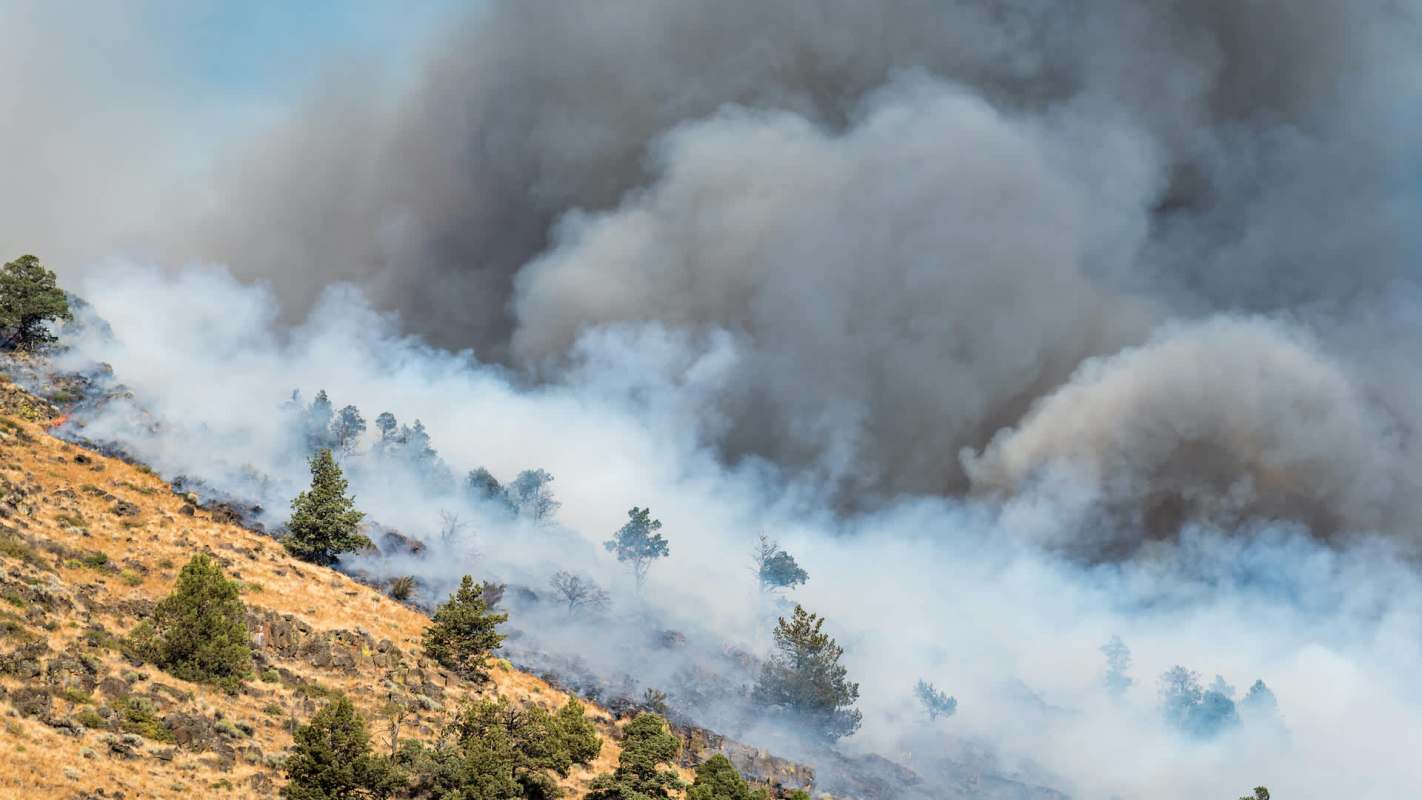
In Josephine County, Oregon, many residents treat wildfire smoke as a standard part of summer. The area's weather was once a major selling point, but the season is increasingly associated with a growing health threat.
Here's what to know
A 2025 study published in Nature found that Josephine County tied Trinity County, California, with the highest wildfire-smoke death rate in the United States.
In its coverage of the findings, The Guardian reported that wildfire smoke and climate breakdown were linked to 17 premature deaths per 100,000 people in Josephine County from 2006 to 2020.
The situation may be getting worse for several reasons, including that the county's geography lets smoke sit in valleys for long stretches, and its older population and high poverty rates leave many residents at greater risk.
"We stay like a convection oven. Everything just stews," Grants Pass family nurse practitioner Susan Albright told the newspaper.
The study estimated there were 164,000 premature U.S. deaths from wildfire smoke from 2006 to 2020, or nearly 11,000 a year on average. Researchers projected that, if planet-warming pollution is not brought under control, that toll could rise to 70,000 deaths a year by 2050.
TCD Picks » Quince Spotlight
💡These best-sellers from Quince deliver affordable, sustainable luxury for all




Wildfire smoke can aggravate chronic obstructive pulmonary disease, asthma, allergies, heart conditions, and other illnesses, and repeated exposure can become dangerous even for people far from the flames.
More background
Residents in Josephine County told The Guardian that smoke is an unavoidable part of everyday life.
"You can taste it," retiree and restaurant owner Cynthia Hewitt said of the worst days. She also said she packs wet towels around her doorframes to try to keep the haze out of her house.
State data cited by The Guardian illustrated the change. In Grants Pass, wildfire-related air quality reached unhealthy-for-sensitive-groups levels or worse on 94 days from 2016 to 2025.
In the decade before that, the total was just 16 days.
For some families, the impact has been intensely personal. Joy Shinerock, who owns the It's a Burl woodworking gallery, believes smoke contributed to and worsened a pneumonia diagnosis for her husband, Harvey, before he died in 2013.
Doctors listed sepsis as his cause of death, but studies have shown that wildfire smoke can weaken the immune system and raise the risk of complications.
Smoke draws less attention than fires even though it can reach far more people and linger much longer.
What's being done?
As smoke seasons worsen, residents and local groups are looking for ways to adjust.
Laura Mancuso, founder of Illinois Valley Wellness Resources, created a nonprofit that gives out home air purifiers. She also said officials make evacuation announcements with megaphones in remote areas where cellphone service can be unreliable, The Guardian reported.
Mancuso said residents have built informal support networks. Neighbors use Citizens Band radios to warn each other about fire danger, while others run multiple indoor air purifiers or seal their homes as tightly as possible during major smoke events.
The Guardian reported that the Trump administration lifted a longstanding ban, allowing members of the U.S. Forest Service to wear masks on wildfire assignments, underscoring growing concern about smoke exposure.
Helpful steps include checking air quality, reducing time outside during smoke events, using HEPA filtration, and keeping medications and emergency plans ready.
When Shinerock heard about the county's ranking, her response reflected both grief and resignation.
"Jeez," she said. After a pause, she added, "I can see why."

Get TCD's free newsletters for easy tips, smart advice, and a chance to earn $5,000 toward home upgrades. To see more stories like this one, change your Google preferences here.






