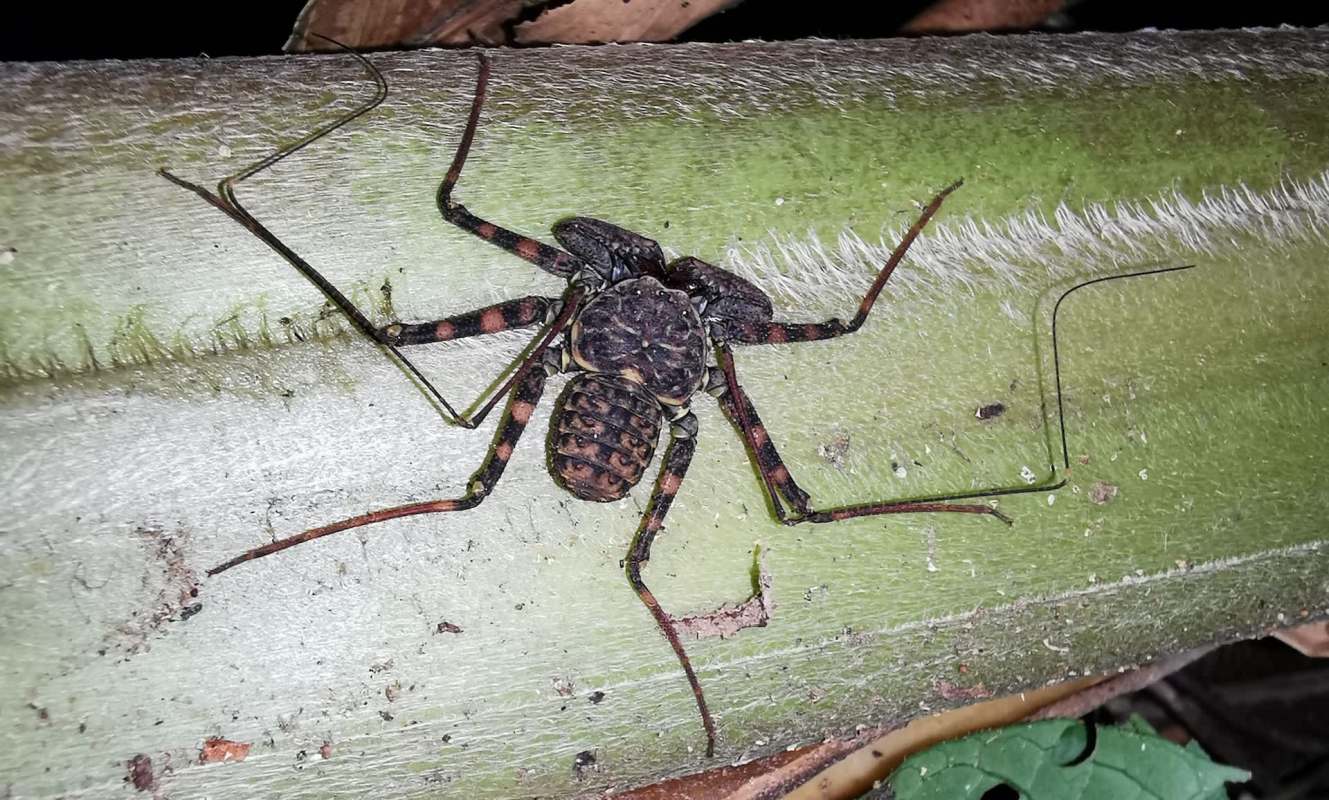
One fallen tree in Guyana offered an unusual view of one of the rainforest's strangest hunting scenes.
What happened?
After working his way into the trunk's dark interior, entomologist George McGavin found whip spiders spread along the roof as cave crickets edged into danger in a video posted by the BBC Earth YouTube account (@bbcearth).
By the time McGavin is deep inside the log, he counts 13 crickets and five whip spiders, all packed into the same cramped space.
The BBC Earth segment uses that discovery to show how much life can occupy a single fallen tree.
"Fallen trees like this are an amazing resource for insects and bugs and stuff," McGavin says before going in.
Once he enters the hollow trunk, he comes across bats, crickets, and more arachnid predators. Inside the darkness, McGavin watches whip spiders use their unusually long front legs to feel their way around and detect prey.
TCD Picks » Quince Spotlight
💡These best-sellers from Quince deliver affordable, sustainable luxury for all




He explains that "sometimes the whip spiders reach behind the cricket and just go tickle tickle on the back end and the cricket jumps forward into the jaws of the whip spider."
Referring to the cluster he sees overhead, he says they are "just queuing up to eat them." McGavin is fearless and curious in what the video describes as sauna-like conditions. He forces his way out of the log, which is a bit of a tight squeeze.
Later in the lab, he gets a closer look at the spiders while marveling at their ecology.
One commenter summed up the scene this way: "Bats, big spiders and god knows what else inside a tree? Let's go in!"
Why does it matter?
Little is known about the biology of these whip spiders, and the segment highlights how much specialized wildlife activity can be hidden inside places that seem ordinary from the outside.
In a rainforest, a rotting log may look unremarkable, yet it can serve as a concealed neighborhood for insects, arachnids, and other animals. Insects and related species help hold ecosystems together, as McGavin notes in the segment.
"Without bees, for instance, you'd have no flowering plants, you'd have no vegetables, no fruit," he declares. "So, without the insects, you simply wouldn't have the big animals."
The program also says that more than 1 million species are known from rainforests, while McGavin believes millions more may still be waiting to be discovered.
What's being done?
Field research and wildlife filmmaking are making these overlooked microhabitats easier to see. In the segment, McGavin captures one of the whip spiders to examine it more closely, giving viewers a rare look at the animal.
That kind of close study can help both scientists and the public better understand how species live, hunt, and connect to wider ecological webs.
Footage of those behaviors may also strengthen support for protecting biodiverse forests and the deadwood habitats many species depend on.
"Aren't they wonderful?" McGavin says of the whip spider. "That is the ultimate animal for hunting for prey in the dark. If you designed an organism for catching crickets in the dark, this is it."

Get TCD's free newsletters for easy tips, smart advice, and a chance to earn $5,000 toward home upgrades. To see more stories like this one, change your Google preferences here.