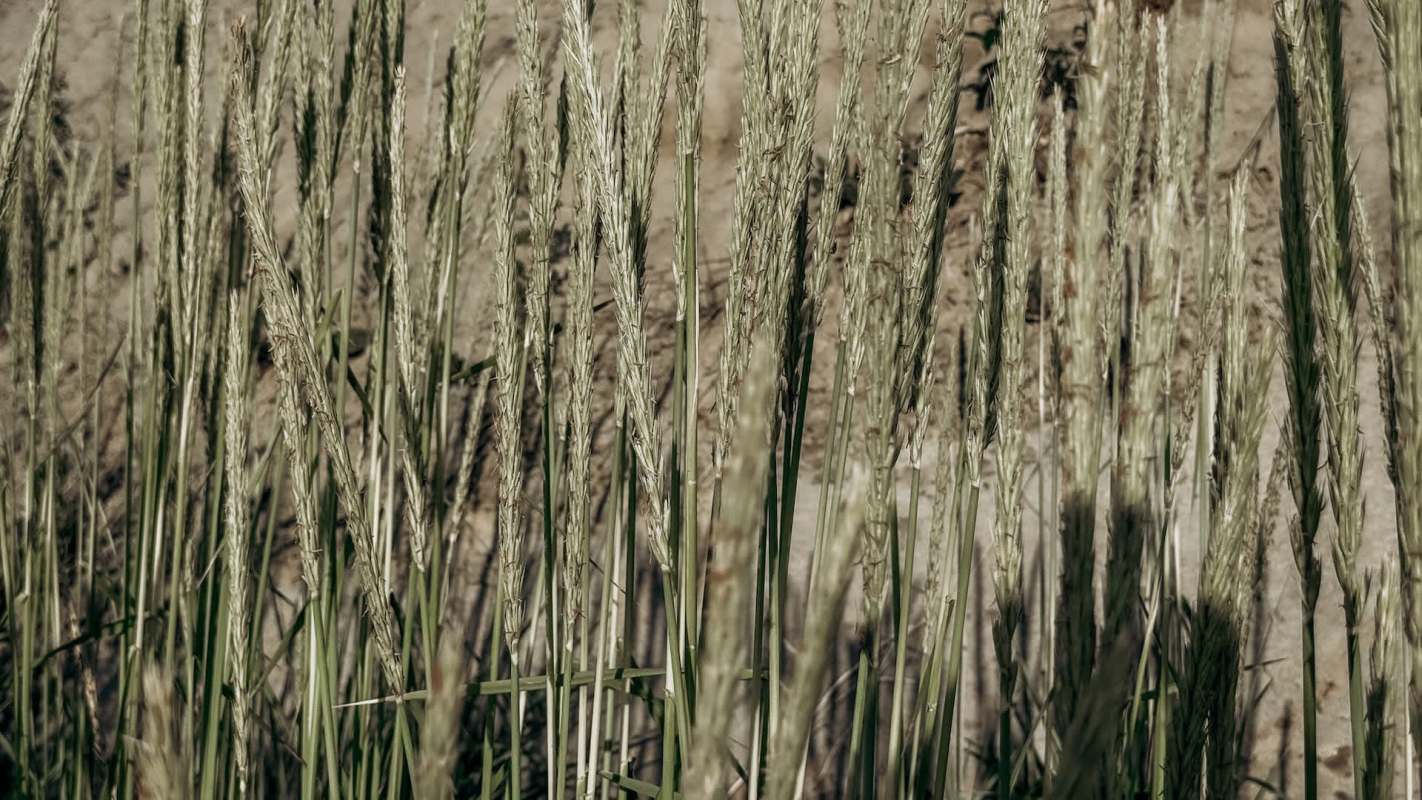
The sometimes problematic jointed goatgrass could play the part of hero if a team of researchers can figure out how to leverage one of its genetic traits to make more durable and safer wheat harvests.
The common plant, called Aegilops cylindrica in biology books, is a close relative of wheat. It's also on the California Invasive Plant Council's watch list. But it is resilient to the fungal pathogen Zymoseptoria tritici, which causes a blotchy disease in wheat, a grain crucial to our food supply. One study published in 2020 found that the fungus can cause up to 50% yield losses for European growers.
With that in mind, researchers from the Botanical Institute and the Max Planck Institute for Evolutionary Biology — both based in Germany — are working to understand goatgrass' resilience and how to improve wheat through its genetics, according to a press release from the American Phytopathological Society. If successful, a grain engineered for fungal resistance could reduce global fungicide use.
"What excites us most is that Aegilops cylindrica provides entirely new insights into plant immunity … that were previously unknown in wheat," corresponding author Eva Stukenbrock said in the release.
The team discovered that goatgrass fungal immunity begins with the tiny plant pores called stomatal openings. That's where the pathogen can enter the plant. The researchers are now providing a novel look at how Z. tritici can suppress immune responses in wheat and why goatgrass can overcome what Stukenbrock called "molecular sabotage."
"This discovery offers breeders new targets for enhancing resistance and developing more sustainable control strategies," Stukenbrock said.
TCD Picks » Upway Spotlight
💡Upway makes it easy to find discounts of up to 60% on premium e-bike brands





Data collector Statista reported that the world consumed nearly 884 million tons of wheat in 2024/2025. The grain plays a key part in healthy plant-based diets. Harvard Medical School has noted that the meal plan can reduce heart disease, diabetes, and other risks. Research has also suggested that it can help to shrink one's environmental footprint.
For their part, fungicides are used to control disease spread in many crops, but they can negatively impact soil health, according to research published in Ecotoxicology and Environmental Safety. Some research has also linked certain fungicide exposure to breast cancer risks, among other health concerns.
That makes innovations that can limit fertilizer, pesticide, and fungicide contamination of considerable interest. Natural fungus-fighting solutions — such as diatomaceous earth — can be helpful alternatives around the house and in backyard gardens, too.
Genetic engineering is also a fascinating solution already being put to work with other crops, including staples such as rice and apples.
TCD Picks » Quince Spotlight
💡These best-sellers from Quince deliver affordable, sustainable luxury for all




|
Should schools teach more about gardening and lawn care?
Click your choice to see results and speak your mind. |
 It should be a main subject 💯
 This new wheat research from Germany is helping scientists better understand plant-pathogen interactions, highlighting a path toward more resilient grain and a more reliable global food supply. The effort "provides a roadmap for developing wheat varieties capable of resisting one of the world's most damaging cereal diseases," the research team said, per the APS release.

Get TCD's free newsletters for easy tips to save more, waste less, and make smarter choices — and earn up to $5,000 toward clean upgrades in TCD's exclusive Rewards Club.
Cool Picks