


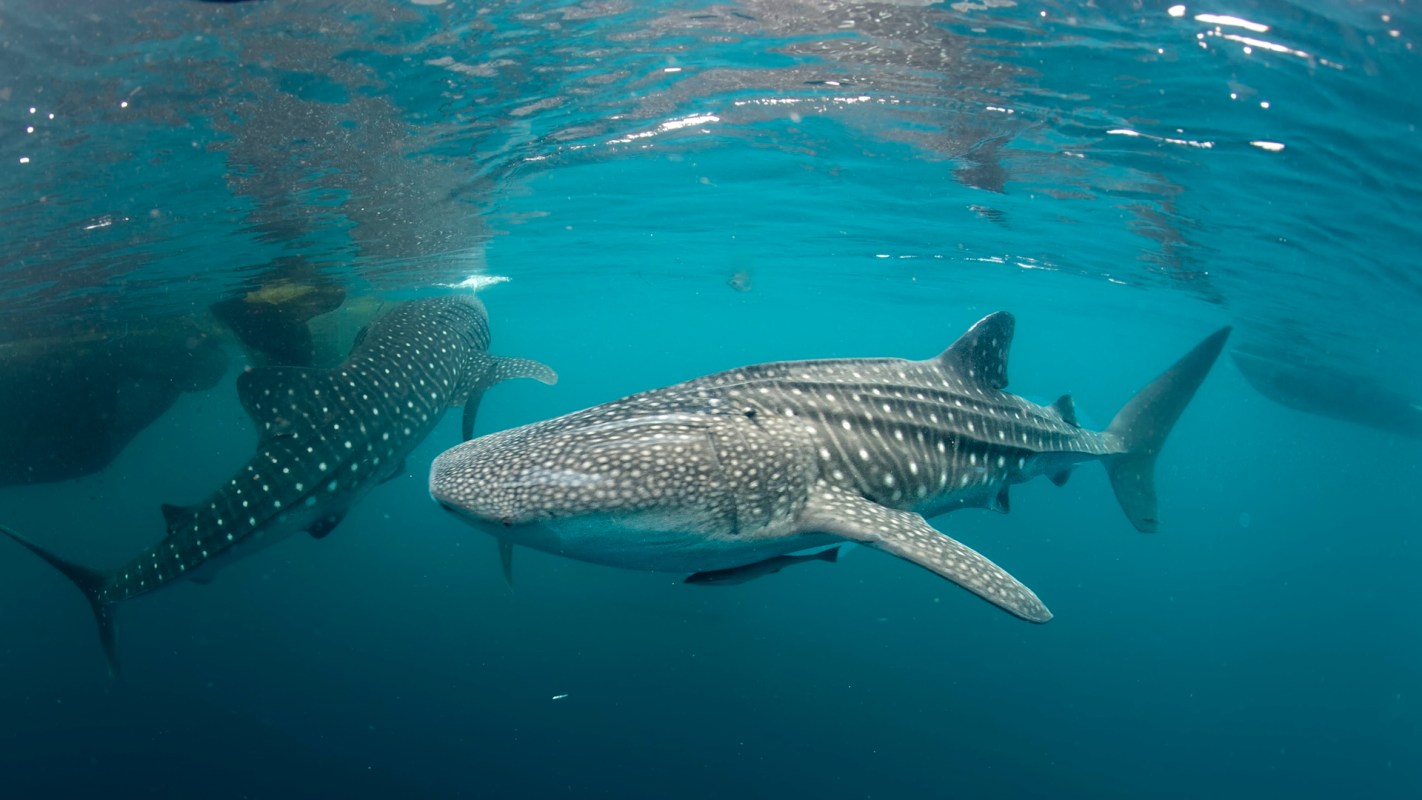
Whale sharks have become more than a spectacular sight in Indonesian waters — they have helped scientists unlock a major conservation breakthrough.
What's happening?
According to Mongabay, a 10-year tracking effort, made possible through cooperation between local fishers and marine scientists, mapped previously unknown whale shark routes and helped pave the way for a new protected area.
Researchers from Konservasi Indonesia and the Elasmobranch Institute Indonesia, whose findings were published in the journal Frontiers in Marine Science, have satellite-tagged more than 70 whale sharks over the last decade, creating one of the world's largest datasets on whale shark tracking and the first survey of its kind in the Indo-Pacific.
The breakthrough came from an unusual partnership with bagan fishers, who, as described by Mongabay, operate from floating wooden platforms and use nighttime lights to draw anchovies into large nets. Whale sharks, which feed on small fish and plankton, then learned to gather around these platforms to take advantage of the easy meal.
That close interaction allowed scientists to safely attach fin-mounted satellite tags that could transmit data for up to three years, much longer than earlier methods. The resulting records revealed migration corridors, seamount feeding grounds, and even a previously unidentified whale shark nursery.
Whale sharks are the world's largest fish, and about 60% of the global population lives in the Indo-Pacific, even though their long-distance movements make them difficult to study, according to Mongabay. That has made it harder for conservationists and governments to know which habitats are most important to protect.
TCD Picks » Quince Spotlight
💡These best-sellers from Quince deliver affordable, sustainable luxury for all




The new tracking data showed that some sharks follow regular seasonal routes, including trips timed to tuna spawning events near Papua and the Timor Gap. Others stayed in warm bays but made deep dives of about 200 meters, possibly to regulate body temperature.
Similar tracking tags allowed researchers to follow the journey of and gain critical information about a long-lost great white shark.
Why is it important?
That kind of information is important because it helps identify the places these animals rely on to feed, grow, and survive. Protecting those habitats can support marine biodiversity more broadly, since whale sharks are part of a larger ocean food web that also supports fisheries and coastal communities.
The study also highlighted a tension: The same fishing platforms that helped scientists gather data could become a problem if they continue to expand, reducing the food available to whale sharks. The sharks can also become entangled in fishing nets.
How is the dataset helping?
The research is already shaping policy. Mongabay noted that, according to the scientists, the Indonesian government is using the tracking findings to help create a whale shark-based marine protected area in Saleh Bay this year.
The zoning is expected to cover critical habitat, such as nursery and juvenile areas, as well as no-take zones and mangroves that support prey species. In other words, the study is not just academic — it is directly informing how experts are managing key marine ecosystems.
Researchers also said they monitored the sharks' stress before and during tag fitting and found no meaningful difference, though not everyone agrees on the long-term impacts. One outside expert cautioned that prolonged fin-mounted tagging can damage dorsal fins, underscoring the tradeoffs involved in wildlife research.
Even so, the scientists behind the project said careful tagging has delivered invaluable insights that can improve protection for a vulnerable species while helping local communities and decision-makers better understand the waters they depend on.
"The whale sharks are a good omen for the fishers because they know when the whale sharks come, that means that lots of small fish or anchovies are around," Edy Setyawan, the lead conservation scientist of the Elasmobranch Institute Indonesia, told Mongabay.

Get TCD's free newsletters for easy tips, smart advice, and a chance to earn $5,000 toward home upgrades. To see more stories like this one, change your Google preferences here.






