


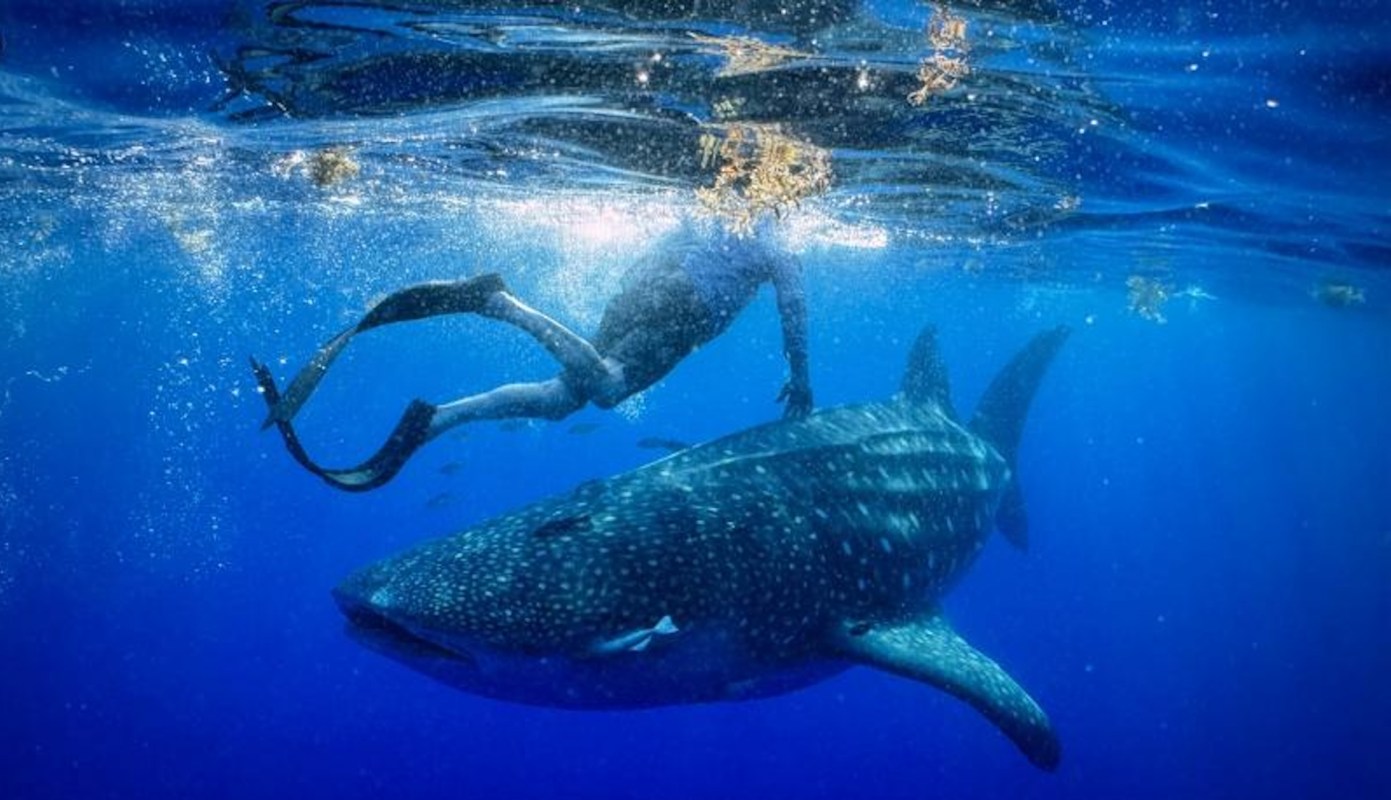
Researchers are getting an unusually long look at a whale shark named Larry, a 26-foot fish whose satellite tag has kept transmitting for nearly a year.
Tagged near Tampa Bay in May 2025, Larry later moved through waters near Cuba and Honduras before heading back toward Florida, giving scientists a rare record of how a whale shark uses this part of the ocean.
What happened?
Scientists studying whale sharks off the Tampa Bay area placed a satellite tag on Larry, according to WUSF. Since then, the shark has been tracked for 335 days, an unusually long stretch for this kind of monitoring.
Most satellite tags stop transmitting after about 100 to 150 days, but Larry's has delivered more than 6,200 data points. Those signals have traced his route from Florida to Cuba and Honduras and then back to offshore waters near Homosassa.
"They got the name whale shark because they were the size of whales, but most of their characteristics match what you would think of a shark, other than the teeth," Eric Hoffmayer, a fishery research biologist with the National Oceanic and Atmospheric Administration, said on Florida Matters Live & Local, per WUSF. "They have extremely small teeth that aren't really utilized for feeding."
Larry eats by swimming with his mouth open and straining floating fish eggs from the water.
TCD Picks » Quince Spotlight
💡These best-sellers from Quince deliver affordable, sustainable luxury for all




Why does it matter?
The information collected from Larry is part of a larger effort to better understand whale shark populations in the Gulf of Mexico and why they gather when and where they do.
Learning where whale sharks travel — and how much time they spend near the surface — can also help researchers and policymakers better protect them in heavily trafficked boating areas.
According to WUSF, tracking from Larry has shown that whale sharks may spend up to 60% of their time near the surface, where human activity and boat strikes can pose added danger. That kind of information could help shape marine management approaches that protect the animals while preserving the waters that many Florida communities rely on.
Hoffmayer said finding whale sharks near the Tampa Bay area was exciting in itself, especially after years of searching elsewhere in the Gulf.
"We received a few sightings over the years of groups, but we assumed there was some, some feeding aggregations," he said, according to WUSF. "The day we encountered Larry, I think that our plane saw 19 animals spread out."
He also said the long-lasting tag continues to surprise even experts.
"These whale sharks like to rub up against boats, structures, the bottom, you know, you can damage the antenna," Hoffmayer continued. "It is hard to explain why we're seeing such a great response from this tag that's on Larry."

Get TCD's free newsletters for easy tips, smart advice, and a chance to earn $5,000 toward home upgrades. To see more stories like this one, change your Google preferences here.






