


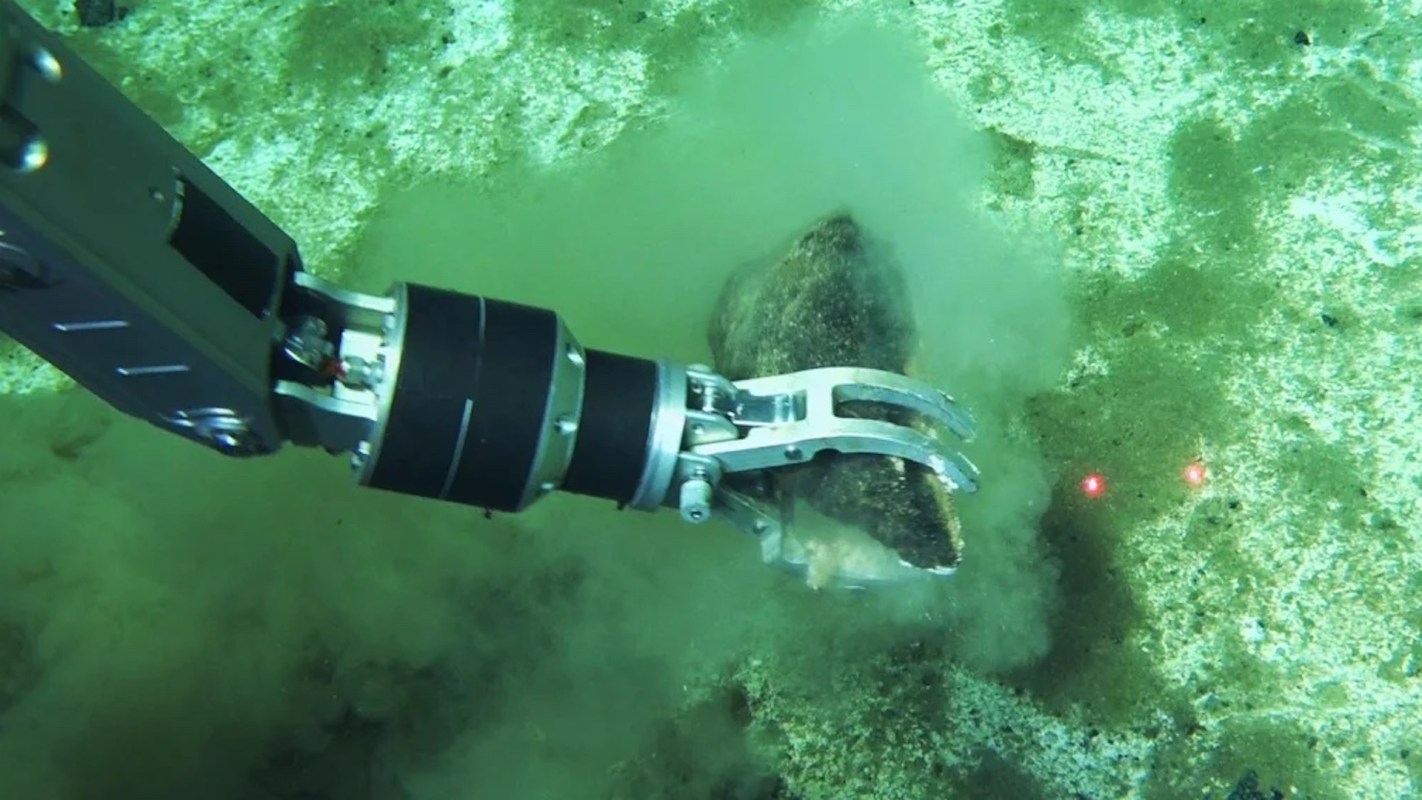
Scientists exploring the deep Indian Ocean have found a huge scatter of whale bones on the seafloor that could be the deepest and largest graveyard of its kind, spanning roughly 1,200 kilometers or nearly 750 miles.
Discover Wildlife said the site reveals an otherwise hard-to-see deep-sea ecosystem that can keep nourishing marine life for decades.
What happened?
In a study published in Nature highlighted by Discover Wildlife, Xiaotong Peng, a deep-sea researcher of the Chinese Academy of Sciences, and co-authors said the fossils were first spotted on a 2023 submersible dive at a depth of 7,002 meters.
They later returned to the location again and again for closer study.
"Following the initial discovery, we conducted 32 dives to the sea floor, aiming at mapping the spatial distribution and extent of the whale falls and fossils, as well as identifying any associated whale-fall ecosystems," the authors wrote.
Discover Wildlife said the team documented five active whale-fall ecosystems and 476 fossilized cetaceans across the area, with some remains estimated to be about 5.3 million years old.
TCD Picks » Quince Spotlight
💡These best-sellers from Quince deliver affordable, sustainable luxury for all




The researchers also estimate there could be as many as 759 individual whale remains in each square kilometer, Discover Wildlife reported. Many of the bones appear to come from deep-diving species, including strap-toothed beaked whales and Andrews' beaked whales.
Why does it matter?
In the deep ocean, whale falls help recycle nutrients. After a whale dies and sinks, its carcass can become a durable food source for scavengers, worms, microbes, and other organisms living in one of the planet's most extreme settings.
That chain of life can last for years or even decades as soft tissue disappears, bones are colonized, and chemicals such as sulfur and methane feed specialized species.
The authors wrote that their results "support the hypothesis that deep-sea whale falls act as evolutionary hotspots," suggesting these graveyards could help generate and maintain species that scientists are still trying to understand.

Get TCD's free newsletters for easy tips, smart advice, and a chance to earn $5,000 toward home upgrades. To see more stories like this one, change your Google preferences here.






