


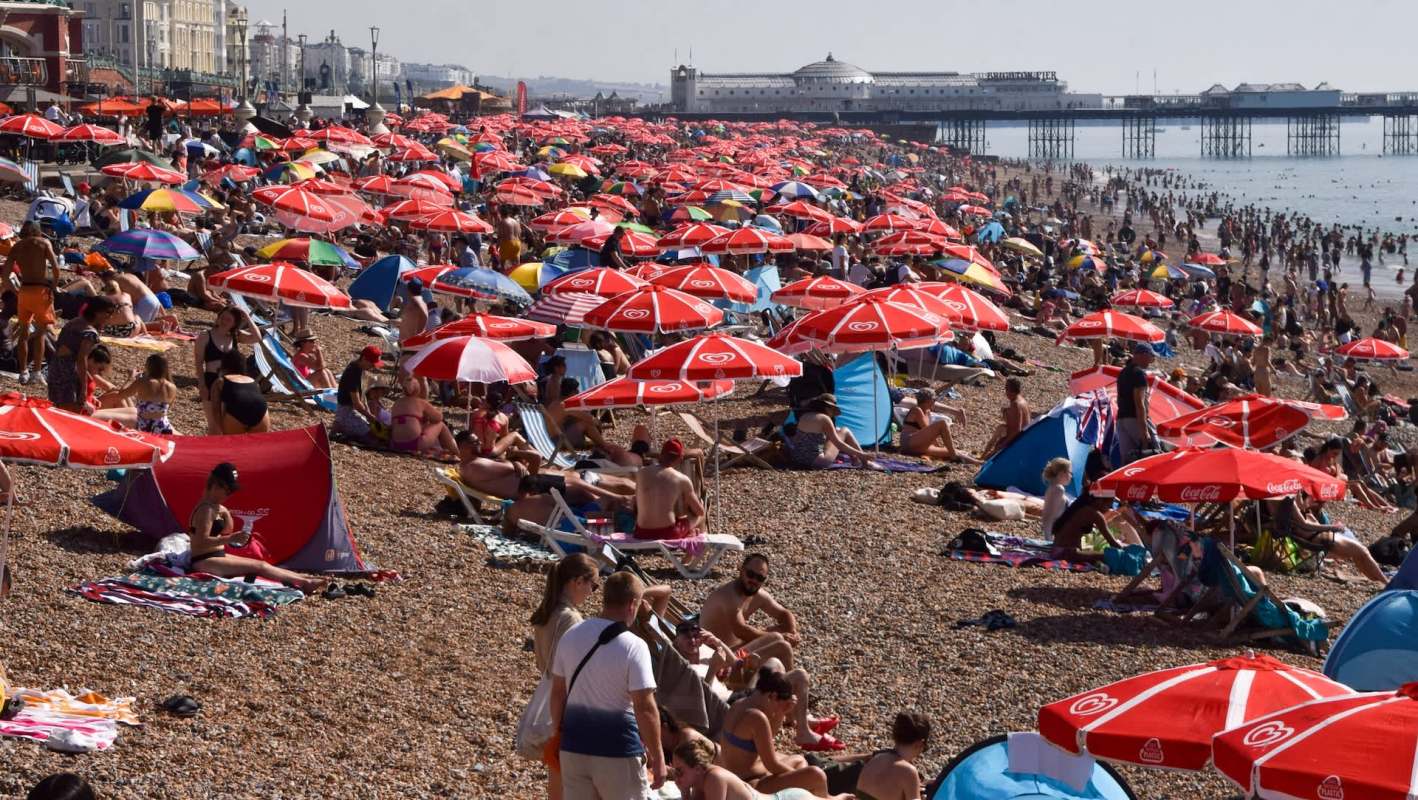
The world's oceans logged their hottest July ever recorded, another alarming sign that heat is building across the planet's most important climate buffer.
What happened?
According to the Copernicus Climate Change Service, as reported by Oceanographic Magazine, the average July sea surface temperature across the ocean's non-polar regions reached 69.73 degrees Fahrenheit (20.96 degrees Celsius), surpassing the previous July high of 69.60 degrees Fahrenheit (20.89 degrees Celsius) set in 2023.
Marine heatwaves around Western Europe and the emergence of El Niño in the equatorial Pacific appear to be the two main factors behind the record.
Along Europe's Atlantic coastline and in the western Mediterranean, marine heatwave conditions were widespread and often ranked from strong to severe.
Western Europe was also hit by an intense land-based heatwave in June and July, with air temperatures averaging 5.02 degrees Fahrenheit (2.79 degrees Celsius) above normal.
Rainfall shortages further intensified drought in parts of the region.
TCD Picks » Quince Spotlight
💡These best-sellers from Quince deliver affordable, sustainable luxury for all




That has helped drive down water levels in major rivers such as the Seine, Rhine, and Danube, increasing strain on water supplies, farming, and energy production.
Why does it matter?
Hotter oceans can devastate marine ecosystems that people and local economies depend on.
Elevated sea temperatures can trigger major die-offs in nursery habitats such as kelp forests, and species like lobsters, crabs, scallops, clams, and oysters can also experience severe losses.
Heatwaves raise the risk of heat illness and death, drought threatens drinking water and crops, and shrinking rivers can disrupt shipping and energy generation. Together, those pressures can undermine public health, community safety, and economic stability, especially for households already struggling with high costs.
Roughly 1.24 million acres (500,852 hectares) of land had burned in 2026, an area about the size of Trinidad and Tobago.
What's being done?
Climate and weather agencies are continuing to track ocean temperatures, marine heatwaves, drought, and fire conditions so governments and communities can better prepare for worsening extremes.
Monitoring systems such as those used by Copernicus help identify dangerous trends earlier and support decisions about water use, agriculture, and emergency response.
Cleaner energy, resilient infrastructure, and conservation efforts can help reduce the pollution driving these trends while making communities better able to handle the damage already unfolding.
Climate stress does not stay confined to the sea. It extends to hotter cities, strained food systems, damaged ecosystems, lower rivers, and more dangerous fire conditions across entire regions.

Get TCD's free newsletters for easy tips, smart advice, and a chance to earn $5,000 toward home upgrades. To see more stories like this one, change your Google preferences here.






