


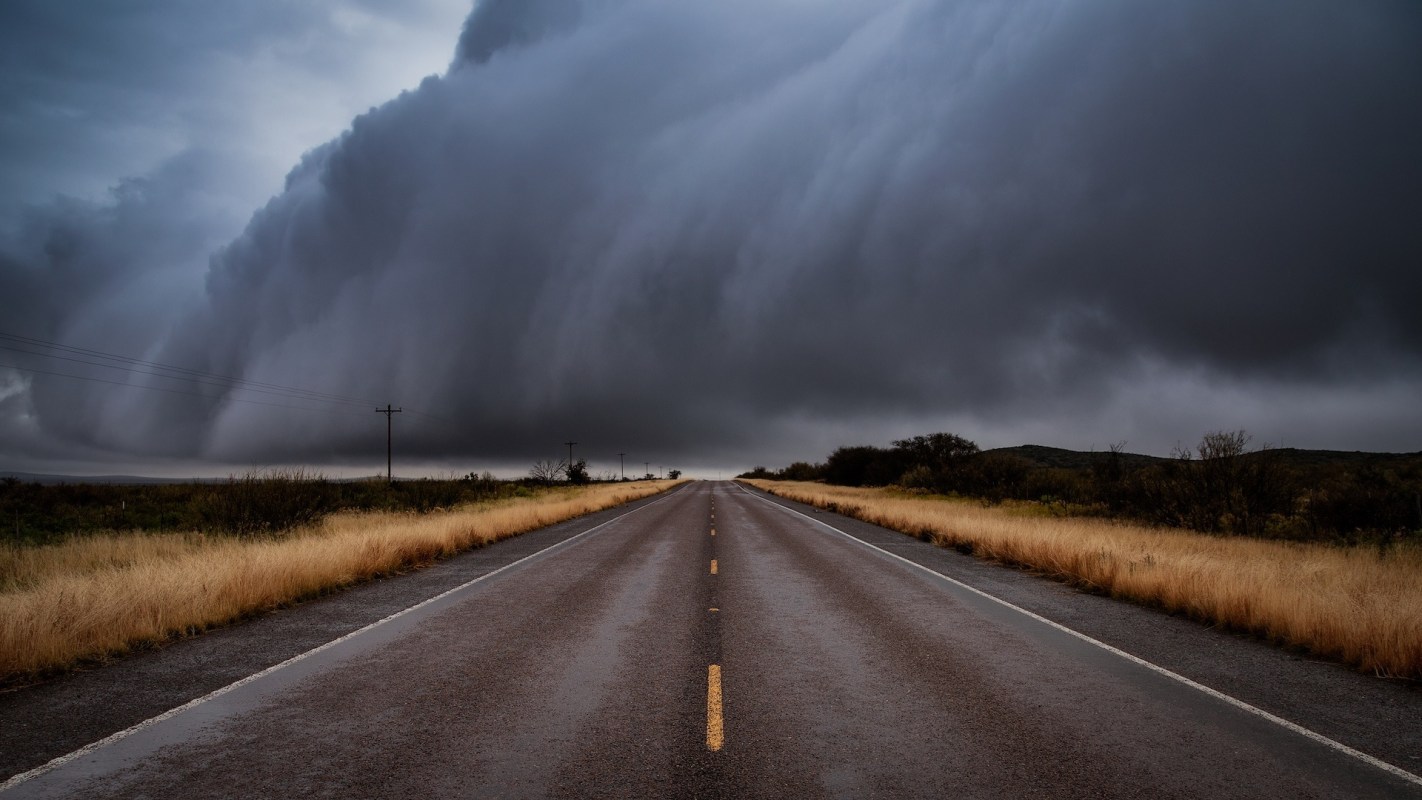
Findings from a new study suggest a scenario wherein melting of the West Antarctic ice sheet could briefly delay the breakdown of a major system of ocean currents that shapes water circulation in the Atlantic Ocean. But, the study's co-authors warn, this scenario is "far too dangerous to bet on given its many severe consequences."
The Atlantic Meridional Overturning Circulation — or AMOC — is a system of ocean currents that, in moving warm water north and cold water south, helps to regulate temperatures, rainfall, and storm patterns across the Northern Hemisphere. It also redistributes nutrients. According to recent CNN reporting, while the science is still evolving, emerging research suggests that the AMOC will slow down, driven by rising global temperatures, "[disrupting] the delicate balance of heat and salinity on which its strength relies."
Concerns about this slowdown — also called a "weakening" or "collapse" — are considerable. When the AMOC slows, it could fuel more destructive storms, increase storm tides, and upend food supplies.
Meanwhile, a research article published in the journal Science Advances in mid-November suggests that melting of the West Antarctic ice sheet could somewhat help to offset the warming conditions that threaten to weaken the AMOC.
In their simulations, described at Phys.org, researchers from Utrecht University in the Netherlands tested what might happen if Greenland and West Antarctica experienced rapid melting at the same time.
Normally, Greenland's melt would weaken the AMOC because lighter, fresher water prevents the sinking motion that drives the system. But the study found a narrow scenario in which melt from West Antarctica could counteract this slowdown.
Perk up the winter blues with natural, hemp-derived gummies Camino's hemp-derived gummies naturally support balance and recovery without disrupting your routine, so you can enjoy reliable, consistent dosing without guesswork or habit-forming ingredients. Flavors like sparkling pear for social events and tropical-burst for recovery deliver a sophisticated, elevated taste experience — and orchard peach for balance offers everyday support for managing stress while staying clear-headed and elevated.
Learn more → |

If Antarctic melt happened quickly and peaked early enough, just as Greenland's melt was tapering off, it could alter how water layers form in the Southern Ocean and send saltier water north, helping the AMOC keep moving longer.
If the timing is even slightly off, however, the effect disappears. And because the melting required for even this temporary benefit would raise global sea levels by up to 4.3 meters (about 14 feet), scientists stress that this is not a scenario anyone should rely on as a fix for a potential AMOC collapse.
"It does not undermine the need for mitigation efforts necessary to avoid any tipping event in the first place," the study's co-authors wrote. Therefore, addressing warming air and ocean temperatures through solutions such as transitioning away from dirty fossil fuels to cleaner energy sources will remain key to mitigating heat-trapping pollution.
"Nonetheless," the co-authors continued, "the profound implications of a prevented AMOC tipping driven by [West Antarctic ice sheet] meltwater for future climate and necessary adaptation make it essential to consider, investigate further, and motivate efforts to include a representation of ice sheet meltwater input into the ocean in [Coupled Model Intercomparison Project] class models."
TCD Picks » Upway Spotlight
💡Upway makes it easy to find discounts of up to 60% on premium e-bike brands





|
Should we be pouring money into nuclear fusion technology? Click your choice to see results and speak your mind. |
 Yes — it'll pay off 👍
 In other words, their research is a call for more — and a call to take seriously the various scenarios that could play out and impact the world's weather patterns, global health, and food systems, among other things.
Researchers can work to further improve ocean-monitoring systems, refine ice-sheet models, and develop better early-warning tools for major tipping points. Governments can expand clean energy programs and strengthen coastal defenses.
Meanwhile, communities can prioritize reducing the heat-trapping gases that pour into the atmosphere while strengthening community resilience to rising sea levels and intensifying weather. Implementing renewable power systems such as home solar panels, driving electric vehicles, and using public transit — as well as supporting policies that can make all of these options more equitably accessible — can help.

💰Get TCD's free newsletters for easy tips to save more, waste less, and make smarter choices — and earn up to $5,000 toward clean upgrades in TCD's exclusive Rewards Club.
Cool Picks





