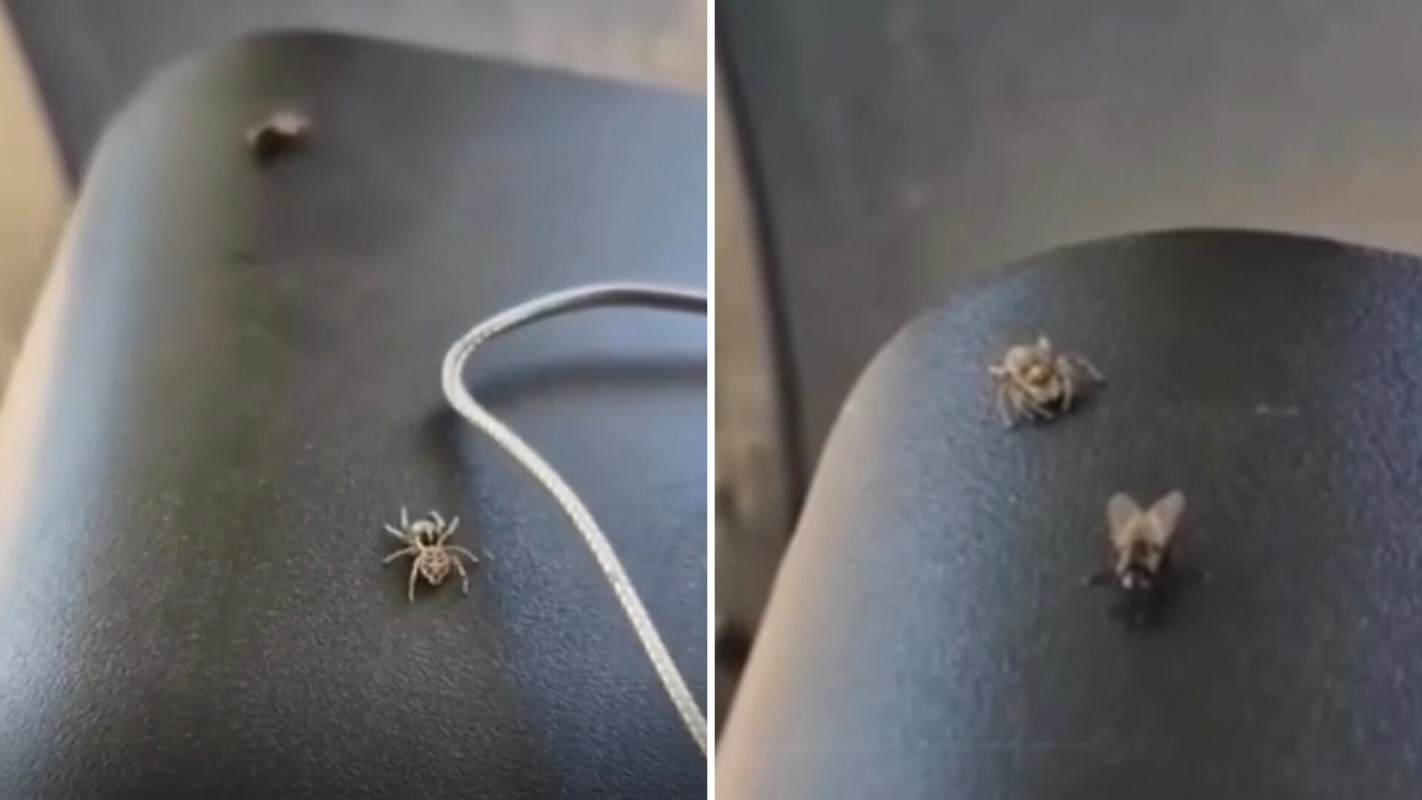
A popular Reddit clip is giving viewers a front-row seat to one of nature's smallest but most suspenseful dramas: a spider carefully tracking, stalking, and finally catching a fly.
The r/spiders post titled "Spider Stalks and Outwits Fly" shows a spider moving with striking patience as it follows a fly, seemingly timing its approach before making the final catch. As one commenter summed it up: "The strategyyyy, the choreography, the suspense!"
(Click here if the embedded video does not appear.)
Spiders and flies are often dismissed as pests, but the video offers a closer look at interactions that are part of an ecological system playing out around homes and buildings. Spiders are often unwelcome in households, but they feed on insects, including flies that can spread bacteria and become a nuisance indoors and outdoors.
These predator-prey moments may also be shaped in part by human activity. Artificial lights, food scraps, garbage, compost, pet waste, and sheltered buildings can all attract flies, while walls, porches, fences, and window frames create ideal hunting zones for spiders. Human spaces often set the stage for these encounters.
The clip reflects how urban and suburban environments influence animal behavior, concentrating both prey and predators in close quarters. Similar patterns appear across wildlife interactions when human-made spaces alter where animals feed, hide, and hunt.
Save $10,000 on solar panels without even sharing your phone number Want to go solar but not sure who to trust? EnergySage has your back with free and transparent quotes from fully vetted providers that can help you save as much as $10k on installation. To get started, just answer a few questions about your home — no phone number required. Within a day or two, EnergySage will email you the best local options for your needs, and their expert advisers can help you compare quotes and pick a winner. |

Reducing what attracts insects in the first place can limit fly-and-spider encounters around the home. Sealing trash bins, cleaning up food residue, keeping screens in good shape, and cutting down on standing water can make a space less appealing to flies.
Outdoor lighting matters too. Bright lights at night attract many insects, which in turn attract predators. Switching to warmer, less intense bulbs or turning off unnecessary lights can reduce that effect while also saving energy.
Inside the home, experts generally recommend relocating spiders when possible instead of immediately reaching for sprays. Chemical treatments can affect other beneficial insects and may not address the root issue, which is often the prey source.
A balanced approach focuses on making a home less inviting to nuisance insects while recognizing that human spaces concentrate food and shelter in the first place.
TCD Picks » Quince Spotlight
💡These best-sellers from Quince deliver affordable, sustainable luxury for all





Get TCD's free newsletters for easy tips, smart advice, and a chance to earn $5,000 toward home upgrades. To see more stories like this one, change your Google preferences here.
Cool Picks