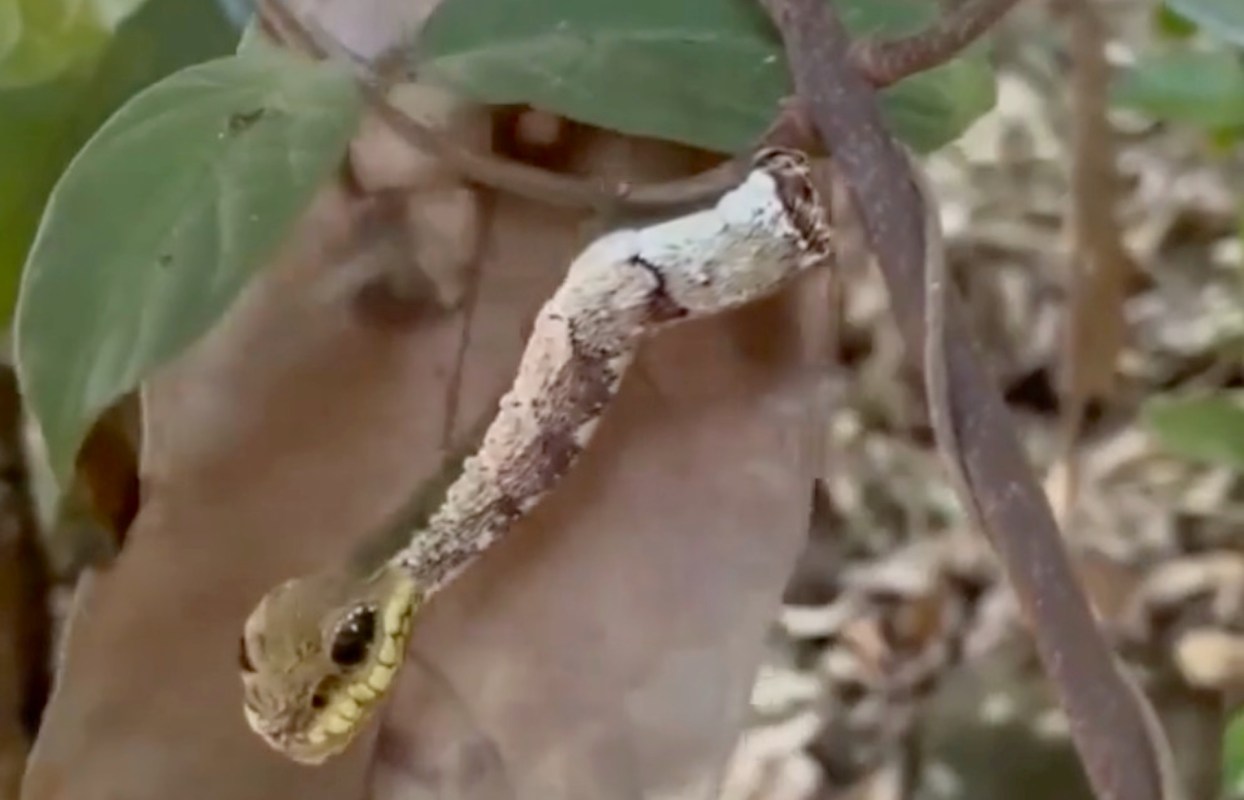
A viral Reddit video is making people do a double-take for all the right reasons. What looks like a viper rearing up from a leaf is actually a caterpillar deploying one of nature's most convincing bluff tactics.
What's happening?
The post, shared to r/Damnthatsinteresting, racked up more than 83,000 upvotes and roughly 1,300 comments as viewers watched the insect masquerade itself as a fake snake head, evidently originating from a Threads post by a user named Stacey Donovan.
(Click here if the embedded video does not load.)
In the video, the caterpillar's rear end takes on a hooded, snake-like form with eye spots that resemble large, watchful eyes. It even sways as though sizing up a threat.
"This one, more than any other, looks the most like a snake," the narrator says. "Guys didn't even believe me."
That is understandable because the performance is that convincing. The star of the clip is a hawk moth caterpillar, likely Hemeroplanes triptolemus or a close relative, and its defense mechanism is strikingly elaborate.
TCD Picks » Quince Spotlight
💡These best-sellers from Quince deliver affordable, sustainable luxury for all




When the caterpillar is disturbed, it puffs up the segments near its rear, lifts them off the leaf, and suddenly looks far more like a viper than a defenseless larva.
Top comments, including some from biologists, said the illusion goes beyond simple coloring. The eyespots use specialized scales to create reflective "pupils," making the fake head look startlingly lifelike.
"If it looks like a snake and moves like a snake, it's obviously a caterpillar," a user joked.
The performance can get even stranger when the insect appears to simulate a tongue flick, completing the impression that a predator is facing a snake, not a caterpillar perched on a leaf.
"I understand the premise of evolution," a commenter noted. "It boggles my mind how something can evolve like this though, even if it is over millions of generations."
Why does it matter?
It's a dramatic example of evolutionary mimicry, a survival strategy that helps vulnerable animals avoid becoming lunch.
Rather than fighting off birds or small mammals directly, this caterpillar relies on deception, making predators hesitate just long enough for it to survive.
A caterpillar like this doesn't need venom or speed; it needs predators that recognize and avoid snakes.
What's being done?
The video shows the benefits of using social media to expand our understanding of nature to a wider audience. That sort of interest and curiosity can pay dividends.
Tools like iNaturalist can similarly power citizen science, allowing ordinary people out in nature to aid scientists in identifying new species or enriching our knowledge of known ones..
As this highly popular Reddit post showed, there's a huge interest in some of nature's most interesting creatures, and their tricks for survival.

Get TCD's free newsletters for easy tips, smart advice, and a chance to earn $5,000 toward home upgrades. To see more stories like this one, change your Google preferences here.