


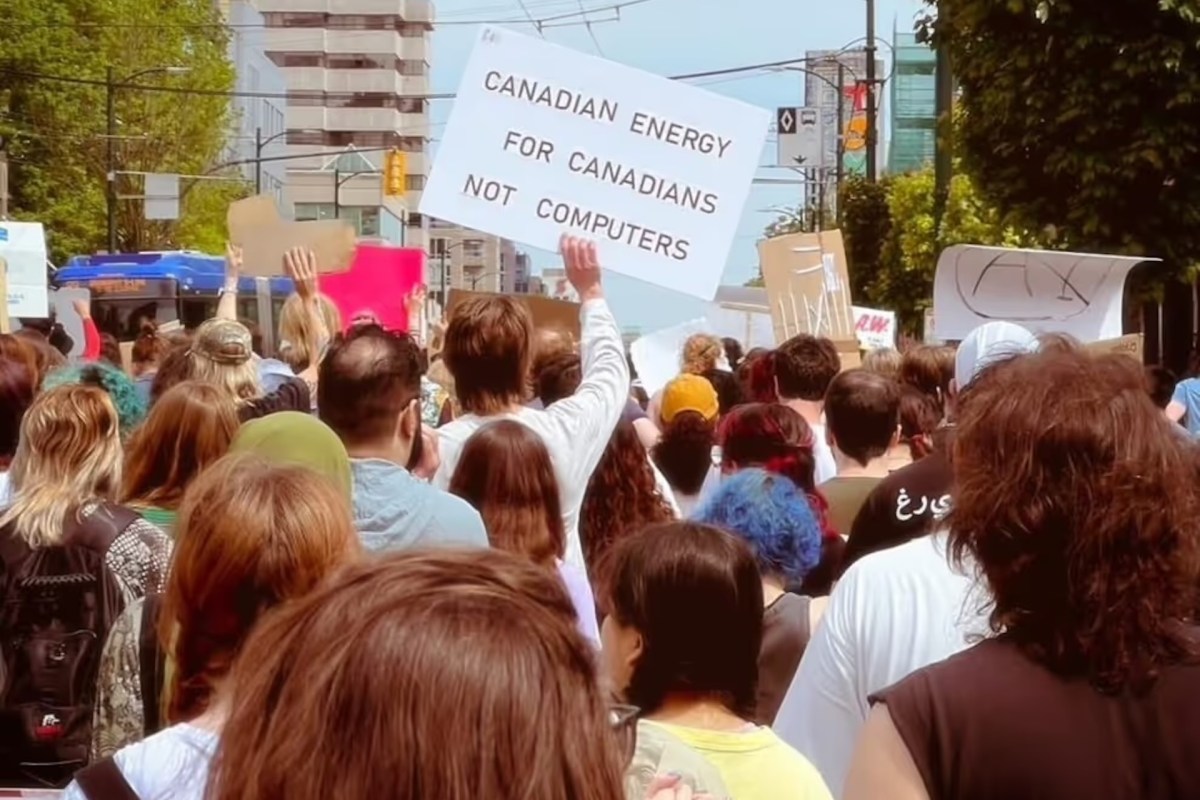
Hundreds of people marched through downtown Vancouver over the weekend to protest a proposed cluster of AI data centers backed by Telus, voicing concerns about water use, electricity demand, and what that could mean for local communities.
What happened?
About 750 people took part in the May 23 march, and a second demonstration is already planned for June 27, according to a report by Daily Hive.
The protests target Telus' plan to help build a sovereign AI infrastructure network in British Columbia, including two proposed Vancouver facilities on Westbank properties. The larger three-site B.C. network is projected to have 60,000 GPUs and reach 150 megawatts by 2032. A Kamloops site is expected to open later this year.
Telus said the investment could add $9 billion to Canada's economy while helping keep sensitive data inside the country. But protest organizer Torin LaRocque said the environmental impact remains a central concern, particularly as Vancouver is already under Stage 2 water restrictions.
Why it matters
AI systems require enormous amounts of computing power, which requires a large amount of electricity. The infrastructure behind AI can also consume significant amounts of water. If projects on this scale are not carefully managed, communities can experience grid strain, rising power costs, water stress, and a negative environmental footprint.
LaRocque argued that, regardless of efficiency claims, the scale of the proposed facilities could still put pressure on local resources.
TCD Picks » Quince Spotlight
💡These best-sellers from Quince deliver affordable, sustainable luxury for all




As governments and companies move to build more domestic AI sites, projects like this are becoming points of debate over who benefits, who takes on the risks, and how quickly expansion should happen.
What's being done
Telus says the facilities are being designed to limit their environmental impact. Saying that the centers would rely on 98% renewable energy and use a closed-loop liquid cooling system. Telus also said the sites would be far more efficient than conventional data centers and cut water use by 90%, an estimated 300 million liters in yearly savings.
Telus said waste heat from the centers would be routed into district energy systems in Mount Pleasant and downtown Vancouver, enough to warm about 150,000 homes in Metro Vancouver, according to Daily Hive.
Telus is framing the project as a way to expand AI infrastructure without compromising climate goals. BC Hydro said it is taking a "managed and phased approach" to handling major new power demand while protecting affordability and reliability for residential customers.
Organizers are responsive to what Telus is saying but have reservations about the validity of the statements. "The protest does not end today," LaRocque said.
Meanwhile, Telus says its Vancouver facilities are "designed to be the world's most sustainable sovereign AI data centres" and a "critical national asset — for Canadians, by Canadians."

Get TCD's free newsletters for easy tips, smart advice, and a chance to earn $5,000 toward home upgrades. To see more stories like this one, change your Google preferences here.






