


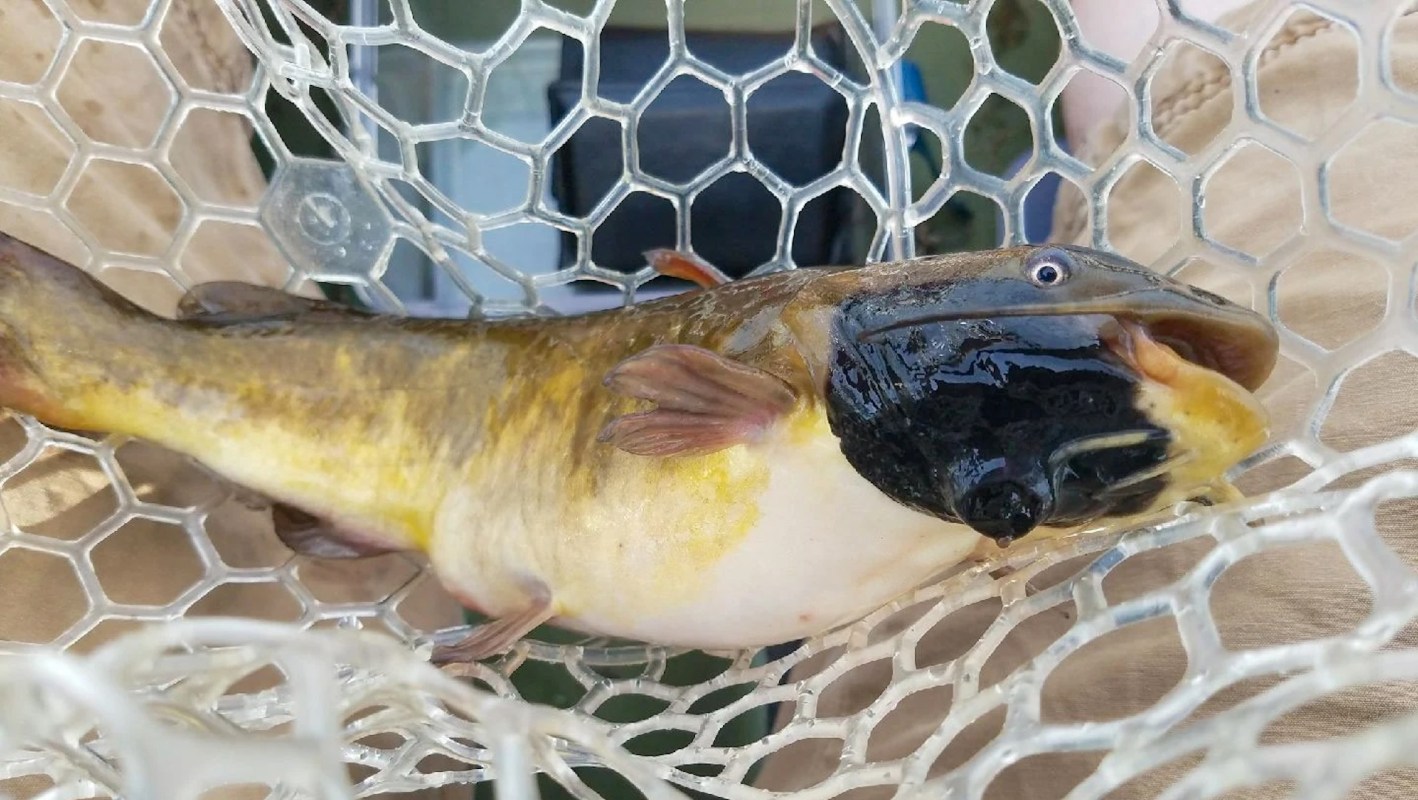
An unusual disease showing up on catfish in Vermont and nearby waters has been identified as one of the rarest findings in wildlife — a cancer that can move from one animal to another, according to SciTechDaily.
What's happening?
In brown bullhead catfish, the melanoma does not appear to arise separately in each affected fish. Instead, SciTechDaily reported, Vermont researchers found evidence that the cancer itself passes between fish in a parasite-like manner, making it the first known case in a freshwater species.
The problem first came to attention in Lake Memphremagog, which lies between Vermont and Quebec, Canada. Reports began climbing in 2012, and by 2014, raised black patches were seen on about one-third of the fish examined.
According to Julie Dragon, a University of Vermont scientist who co-led the study, the team first thought pollution or a virus might be responsible.
"This was surprising," Dragon said, "and we wanted to know how a bottom-dwelling fish was getting a cancer we associate with exposure to too much sunlight."
DNA comparisons between tumors and healthy tissue provided the crucial clue. SciTechDaily reported that cancer cells from different fish were more similar to one another than to the animals carrying them, which is the hallmark of a transmissible cancer. Published in Nature, the study describes only the fourth animal cancer of this kind ever recognized.
TCD Picks » Quince Spotlight
💡These best-sellers from Quince deliver affordable, sustainable luxury for all




Why is this concerning?
The finding shows that disease can evolve in ways that blur the boundary between cancer and infection. It also gives scientists a rare opportunity to study what usually keeps cancers contained within one body — and what can happen when those barriers fail.
SciTechDaily reported that more than 175,000 people draw drinking water from Lake Memphremagog. Researchers say the illness is not known to harm humans, but widespread disease in wildlife can still signal deeper environmental instability.
Brown bullhead catfish serve as indicators of environmental quality, so when nearly 30% of fish in one lake appear to be affected, it can raise concerns about pollution and conservation.
Researchers have not linked the cancer to the nearby Coventry Landfill despite public concern. Cases have appeared throughout the lake and in additional waters across Vermont, New Hampshire, and Maine as well as New Brunswick in Canada.
What's being done?
Scientists are now working to determine where the cancer came from, how it spreads, and what it could mean for fish populations over time.
A leading hypothesis is that transmission happens during spawning, said Mark Henderson, a fish biologist who co-led the study at UVM's Rubenstein School.
"It seems to only happen in larger fish that are of spawning age," Henderson said, according to SciTechDaily.
The research team is also investigating whether naturally occurring arsenic plays a role. They detected unusually high arsenic within the tumor cells and found the illness appearing more often in places where nearby soils contain more arsenic. Researchers did emphasize that this does not establish cause and effect.
Peter Emerson, a Vermont state biologist and study co-leader, said the disease has already been found in "a few other ponds and lakes in this region," suggesting it is not confined to a single lake.
Strong monitoring, transparent water testing, and ongoing wildlife surveys can help communities detect unusual changes sooner and respond before ecological disruptions become more severe.
"By studying how cancers survive and spread outside their original host, we can learn a great deal about what keeps cancers contained — and what happens when those boundaries break down," Dragon said. "These fish provide an opportunity to look at evolution of cancer."

Get TCD's free newsletters for easy tips, smart advice, and a chance to earn $5,000 toward home upgrades. To see more stories like this one, change your Google preferences here.






