


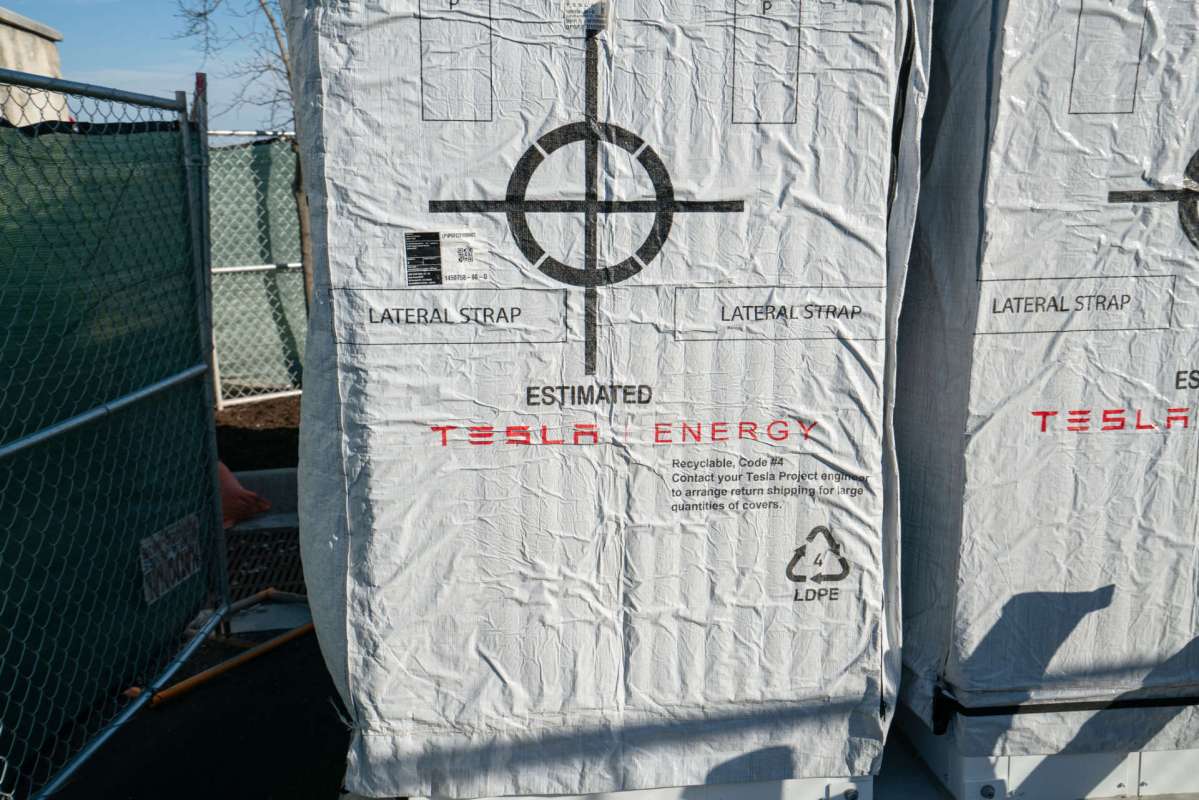
Tesla began producing its next-generation Megapack 3 grid battery at its facility in Brookshire, Texas, on August 6, a step that could help utilities bring large-scale energy storage online more quickly.
Compared with the earlier version, Megapack 3 stores about 28% more energy without taking up any extra space, which could help grid operators add resilience without finding larger sites.
What's happening?
On August 6, Tesla said Megapack 3 production was underway at its newest Texas Megafactory, Electrek reported.
"Megapack 3 is officially rolling off the line at our newest Megafactory in Brookshire, Texas!" the Tesla Megapack (@Tesla_Megapack) account wrote in a post on social platform X.
"The factory went from groundbreaking to operation in just 16 months & has a designed capacity of 50 GWh/year dedicated to Megapack 3."
Megapack 3 is officially rolling off the line at our newest Megafactory in Brookshire, Texas!
— Tesla Megapack (@Tesla_Megapack) August 6, 2026
The factory went from groundbreaking to operation in just 16 months & has a designed capacity of 50 GWh/year dedicated to Megapack 3 pic.twitter.com/PJTyboJCcp
In practical terms, that means each Megapack 3 can store around 5 megawatt-hours, up from 3.9 megawatt-hours in the Megapack 2 XL, even though the physical footprint stays the same.
TCD Picks » Quince Spotlight
💡These best-sellers from Quince deliver affordable, sustainable luxury for all




According to Tesla, a key reason for that gain is the move to larger 2.8-liter cells. It also reduced thermal-system connection points by 78%, which could help limit leaks, cut maintenance demands, and speed up assembly.
Tesla is also introducing the Megablock, a configuration that combines as many as four Megapack 3 units for roughly 20 megawatt-hours, along with transformers and switchgear installed at the factory. The company says this approach can trim installation time by about 23% and enable 1 gigawatt-hour of deployment within 20 business days.
Why does it matter?
Large battery systems like these play an important role in storing electricity generated by solar and wind projects so it can be used when demand rises or when weather conditions limit power production. For households and businesses, that can mean a grid better able to handle heat waves, storms, and blackout risks.
Fitting more energy into the same amount of space is especially valuable in places where land is limited. Utilities and cities may be able to add more backup capacity without expanding a site's footprint, which can save both time and money.
Another potentially important shift is how much of the electrical integration is handled before equipment reaches the site. If more of that work is completed in the factory, Tesla may be able to reduce one of the biggest on-site construction slowdowns for battery farms.
Tesla has reported tariff-related pressure on energy-business margins tied to lithium iron phosphate cells, and a 50-gigawatt-hour factory will require an enormous supply of cells.
What's being done?
Brookshire is Tesla's answer to rising demand for grid storage. Its California and Shanghai facilities have been running at high output, and the Texas site adds capacity as competitors such as CATL, Fluence, and BYD pursue the same market, Electrek reported.
The company has also landed a major European order from NatPower valued at $5 billion for 25 gigawatt-hours of Megapack capacity, as utilities and data-center operators look for more storage to support energy-intensive operations and improve grid stability.
For everyday consumers, the same underlying concept applies on a smaller scale. Home batteries paired with rooftop solar can help people keep the lights on during outages and reduce exposure to rising electricity bills.
"Congratulations to the Tesla Megapack team! Exciting milestone," one commenter wrote on the company's post.
"Megapack 3 is going to severely help deliver energy in which the U.S. is in need of," another said.

Get TCD's free newsletters for easy tips, smart advice, and a chance to earn $5,000 toward home upgrades. To see more stories like this one, change your Google preferences here.






