


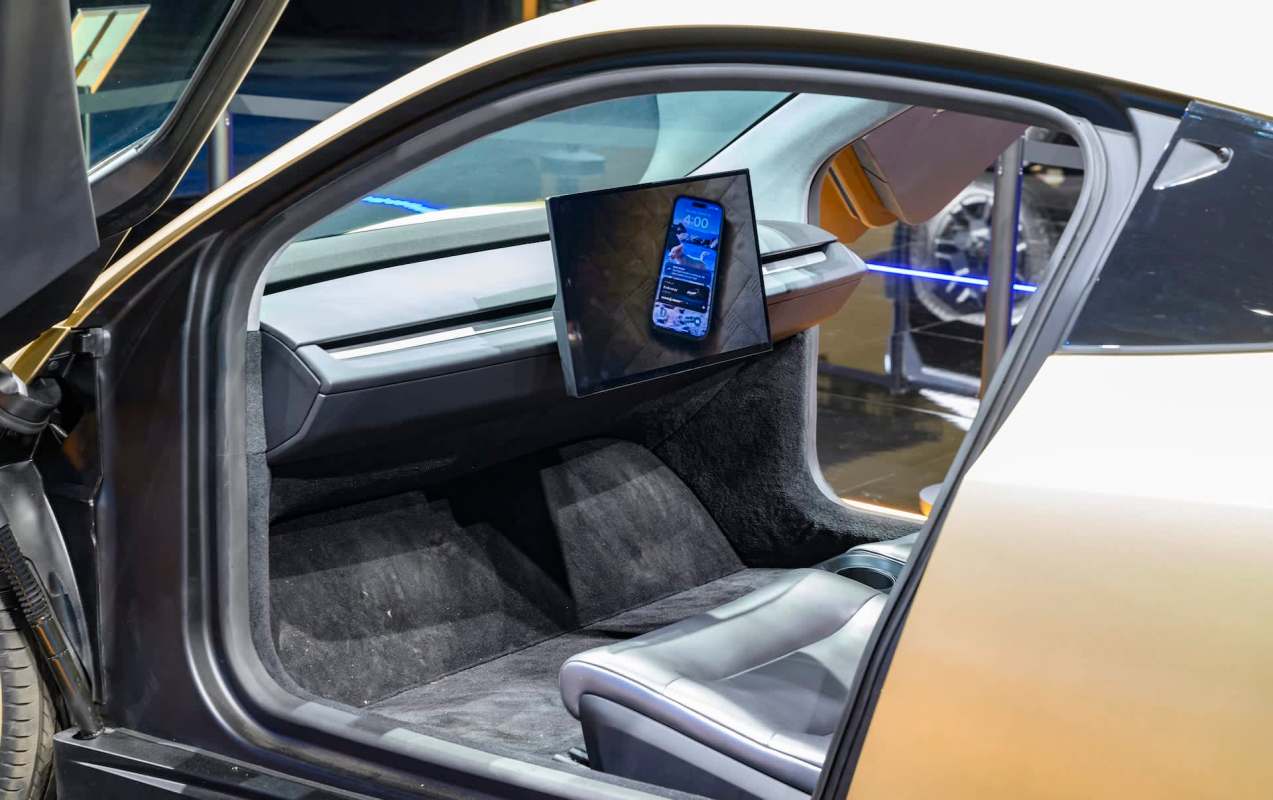
Tesla's Cybercab recently received a certified efficiency rating of 165 watt-hours per mile — a figure that would make it more efficient than any other production electric vehicle on the market.
That eye-catching figure is real, but so is the fine print behind how Tesla achieved it.
According to a report from Electrek, Tesla Vice President of Vehicle Engineering Lars Moravy confirmed the efficiency figure. That achievement puts the Cybercab well ahead of the EVs rated by the Environmental Protection Agency, including the Lucid Air Pure at 230 Wh/mi and Tesla's own Model 3 RWD at 240 Wh/mi.
However, the Cybercab is not a typical passenger car. The vehicle is a small, two-seat robotaxi that omits a steering wheel and pedals and uses a battery pack with a capacity below 50 kilowatt-hours.
Tesla also shaped the vehicle around aerodynamic efficiency, with a rear end that tapers sharply instead of prioritizing cargo space and cabin flexibility.
The weight reduction and aerodynamic design optimize the Cybercab for efficiency.
TCD Picks » Quince Spotlight
💡These best-sellers from Quince deliver affordable, sustainable luxury for all




The company has said the vehicle could deliver close to 300 miles of range despite its small battery. Production started at Giga Texas in April, although the rollout is expected to begin slowly.
If similar design choices are widely adopted, drivers could see more range from smaller batteries, lower charging costs, and potentially lower vehicle prices.
Electrek noted that the updated design is nearly 30% more efficient than the next-most-efficient EV on the market, the Lucid Air Pure.
Still, it is not an apples-to-apples comparison with a normal car. The Cybercab was built for one job — moving two passengers as cheaply as possible — and leaves out the weight, controls, and features that most conventional buyers expect.
Despite the record-efficiency figures, Tesla still faces major hurdles in its mission to make the Cybercab widely available. The company has not yet solved unsupervised autonomous driving at scale, and its supervised robotaxi fleet is crashing at about four times the rate of human drivers, Electrek reported.

Get TCD's free newsletters for easy tips, smart advice, and a chance to earn $5,000 toward home upgrades. To see more stories like this one, change your Google preferences here.






